Archives
- June 2018
- December 2017
- November 2017
- May 2017
- January 2017
- November 2016
- May 2016
- April 2016
- December 2015
- November 2015
- October 2015
- September 2015
- August 2015
- July 2015
- June 2015
- May 2015
- April 2015
- February 2015
- January 2015
- December 2014
- November 2014
- October 2014
- September 2014
- August 2014
- July 2014
- June 2014
- May 2014
- April 2014
- March 2014
- February 2014
- January 2014
- December 2013
- November 2013
- October 2013
- September 2013
- August 2013
- July 2013
- June 2013
- May 2013
- April 2013
- March 2013
- February 2013
- January 2013
- October 2012
- September 2012
- August 2012
- July 2012
- June 2012
- May 2012
- April 2012
- March 2012
- February 2012

Mar
5
2012
 4
4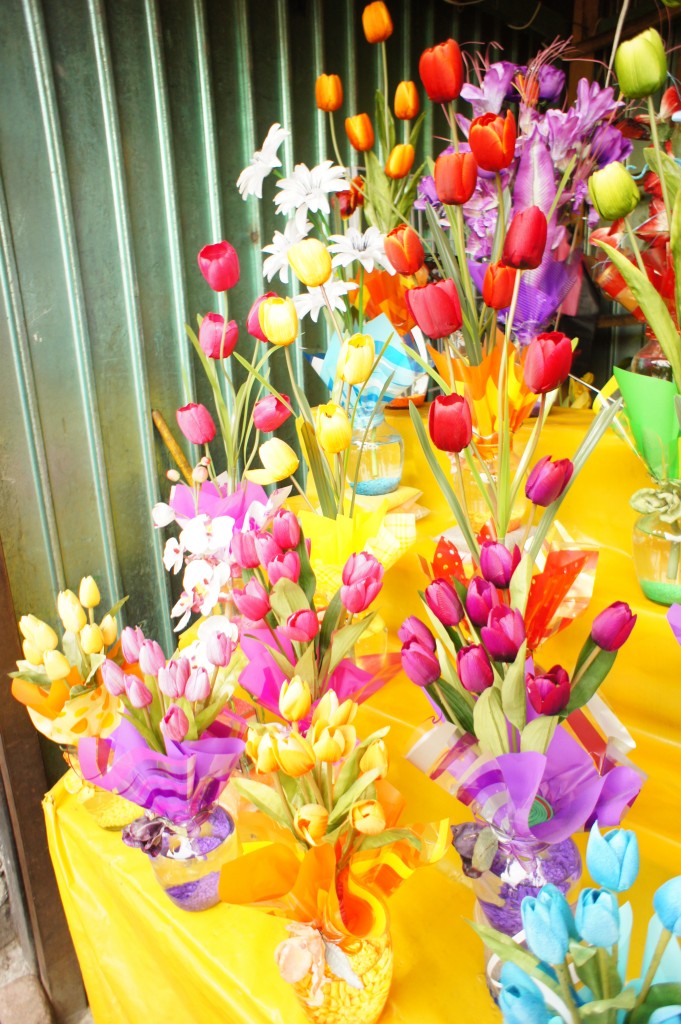
When I traveled south in early February it was not only to escape the drudgery of winter gardening, but to get out of winter itself, skip over spring and land smack-dab in the middle of summer.
Boy, did I get a surprise.
Mexico City where Michael and I spent the first week of our trip was chilly and rainy, like Seattle in April. Well, maybe a tad warmer. Mexico City is only 19°26” north of the equator, but it sprawls out on a plateau which at it’s lowest is 7,217 feet above sea level. Taking in the mountains and volcanos that surround it, it leaps to an altitude of over 12,000 feet. It’s like being on a mountain top to us valley-dwellers, whose home is only about 60 feet above sea level. I knew I would not be landing in the tropics, nor the deserts neither that make up a large portion of Mexico. I knew I wasn’t leaving North America. I was even warned, “It could be cool at night,” so I thought I was ready with my corduroy sports coat and some thermal t-shirts. And I was ready. For the weather.
What I wasn’t ready for were the tulips.
I have been growing, or at least watching tulips grow since I can remember. They were probably one of the first miracles of gardening I witnessed as a child. My mother would dig a hole, drop in—actually she was probably more careful than that—a brown bulb not unlike an onion, it would sit in our cold Wisconsin clay that could freeze up to 2 feet deep and then burst out of the ground in spring with such vigor, such joy and such color that I couldn’t help but be in awe. I plant tulips every year now. For my clients and myself.
Anyway, when I think of tulips I think of Holland, of course, and Holland, Michigan, and the Skagit Valley north of Seattle emblazoned with tulips each April and clogged with cars full of slow moving gawkers. But I don’t think of Mexico. When I think of Mexico I think of palms and orchids, acres of philodendrons crawling across the ground and poinsettias like trees. Everything you would need a conservatory here to grow.
Our Mexican friends Alberto and Memo were “freezing to death”, while Michael and I were comfortable in the slightly warmer-and-drier-than-Seattle-in-April temperatures. But they were also great sports and marched us from one end of the spectacular city to the other. When I came home and finally opened a map I realized we had only seen about 2% of the over 570 square miles that make up the largest city in the Western Hemisphere. We saw superlative architecture, we saw millions of friendly people (there are nearly 22 million in the metropolitan area); we saw incredible wealth and horrible poverty; we ate lavishly and cheaply; we saw palms; poinsettias and philodendrons galore; and we saw tulips.
I never think of places with no snow to speak of, no freezing temperatures, no January thaw, as having winter and therefore as having spring. Spring is a defiant act against winter, a force to reckon with. As you know I still have a hard time with the Pacific Northwest’s hazy seasons weaving in and out of each other willy-nilly. But it was spring in Mexico. And February 2nd, Dia de la Candelaria —Candlemas to us English speakers, or Ground hogs day— is a particularly important spring festival there. And a time for giving tulips. So tulips abounded at ever street corner flower stall, in the markets and super markets, in hotel lobbies, in restaurants and in cathedrals.
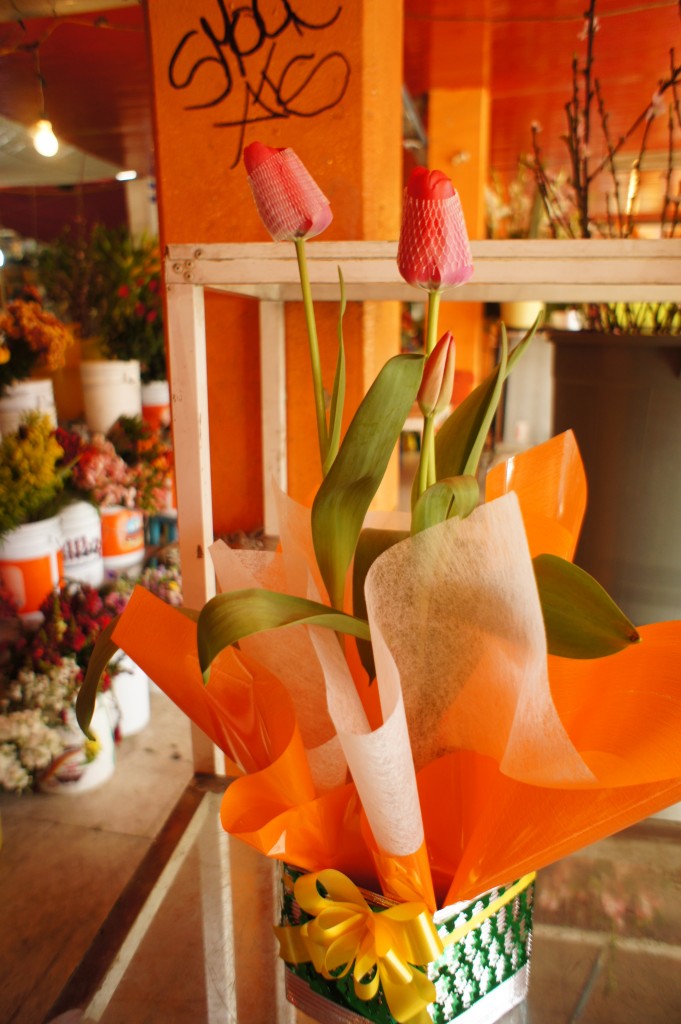
Tulips are in a strange way a very modern flower. The ancient Greeks who were formidable botanist failed to mention them as did many of the herbalist of the day. It wasn’t until the 1400s that tulips began their sometimes maddening ascent to fame and popularity. Now at anytime of year here you can buy a bouquet of tulips. Every Fourth of July I have to chuckle at the bouquets of red, white and blue ( okay, lavender) tulips that turn up at the grocery store en mass. Nothing says America like tulips.
If you have grown tulips you know that they need a good chill to set flower buds. My gardening friends in California, who grew up back east, confess to missing them as they stand among their aloes blazing with flowers in March. What is the allure of the tulip, and how did it catch the Mexican imagination? They can’t possible grow them there with out the complications of chilling them to set the flower buds. So I googled “Mexican Tulips”: all that came up was the Mexican tulip poppy (Hunnemannia fumariifolia), not a tulip at all but definitely a poppy relative. Were all these tulips coming north or south from cooler places to Mexico City? Where there great refrigerated greenhouse pumping them in the outskirts of the city? Were they flown in from Holland? I know I was on vacation and should have been enjoying myself, not puzzling over tulip propagation, but one of the things I enjoy is flowers and in particular tulips and nothing is better to me than to feed my curiosity. And still my curiosity had not been satisfied. Maybe I need another trip to Mexico City and a little more Spanish under my belt to find out where all those Mexican tulips come from.
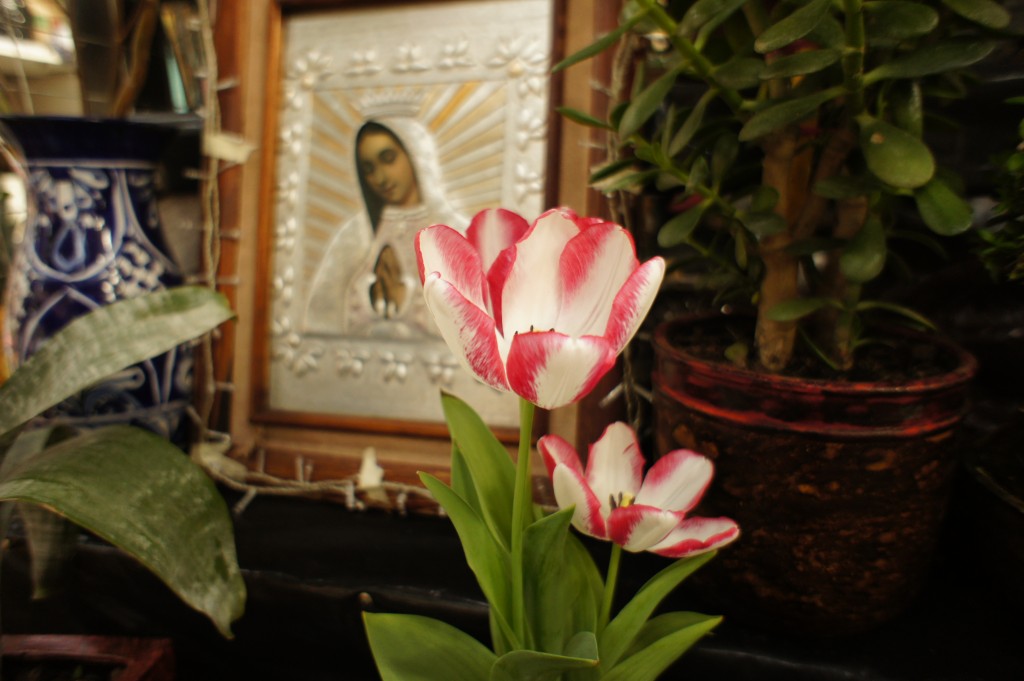
What I did find is I am not alone in my reverence of flowers, in the joy I take in them, in my celebration of spring ( we’re still waiting, vaguely, in the Northwest) And that I am not alone in my love of tulips.
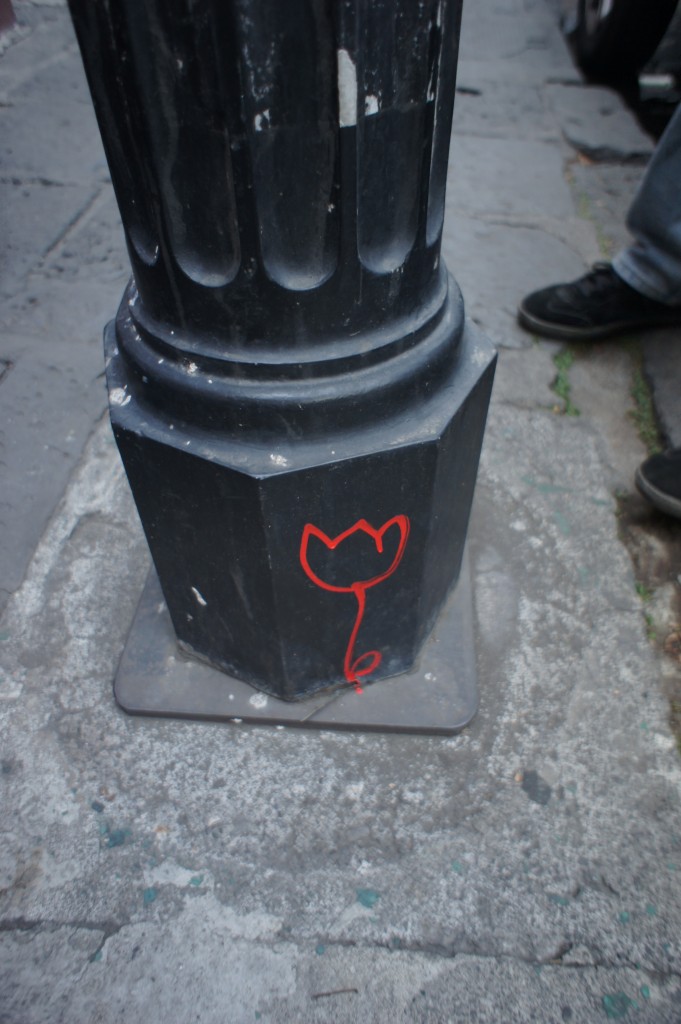
Even taggers got the tulip bug.

