• C.V.
  • Services
  • Classes
  • Writing
  • Blog
  • Contact
The observations and ruminations of a plantsman in the Pacific Northwest


Jan
23
2017
 0

FLORA JAPONICA: Fern vs Man


Human predation is probably the last thing threatening the existence of ferns on the planet. Few ferns are edible, let alone palatable.
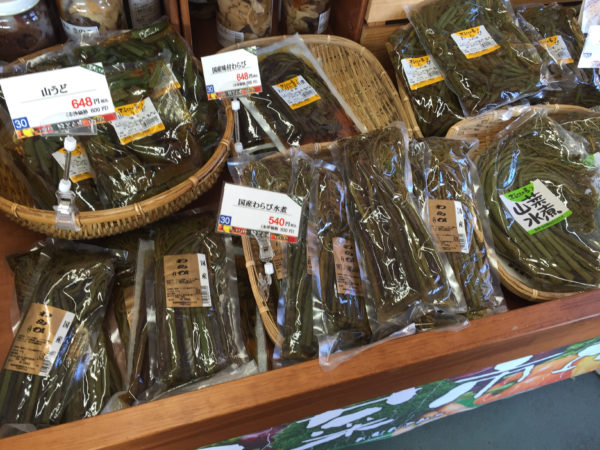
The bracken fern (Pteridium aquilinum), after a great deal of processing to leach out carcinogenic compounds is one example of the reason why we don’t eat so many ferns.
But in Japan where there is a distinct name for ferns that are edible, warabi, bracken fern is actually quite popular. At a truck stop between Fukushima City and Sendai we saw them processes and packaged for sale. The day before I had eaten them in a bowl of Udon soup with mountain vegetables. I had nibbled on raw bracken in my own garden back home; it was acrid and tasted carcinogenic. The processed bracken in my soup was delicious, a subtle asparagus/spinach flavor, definitely wild but also in some sense a refined flavor.
If any of you have ever battled bracken in your garden, you know that eating it would probably not keep this cosmopolitan fern, which could easily be called an aggressive weed, in check. As a Northwest gardener it is hard to imagine any fern as anything less than weedy. Sword ferns (Polystichum munitum) and lady ferns (Athyrium filix-femina) like to move into any shady, or not so shady, nook in our gardens. They even end up in unlikely places: a mossy roof or a crevice in black top.
It is truly hard to think of ferns as threatened, but like many other plants and animals on this planet habitat loss is reducing populations of the rarer and less aggressive of the ferns. And though some of those were the exact ferns we sought out on this trip, they will not be the subject of this post, but the next. What I want to talk about now is the ferns that survive us, or even flourish in man-made habitats.
Many ferns are amazingly adaptable not requiring the warm humid climate of the early Carboniferous Era in which they developed and dominated, nor a Victorian terrarium for their survival. If I took anything away from this trip it was the knowledge that ferns weren’t an idea that nature had some 300 million years ago and abandoned. They are not only primordial survivors that managed to stay alive through the rise of flowering plants. Ferns have been evolving all along; we are still finding interspecific hybrids today, proof of their continual development. Ferns are as modern as roses in some sense, but with a longer period of time to develop some amazing survival strategies.

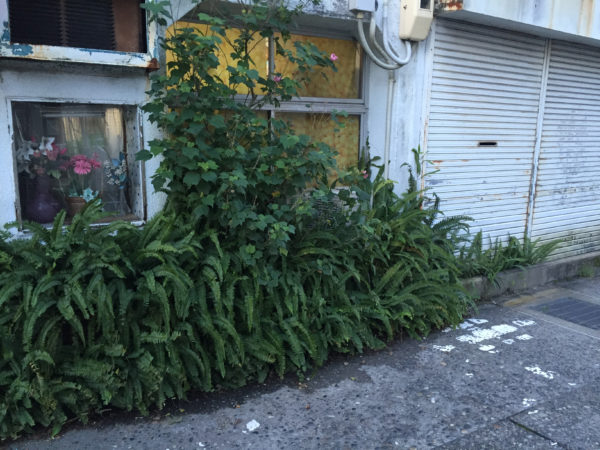
The ladder fern (Nephrolepis cordifolia) made it on to our list but was regarded, or not regarded at all, by the experts on our trip because of it’s weedy and downright invasive habit. Nearly every palm in the Kii Penninsula was covered with this fern. Here you can see it taking over a storefront in Shingu; it didn’t even seem like there was any soil for it to grow in.

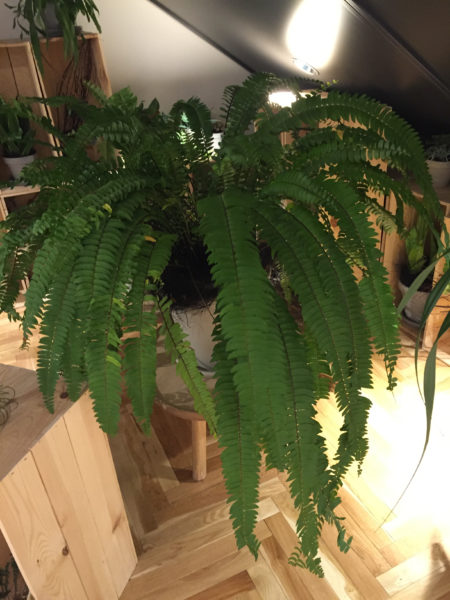
The closely related Boston fern (N. exaltata) seems to care little about where it grows, either. Here under an escalator in a department store basement in Tokyo one thrived in a pot, far from rain showers or sunlight. I’ve seen this fern forming thick masses on the Big Island of Hawaii, unstoppable in that ideal climate.
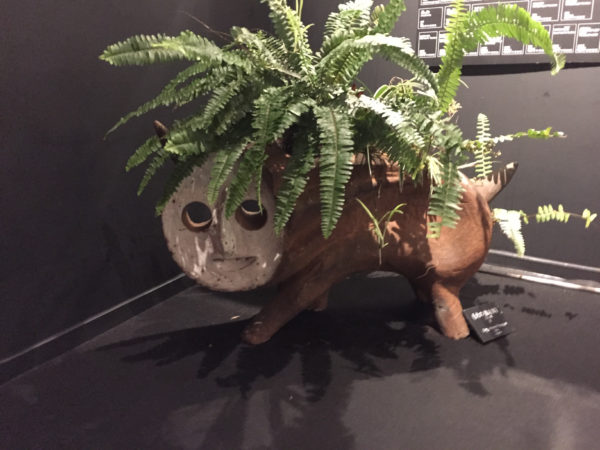
Or here growing under fluorescent light in one of Taro Okamoto’s expressive planters on exhibit in the Tokyo museum in his honor.
I was actually surprised how often I saw ferns deep in the interior spaces of stores, some even subterranean, one would never think of as supporting plant life.

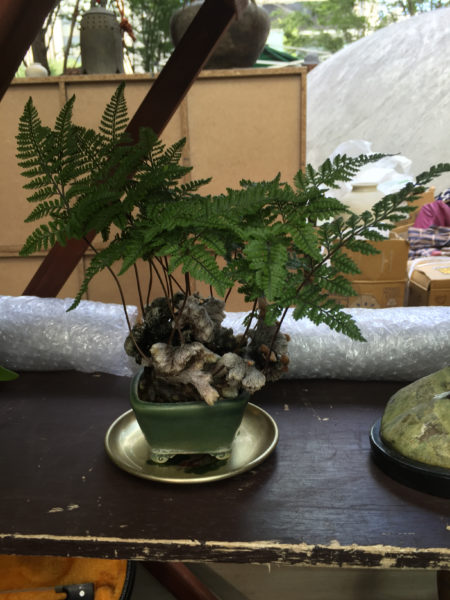
The ubiquitous squirrel’s foot fern (Davallia mariessii) another native fern of Japan, could be found for sale everywhere from the gift shop In Bandai Asahi National Park…

and at the Tokyo Antique Fair in Ginza…

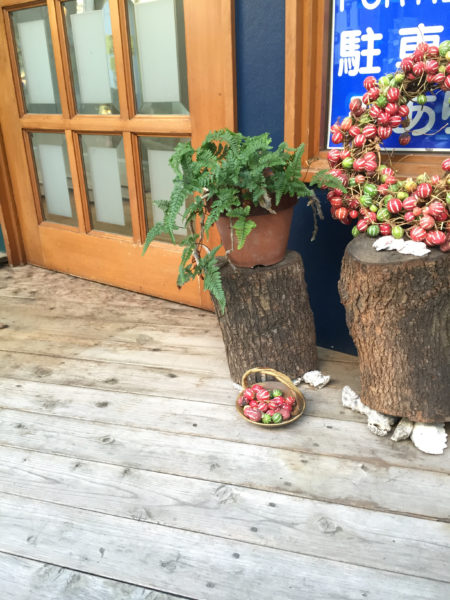
and seen on every doorstep from Sendai to Shingu.

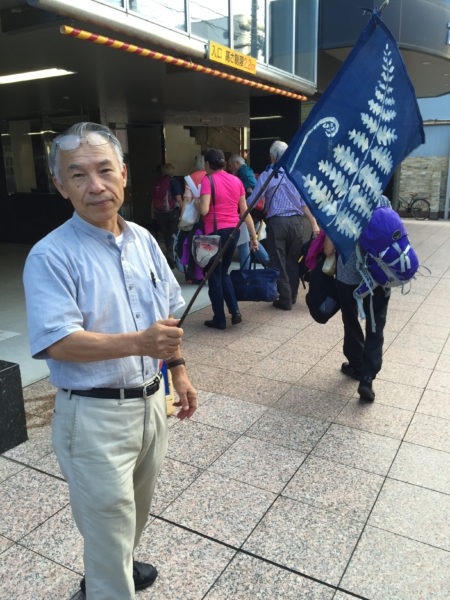
It even graced the flag that our guide in the Kii Penninsula, Oohara-san, used to rally the pteridological troops each morning, and to signal our return to the bus at the end of the day.

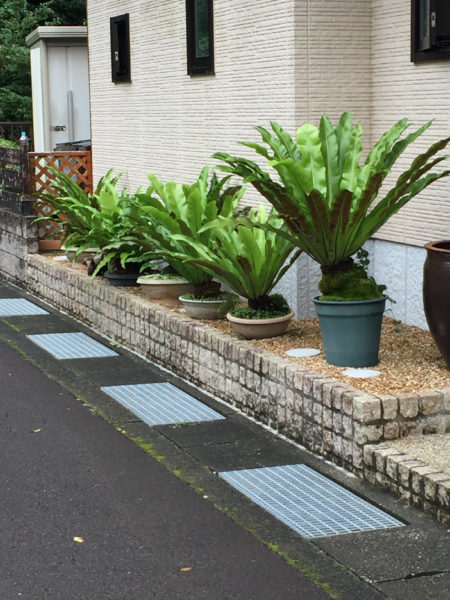
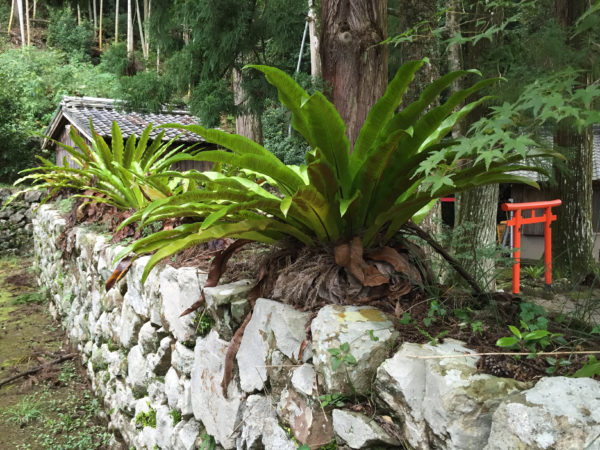
Another ubiquitously planted, though not native, fern was the epiphytic bird’s nest fern (Asplenium nidus).

Here it is hard to tell if it had naturalized into this wall at the Konouchi Shrine in Mie Prefecture, or if it was planted; it’s architectural presence defied the wildness of the place, at the same time feeling totally harmonious with the temple architecture.

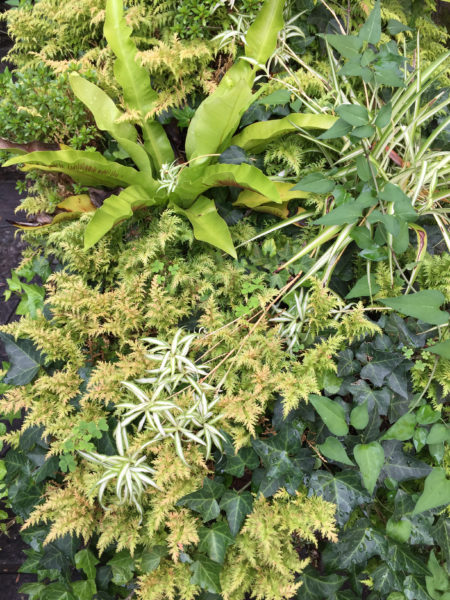
In the village of Iseki outside Shingu ,I was struck by this planting using the native gemmiferous spikemoss (Selaginella moellendorfii) with non-native bird’s nest fern and other garden plants.

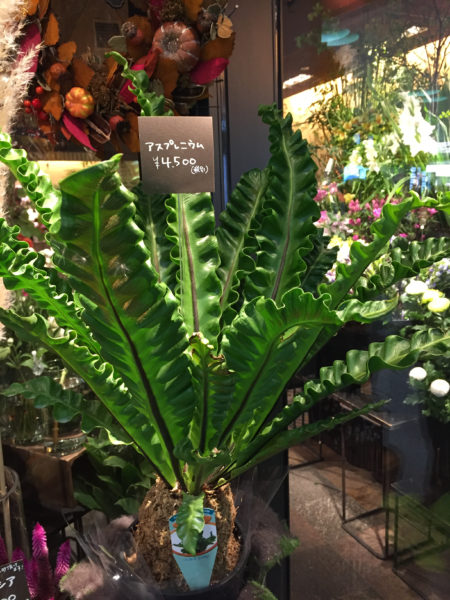
The apotheosis of the bird’s nest fern is it’s many wavy leafed cultivars; this is probably ‘Victoria’. Brought in from a grower in a tropical locale, I wondered how long it would last in this underground train station flower shop in Tokyo. It was only $45 for this large, nearly 3-foot, beautiful fern.

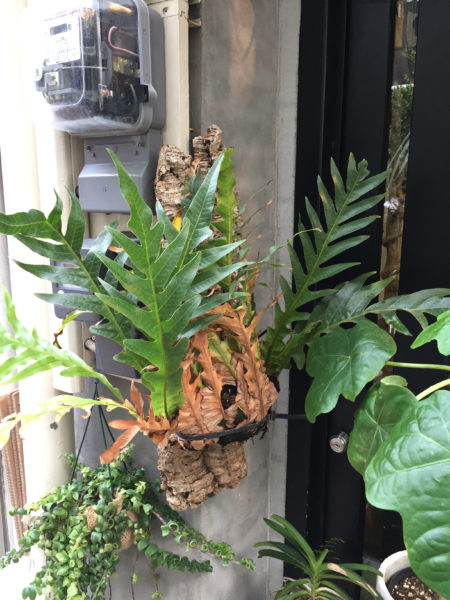
What amazed me most was not so much the environments into which we have dragged ferns, like this staghorn fern ( Platycerium sp.) tied to the side of a building in the hyper-urban district of Tokyo called Ginza.

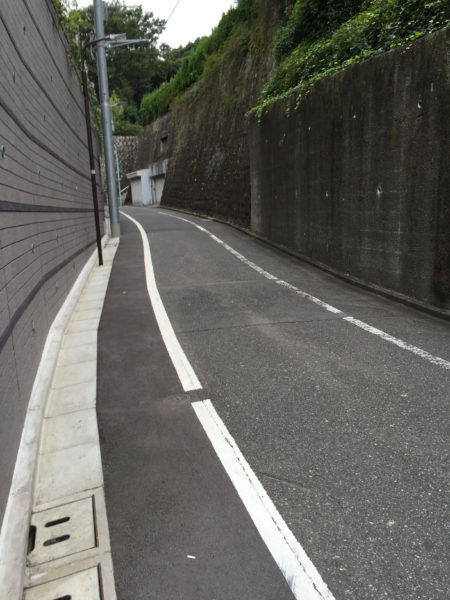
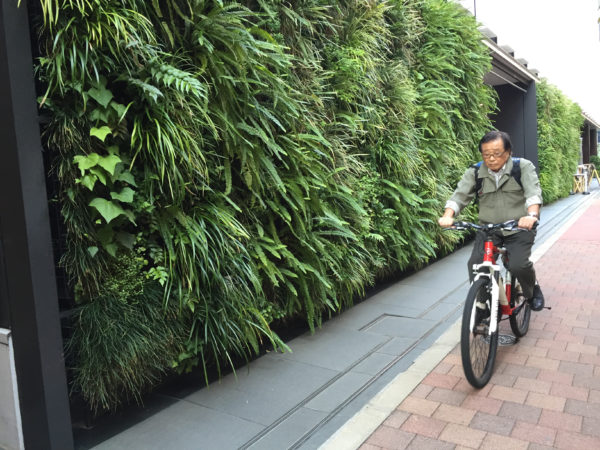
But the places ferns follow us willingly, like this man-made “canyon” near Yoyogi Park in Tokyo. In some ways it is the exactly like the environments we sought out in the country to look for rare native ferns.

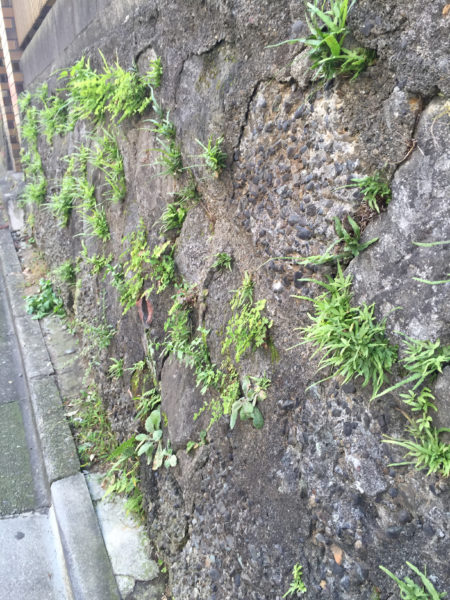
These urban ferns are seldom native. Actually this Tokyo wall is nearly covered with the exotic and often cultivates ribbon fern (Pteris cretica).

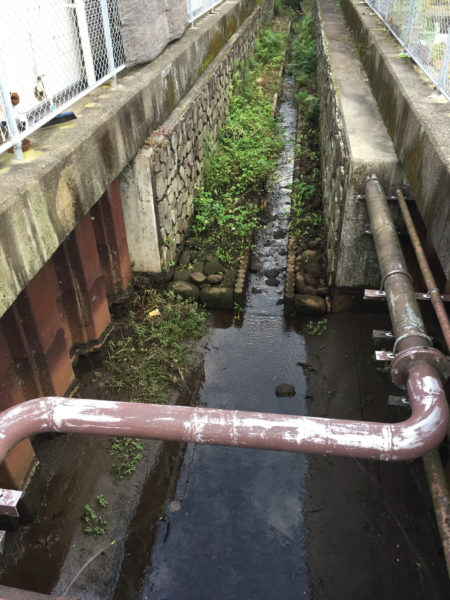
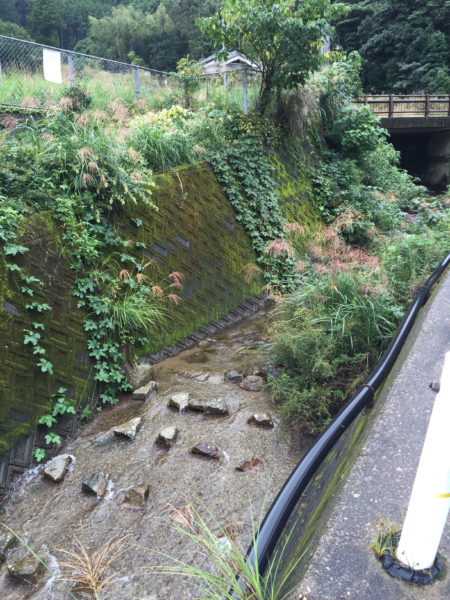
Or a mix of natives and invasives, as in this channel in the city of Shingu.
Our guide called it the shortest river in Japan; I don’t know if she was joking or telling us the truth.

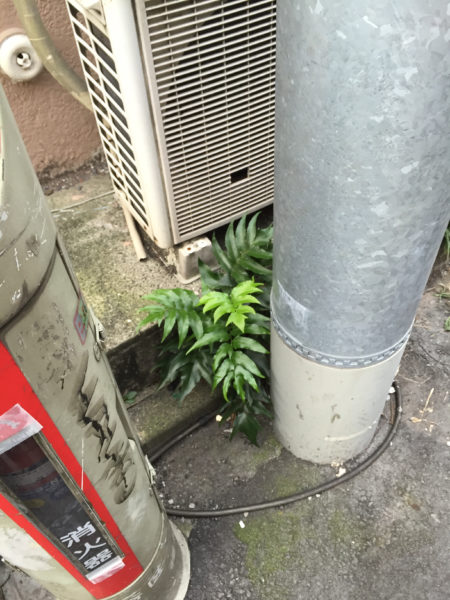
I have the feeling this is probably a native fern, though I had neither the time nor inclination to identify it, swept up in the bustle of Tokyo.

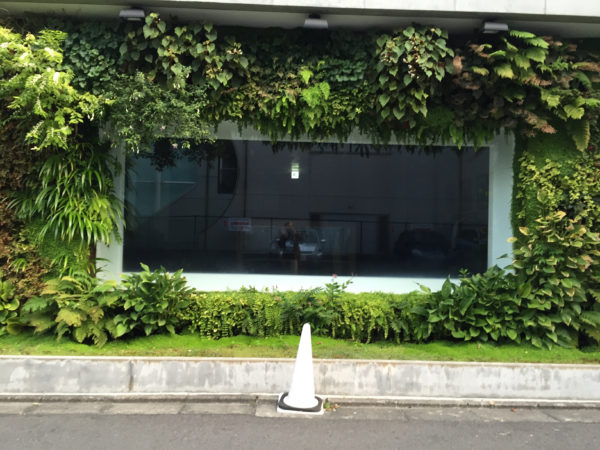
The forward thinking architects, inspired by the adaptability of ferns to urban environments and their propensity for growing on vertical surfaces, used many Japanese native ferns in this planting on an upscale men’s clothing store façade in Sendai.

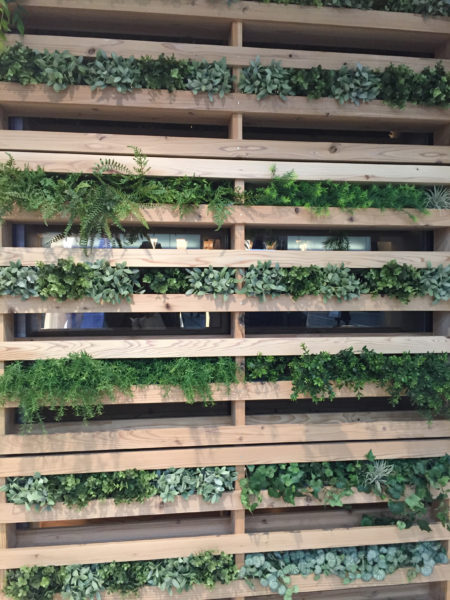
As were the architects who designed this ferny façade in the Kanda neighborhood of Tokyo.

or whoever made this dramatic window treatment and filled it with plastic plants, including ferns.

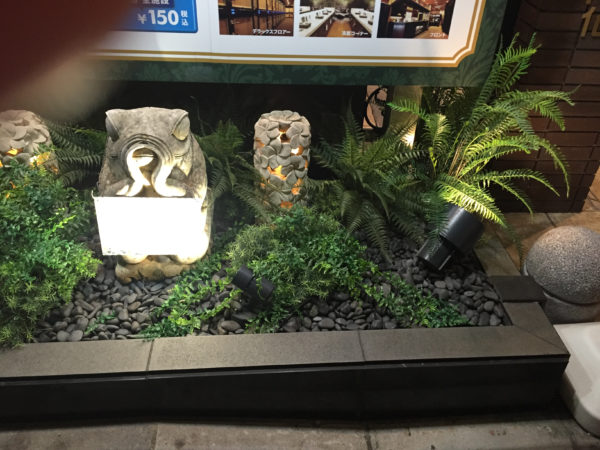
Ferns are such a beloved garden element that even the laziest of gardeners “grow” them. The gardener who created this “planting” of plastic plants in the Akihabara neighborhood of Tokyo included many ferns. After all, this garden was in the shadows of an overhead freeway and high-rise buildings along a major 6-lane thoroughfare. Maybe he had his doubts that real ferns would make it, though I wouldn’t.

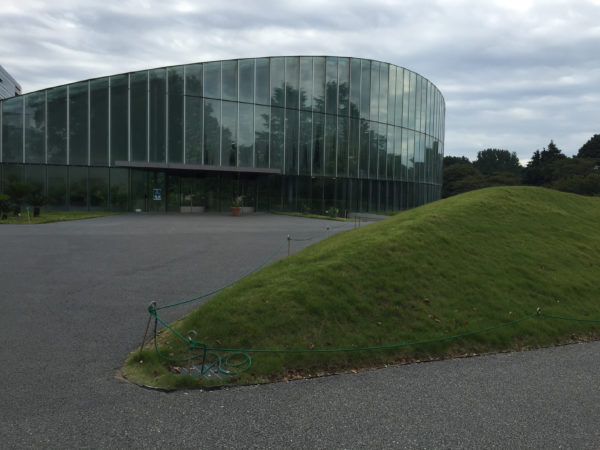
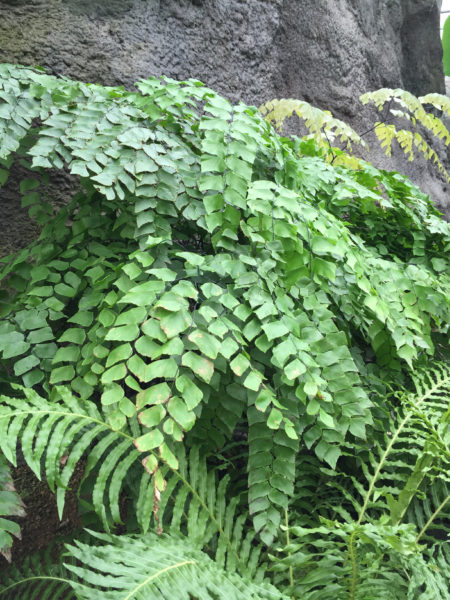
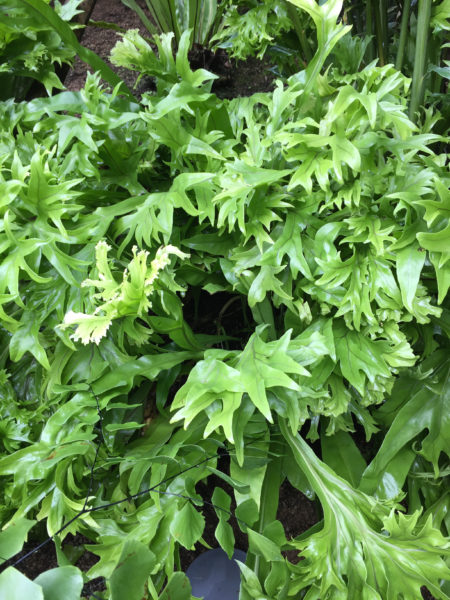
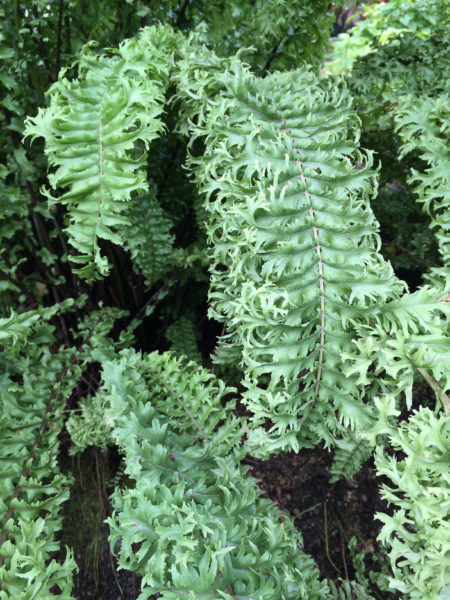
It was our love of ferns, among other plants, that spawned the development of the glass greenhouse. To this day we create them all over the world for growing plants that cannot endure the local climate. In Shinjuku Gyoen, the National Garden of Japan in Tokyo, this new and sculpturally beautiful greenhouse has impressive displays of exotic ferns, that would never last outdoors even in the apparently fern friendly climate of that mega-city.

The tropical diamond maidenhair fern (Adiatum trapezoidiforme).

The elk horn fern (Polypodium punctatum ‘Grandiceps’).

and Nephrolepis exaltata ‘Fluffy Ruffles’ all grow to luxurious dimensions in this ideal manmade environment.

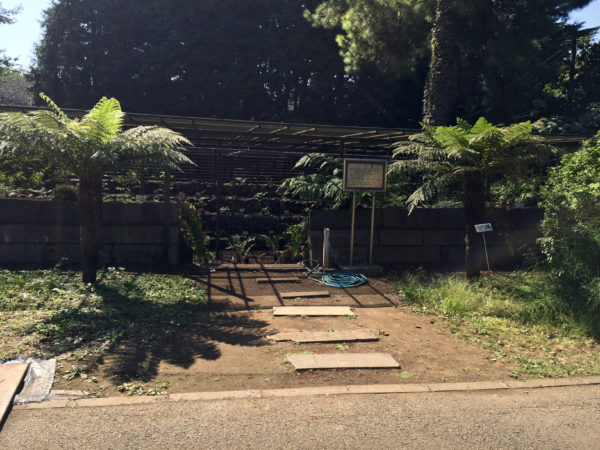
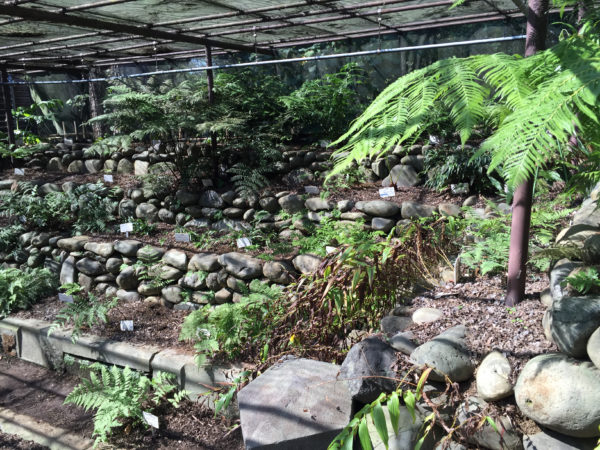
Koisikawa Botanical Garden at the University of Tokyo hosts a lovely collection of hardy ferns in a crude cinderblock lath house.

The beds are nicely labeled for boning up on Japans native ferns.

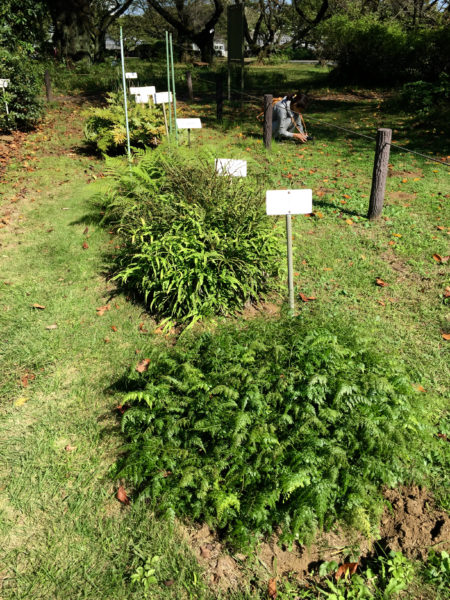
Others are planted out in the rows in the open garden, and may have been aprt of the medicinal garden. I couldn’t read the signs.

All of this is a testament to the fact that we humans have a great interest in ferns and that we will go to great lengths to cultivate them and enjoy their beauty, to seek them out in their native habitats and study them…

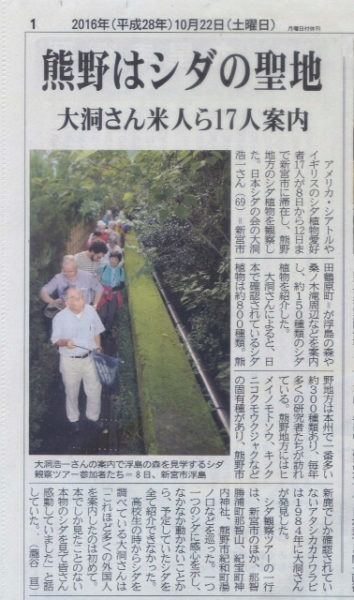
Still, it was big news in Wakayama prefecture when a group of foreigners showed up in this out of the way part of Japan to look at ferns. Oohara-san says in the article that he hopes that local people will understand the importance not only of the ferns in this area but plants in general and the necessity for preserving them.

Add a Comment


Nov
1
2016
 0

FLORA JAPONICA: Water


This post, the first in a series of six posts each focusing on a different aspect of the trip, is an introduction of sorts to Japan from the perspective of a first time visitor and also a botanist and gardener.
It may seem a bit self-indulgent to stretch out my recent trip to Japan with a series of blog posts. But prepping for these posts has allowed me not only to process the 8000 photos I took—no exaggeration—but also to revisit the myriad plants we saw, in particular the ferns, and the beautiful locales to which we travelled to see them.
It has also given me the time to process my impressions of the “Land of the Rising Sun”. It has given me the space to do further research and, yes, it has been a wonderful indulgence by which I extended and continue to extend my trip, which lasted only 17 days, for a few more weeks.

When I first heard of this tour focused on the ferns of Japan offered by Japan Specialized Group Tours I was intrigued, and baffled. How could a tour focus only on ferns? Still the intrigue outweighed the puzzlement, and I signed on. Certainly the idea of hiking in the forests of Japan was reason enough to tag along with members of the British Pteridological Society and the Hardy Fern Foundation. As a garden designer I am a great fan of ferns and use them in nearly all the gardens I make. Also as a plant collector I have amassed quite a collection of ferns, over 50 different types at last count, and have unwittingly become a confirmed pteridomaniac, a term of affection among fern lovers. This trip certainly clenched the deal, introducing me to many spectacular ferns I had never seen before and wonderfully charming pteridomaniacs, who are some of my favorite people on the planet now. I will get to the ferns and their lovers in subsequent posts.
I really want to just set the stage, so to speak, to draw a map of Japan in words and photos.
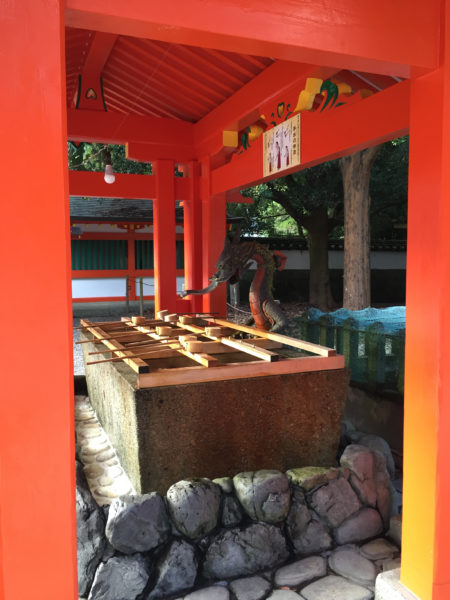
And that map would not be complete without water: from the Pacific Ocean to the countless rivers, ponds, drainage ditches, and puddles Japan is a watery place.
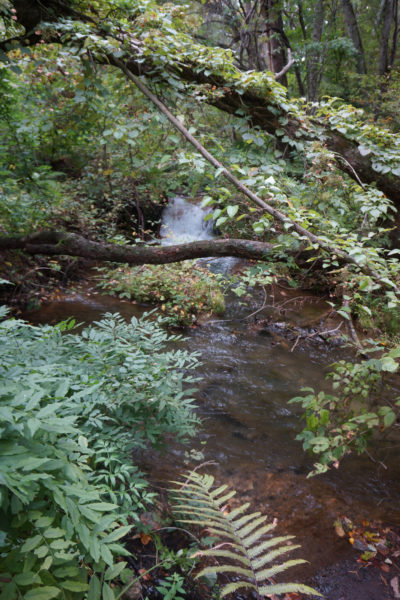
I am not saying that because we got rained on everyday. We actually only got rained on once. I am not saying that because we were exploring dank river valleys and swamps in search of water loving ferns. I am stating a fact.
The rainfall in Tokyo averages 60” a year, nearly double that of “rainy”Seattle, and that rain, heaviest in the summer months, falls year round. Farther south in the Wakayama prefecture, where we spent the second half of the trip, yearly rainfall averages about 130” a year. Even the driest months in our base town of Shingu have significant amounts of rainfall.
Though the strato-volcanic archipelago known as Japan runs from 24th to the 46th parallel, there is only one anomalous desert. Japan is a wet and humid place from beginning to end. Our trip kept us contained to the center of the main island of Honshu, but within that small region of the 430 or so islands that make up the country we were able to see a wide variety of habitats and plants.
Though I grow many Japanese plants in the gardens I created in the Seattle area, I don’t really know the Japanese flora. I was certain with all the volcanoes, mountain ranges, and waters that Japan would look a lot like Washington State.
Only a little.
Japan’s landscape and flora has much more in common with the southeastern portion of this continent. In the areas where we travelled the mountains were often soft, rounded and tree-covered. The general scale of things was smaller and tighter, at times reminding me of the Ozarks or the Vulkan-Eiffel of western Germany. With all the rainfall and hot humidity it is actually the antithesis of our modified
Mediterranean climate. The forests are generally broad-leafed, both evergreen and deciduous. Where we did encounter coniferous forest they were usually planted mono-crops. These forests were ideal habitats for ferns, along with many under story shrubs and herbaceous plants. What we saw was mind-boggling and complex.
Much more than I could take in at first glance.
So what I got were impressions, and that is mostly what I will share.

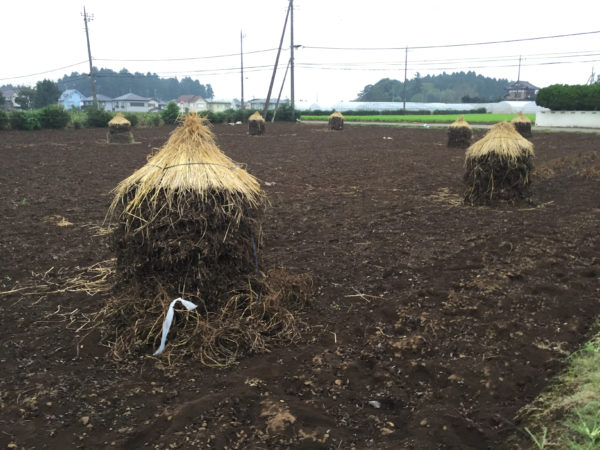
My first impression was of the agricultural fields across from our hotel not far from Narita Airport. The smell of damp earth, of curing peanuts piled in little “hut” immediately grounded me. The sky was a hazy gray, everything was damp.

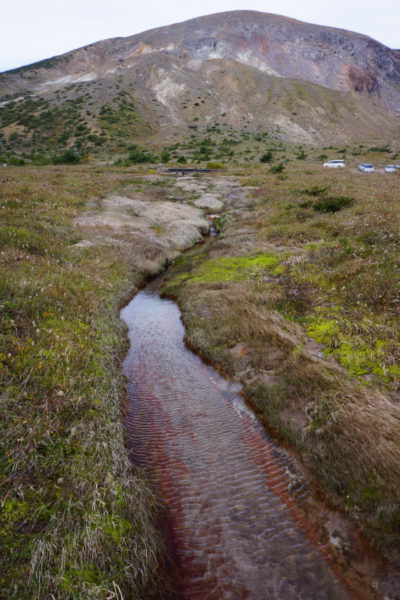
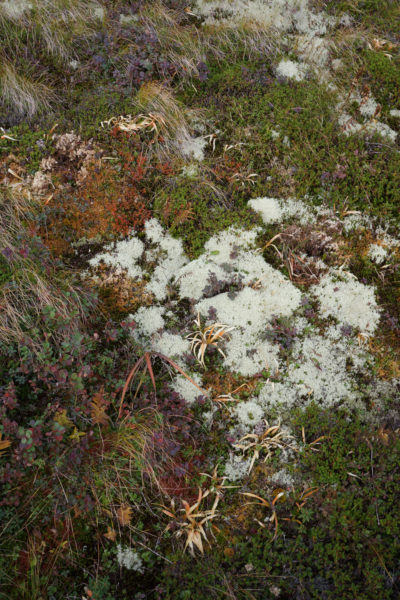
Above Fukushima City at about 5000 feet above see level in Bandai-Asahi National Park, we hiked through this beautiful alpine bog. The air was definelty cooler, but the winds, ahead of the approaching typhoon, were strong. Fall color was just starting to show.

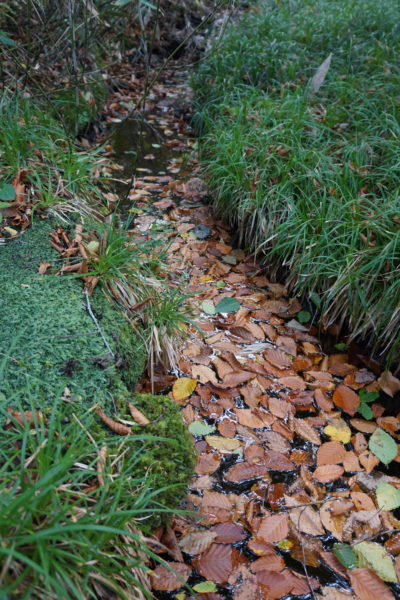
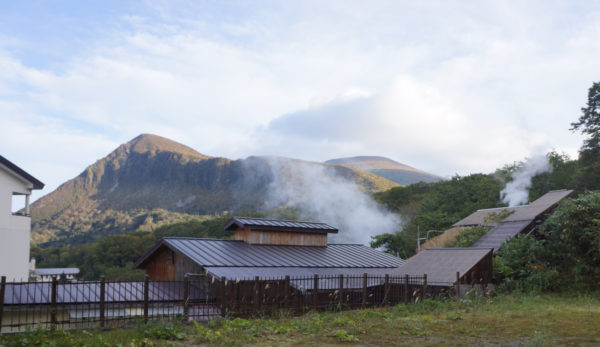
Later that day we were up in the forest behind Noji-onsen. Beech leaves were already clogging the forest streams and the whole hike was seasoned with the fragrance of sulfur from the steaming hot springs below. The clouds parted to afford us views of Mt. Kimen at the end of the day.

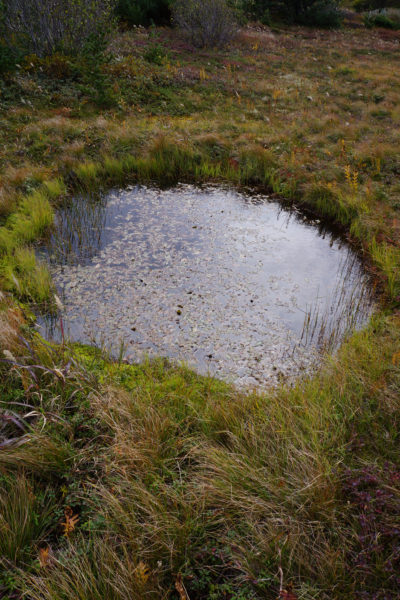
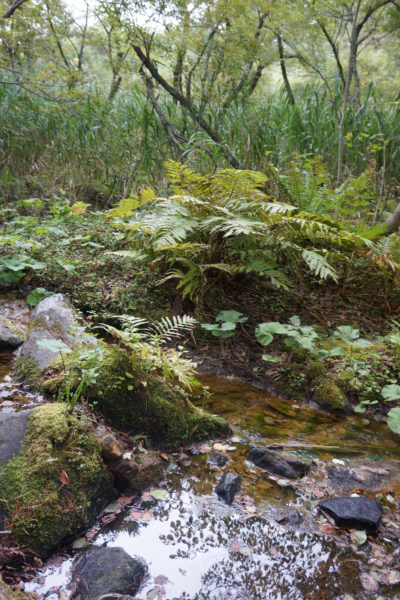
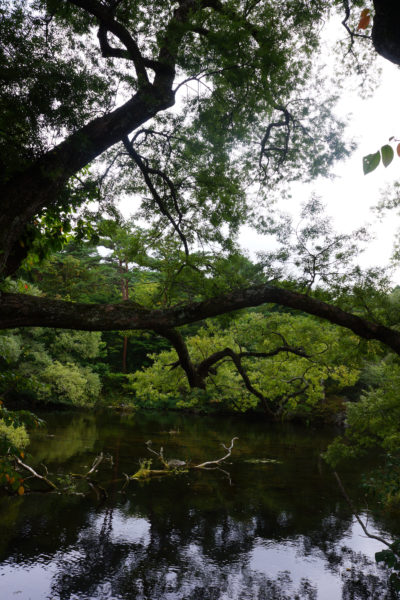
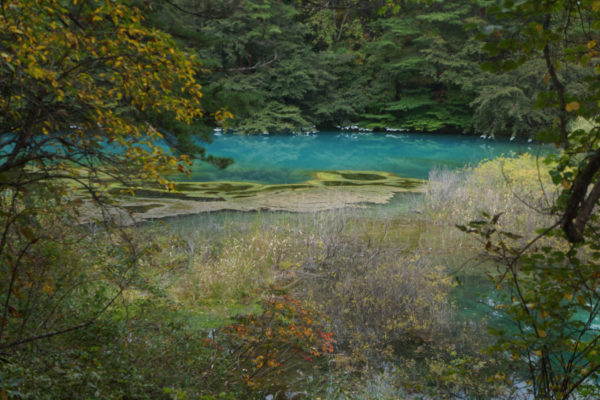
On the very popular Gosyokunuma Trail (the “Five Colored Ponds”) we encounter many interesting ferns and groups of Japanese tourists. But what we mostly saw was a variable series of wetlands, streams swamps and one of the five famous ponds was never far from the trail. The last pond pictured Yanagi-numa, “willow Pond” was of course my favorite.

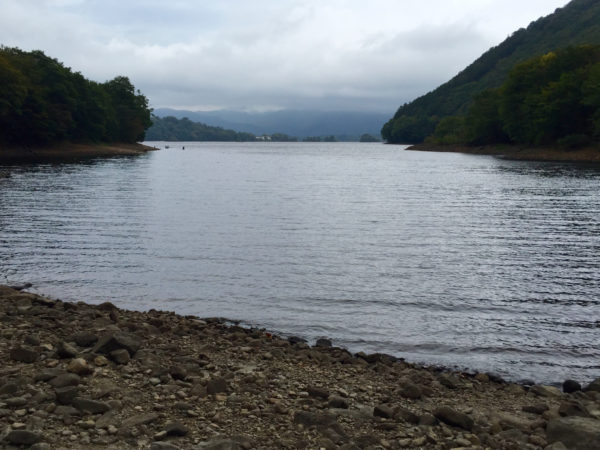
Lake Hibara seemed like a gloomy Scottish loch and offered a particularly rare ferns, Isoetes.
The brooding sky was the typhoon that passed through Japan while we travelled.
The first raindrops hit the windshield as our bus headed back to the hotel for the day, and the storm pummeled the park while we slept.
We left the park under clearing skies in the morning.

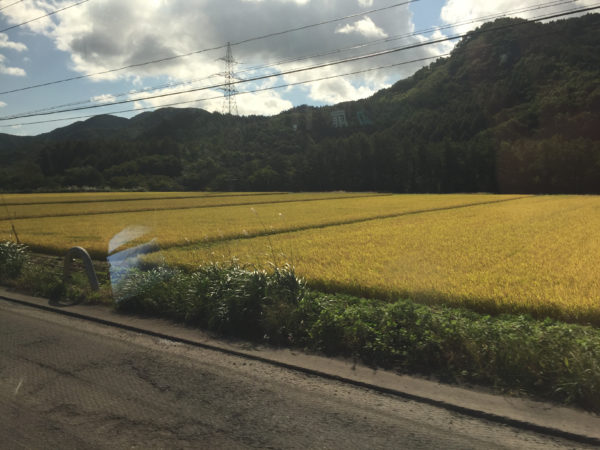
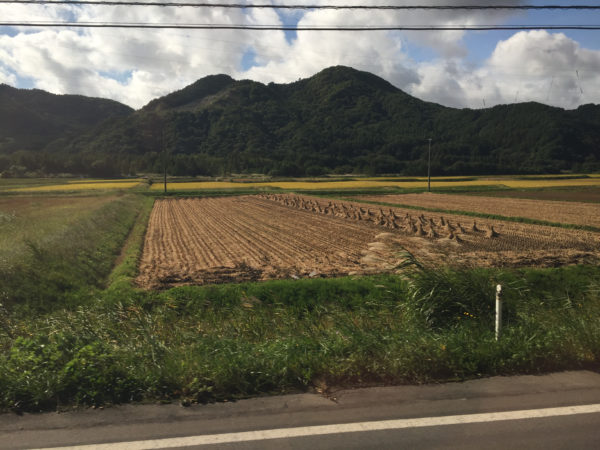
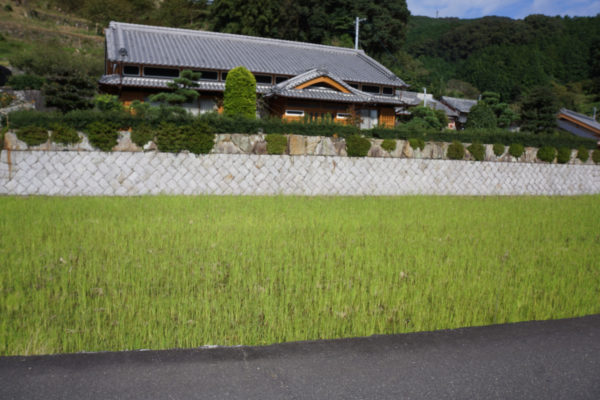
If anything defines the landscape of Japan more than water it is rice fields.
A rice crop is totally dependent on water and the movement and control of this water
shapes every village and agricultural area we crossed.

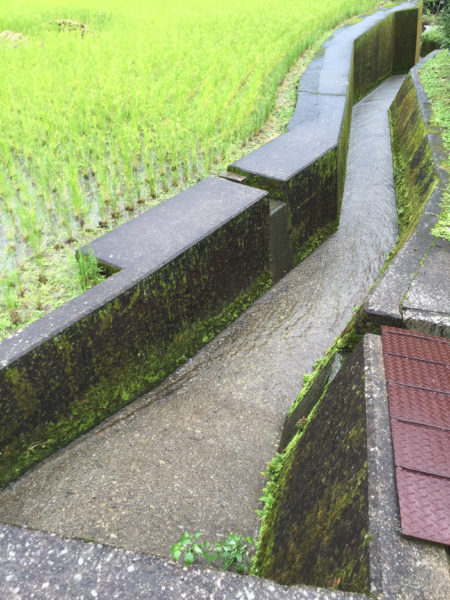
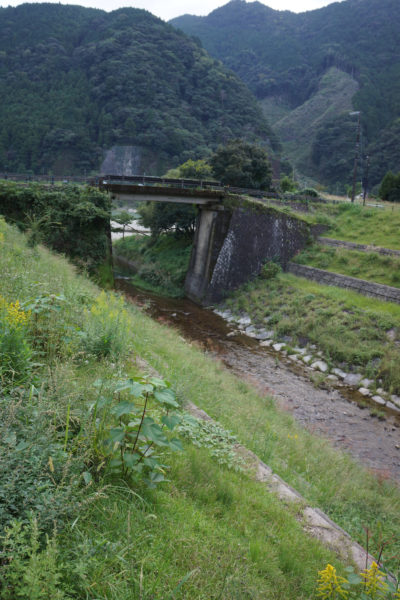
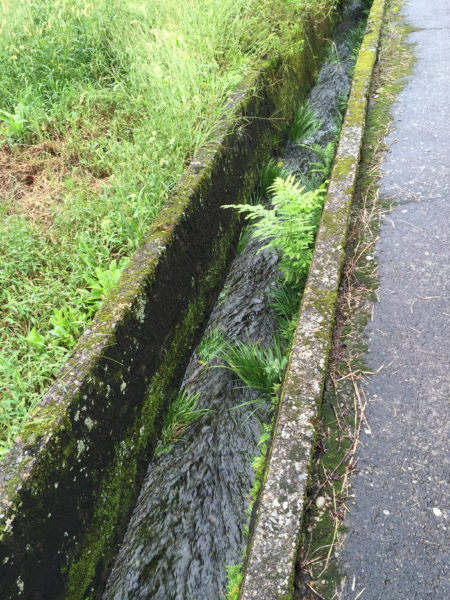
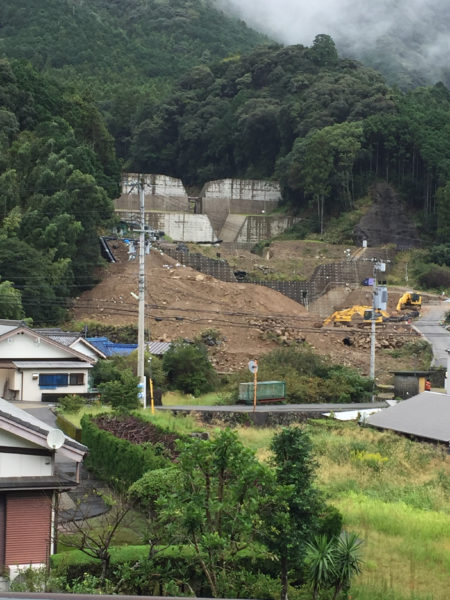
The Kii Peninsula where we spent the second half of our trip is considered by climatologist to be the wettest subtropical region in the world. Some areas receive up to 200 inches of rain in a year. Human have been living here for thousands of years and have created canals,channels, ditches and weirs all in an effort to control the waters that can cause massive landslides and floods.

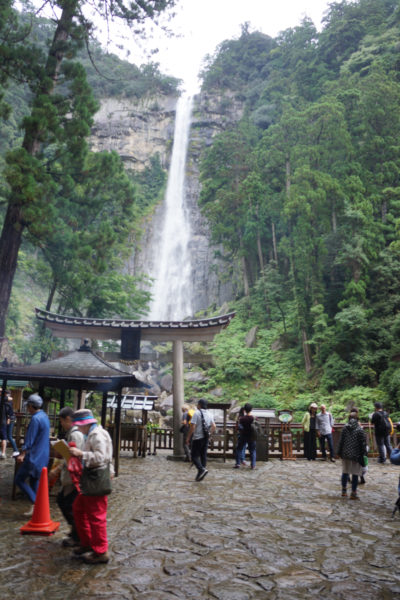
It is also a region of waterfalls. We spent the better part of an afternoon looking at ferns and basking in the misty of Nachi Falls, Japan’s most revered water fall, devoted to Kannon, or Kwanyin, and said to represent eternally flowing divine compassion. It was a beautiful and busy site.

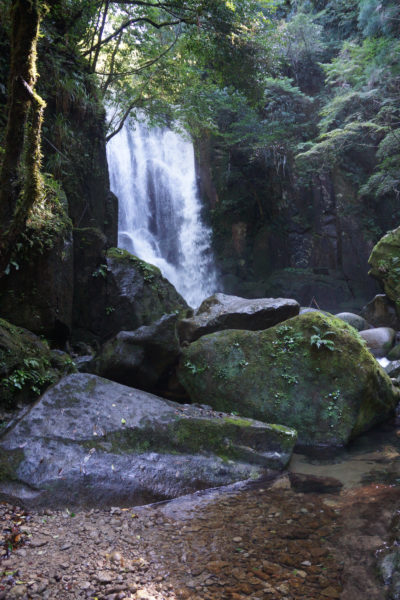
Kuwanoki Falls was a different story. I raced ahead of the group and enjoyed a few moments alone in the depths of the forest at the foot of these falls, another of the most revered falls in Japan.

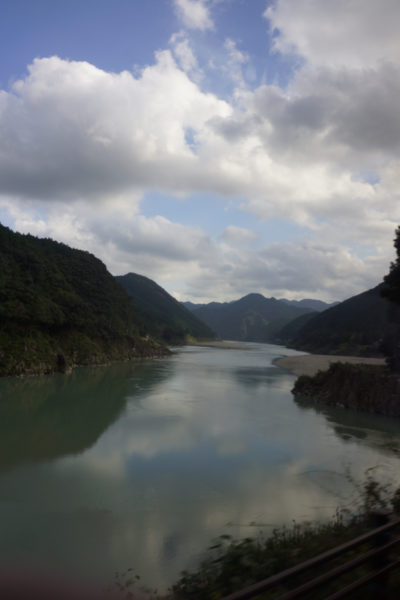
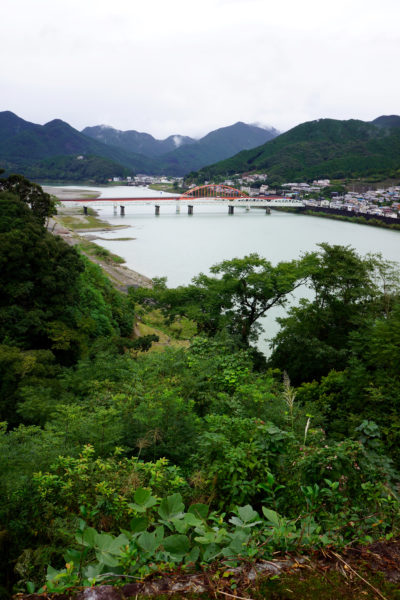
All of our travels in this region centered on the Kumano River which is fed by the innumerable streams and lesser rivers of the area. it was our near constant companion as we drove up and down its length on our way to fern viewing sites. The river runs along the north boundary of Shingu, the town where we stayed and was just blocks from our hotel.

The view from an old fort above our hotel looking back up the Kumano River toward the mountains that are it’s source, and where we spent time hiking and looking at ferns.

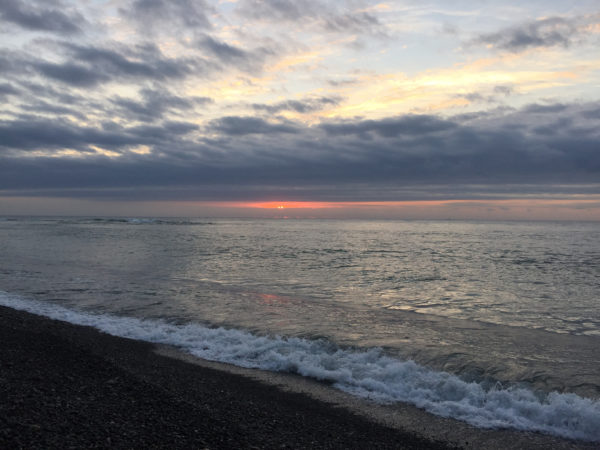
On the last day of our tour I woke early and headed down to where the river vanished into the Pacific Ocean.I tried to imagine the Washington coast out their somewhere across the one body of water we share with Japan.
I have seen the sun set many times into the Pacific at locations all along the west coast of North America; I wanted to see the sun rise out of the Pacific once.
The clouds barely parted on the horizon right at sunrise and the bright red ball that graces the Japanese flag made a brief appearance.

Add a Comment

« Previous Page Next Page »

  • Archives

    • June 2018
    • December 2017
    • November 2017
    • May 2017
    • January 2017
    • November 2016
    • May 2016
    • April 2016
    • December 2015
    • November 2015
    • October 2015
    • September 2015
    • August 2015
    • July 2015
    • June 2015
    • May 2015
    • April 2015
    • February 2015
    • January 2015
    • December 2014
    • November 2014
    • October 2014
    • September 2014
    • August 2014
    • July 2014
    • June 2014
    • May 2014
    • April 2014
    • March 2014
    • February 2014
    • January 2014
    • December 2013
    • November 2013
    • October 2013
    • September 2013
    • August 2013
    • July 2013
    • June 2013
    • May 2013
    • April 2013
    • March 2013
    • February 2013
    • January 2013
    • October 2012
    • September 2012
    • August 2012
    • July 2012
    • June 2012
    • May 2012
    • April 2012
    • March 2012
    • February 2012


(c) 2015 Daniel Mount Gardens.
Daniel Mount GardensLogo Header Menu
  • C.V.
  • Services
  • Classes
  • Writing
  • Blog
  • Contact