Archives
- June 2018
- December 2017
- November 2017
- May 2017
- January 2017
- November 2016
- May 2016
- April 2016
- December 2015
- November 2015
- October 2015
- September 2015
- August 2015
- July 2015
- June 2015
- May 2015
- April 2015
- February 2015
- January 2015
- December 2014
- November 2014
- October 2014
- September 2014
- August 2014
- July 2014
- June 2014
- May 2014
- April 2014
- March 2014
- February 2014
- January 2014
- December 2013
- November 2013
- October 2013
- September 2013
- August 2013
- July 2013
- June 2013
- May 2013
- April 2013
- March 2013
- February 2013
- January 2013
- October 2012
- September 2012
- August 2012
- July 2012
- June 2012
- May 2012
- April 2012
- March 2012
- February 2012

The observations and ruminations of a plantsman in the Pacific Northwest
Mar
16
2014
 0
0
I may have spent a good portion of my Hawaiian vacation seeking out, photographing and researching the native flora. That’s fun for me, as I said. But I also have a lazy mind that likes to be lambasted with brightly colored giant flowers and over-sized foliage. I can usually dial-down my need to identify every plant I see and enjoy the beauty, though I actually feel that knowing plants and noticing differences actually enhances and deepens that enjoyment.
So, all the plants in the following photos are non-native. The trouble with paradise is I found many of these nonnative plants so alluring.I know if I lived in Hawaii I’d be growing plenty of exotics in my garden.
ORCHIDS: If any flower is emblematic of the tropical paradise that Hawaii is promoted as, it is the orchid. There are only 3 very rare species of orchid in the Hawaiian Islands, but there are plenty of orchids being grow for local use and for shipment to the mainland as plants or cut flowers. There are 3 species that have become “weedy” that we saw often along the roads, but there are many just growing on chain link fences and in trees.
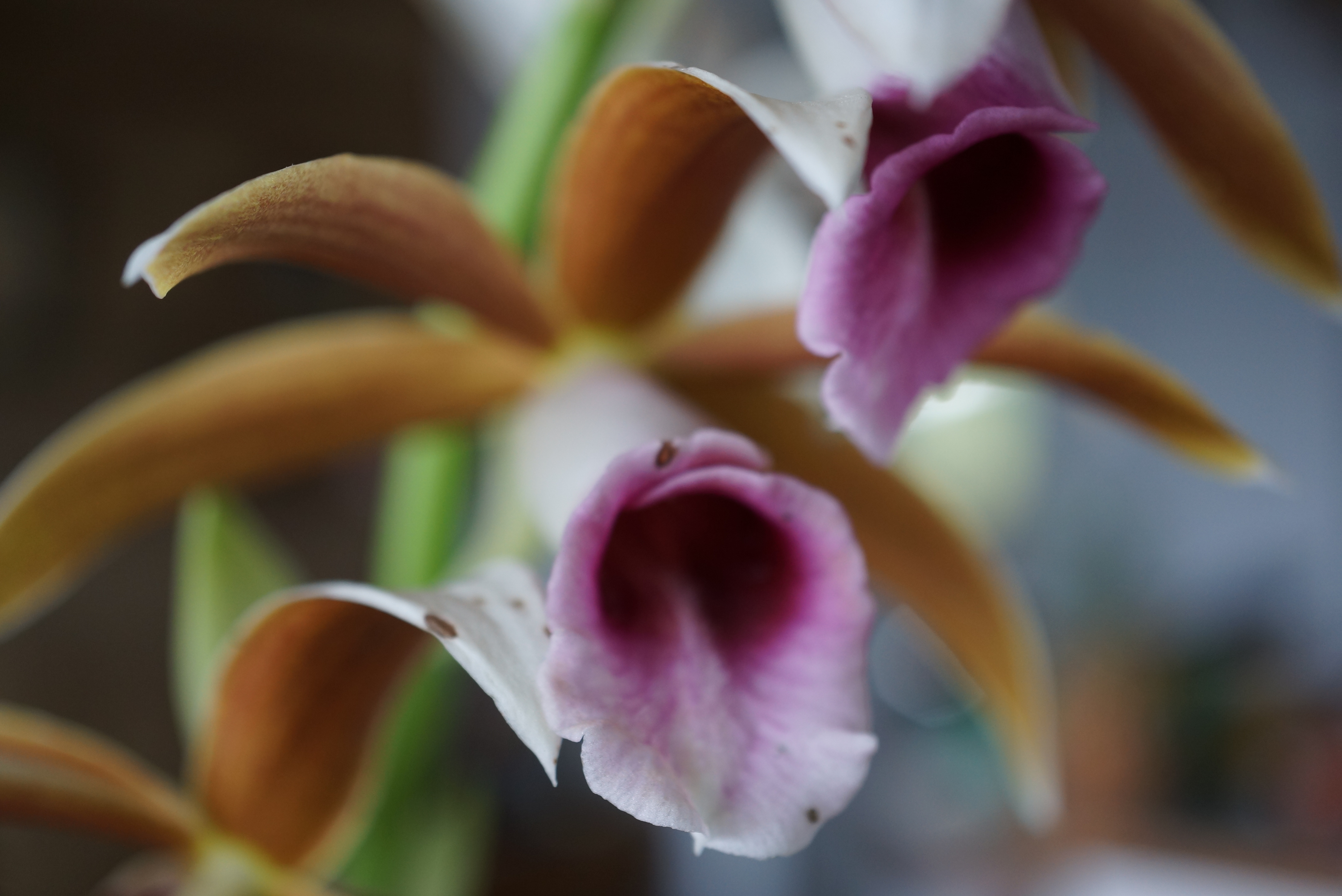
Phaius tankervillea, or nun’s cap orchid is one such naturalized roadside orchid, a real beauty.
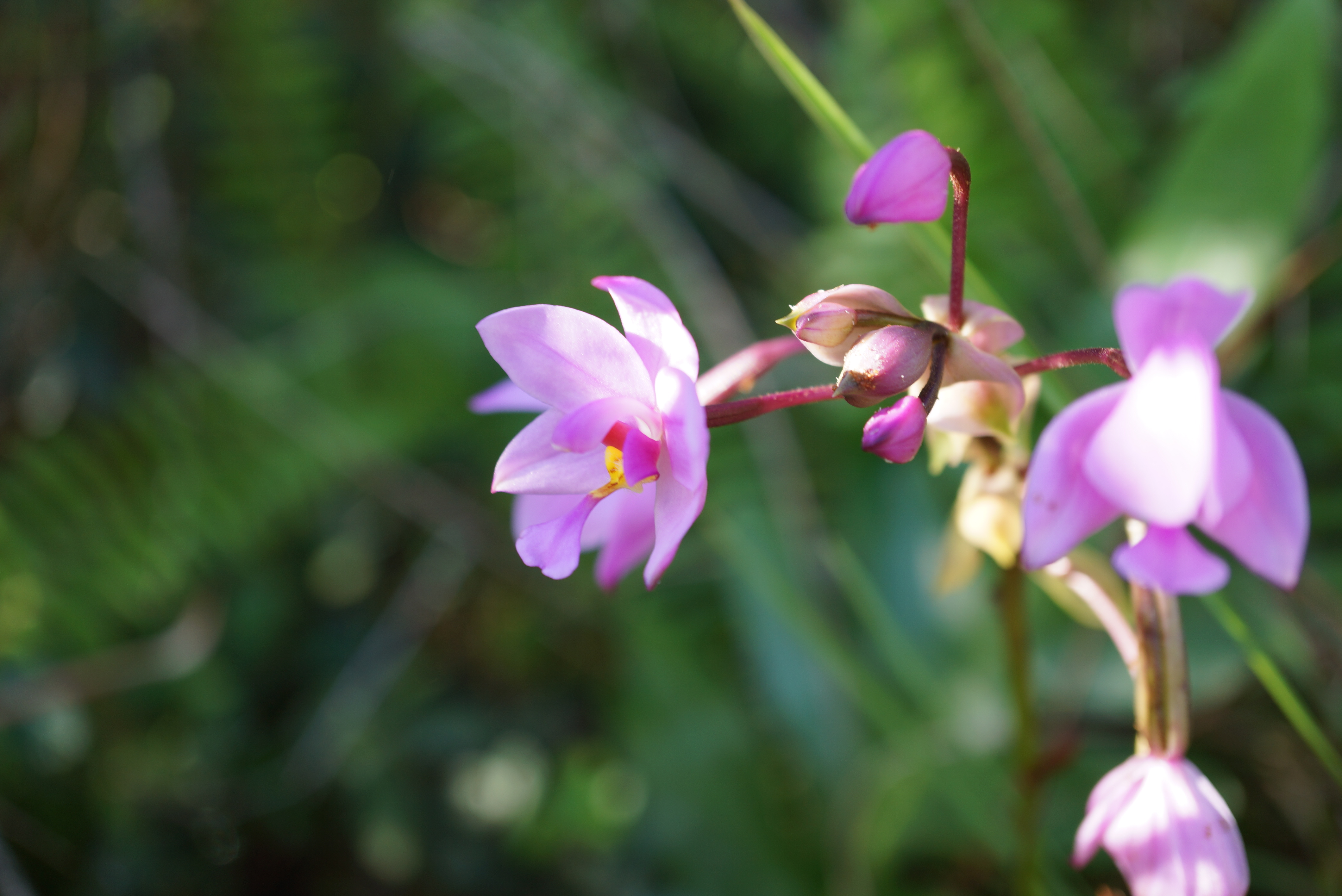
Spathiglottis plicata, or Philippine ground orchid, arrived on the island of Oahu in 1920 and has since spread throughout the islands in a gentle way. Lovely to find it among the weedy grasses on the road side.
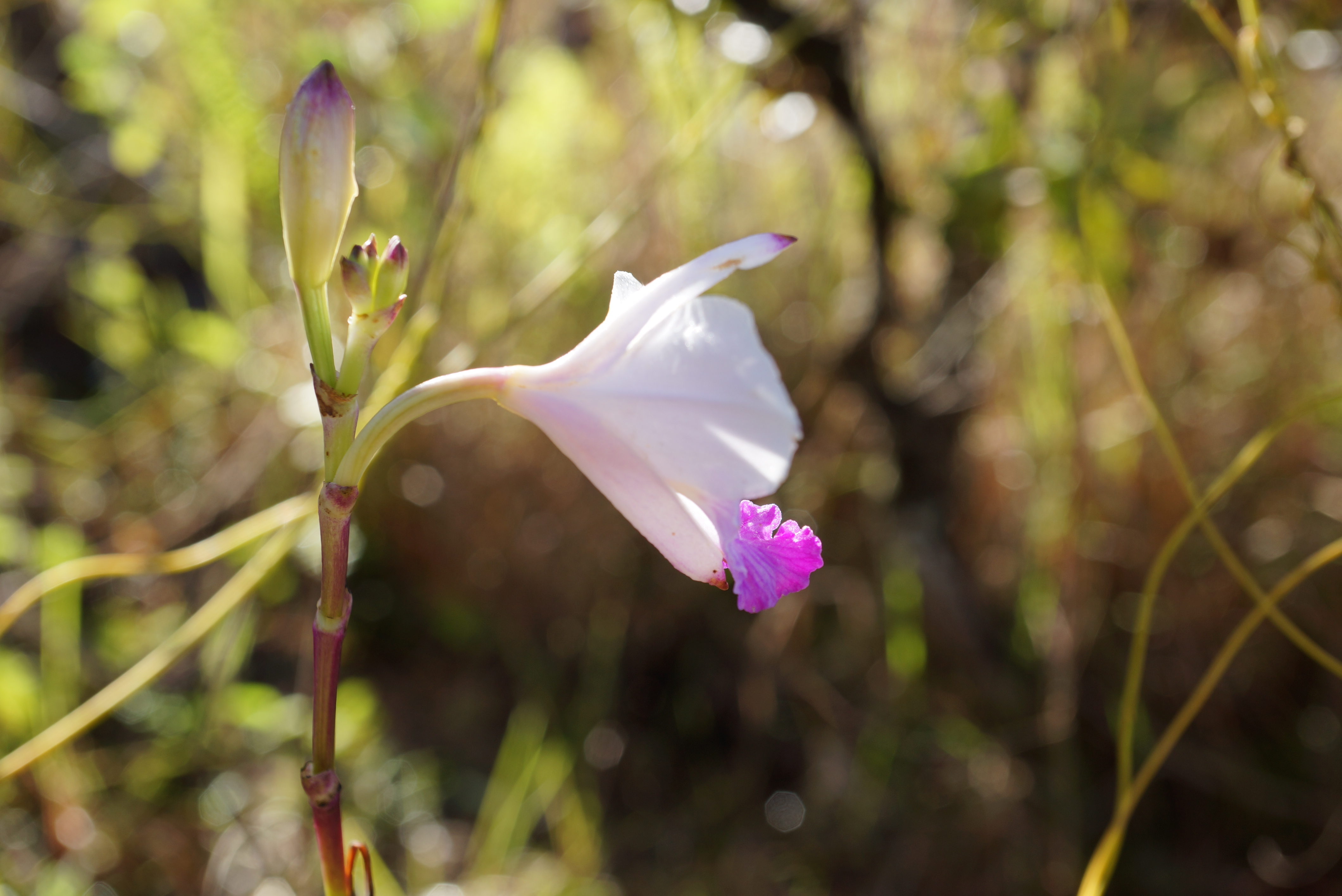
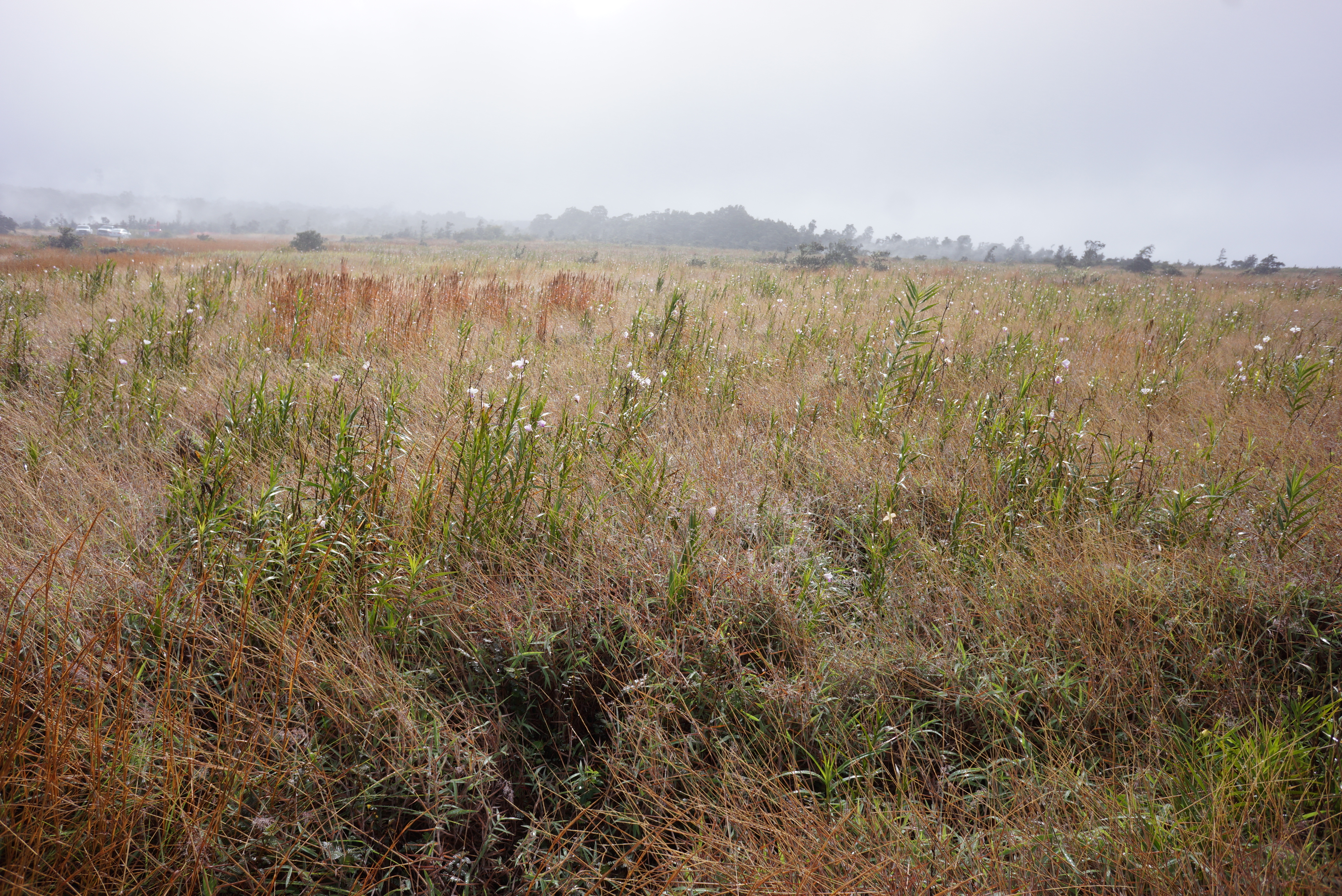
Arundina graminifolia, or bamboo orchid, was the most prevalent naturalized orchid we saw, it was a dramatic member of the meadows in Volcano National Park, as well as along the road side to Kapoho.
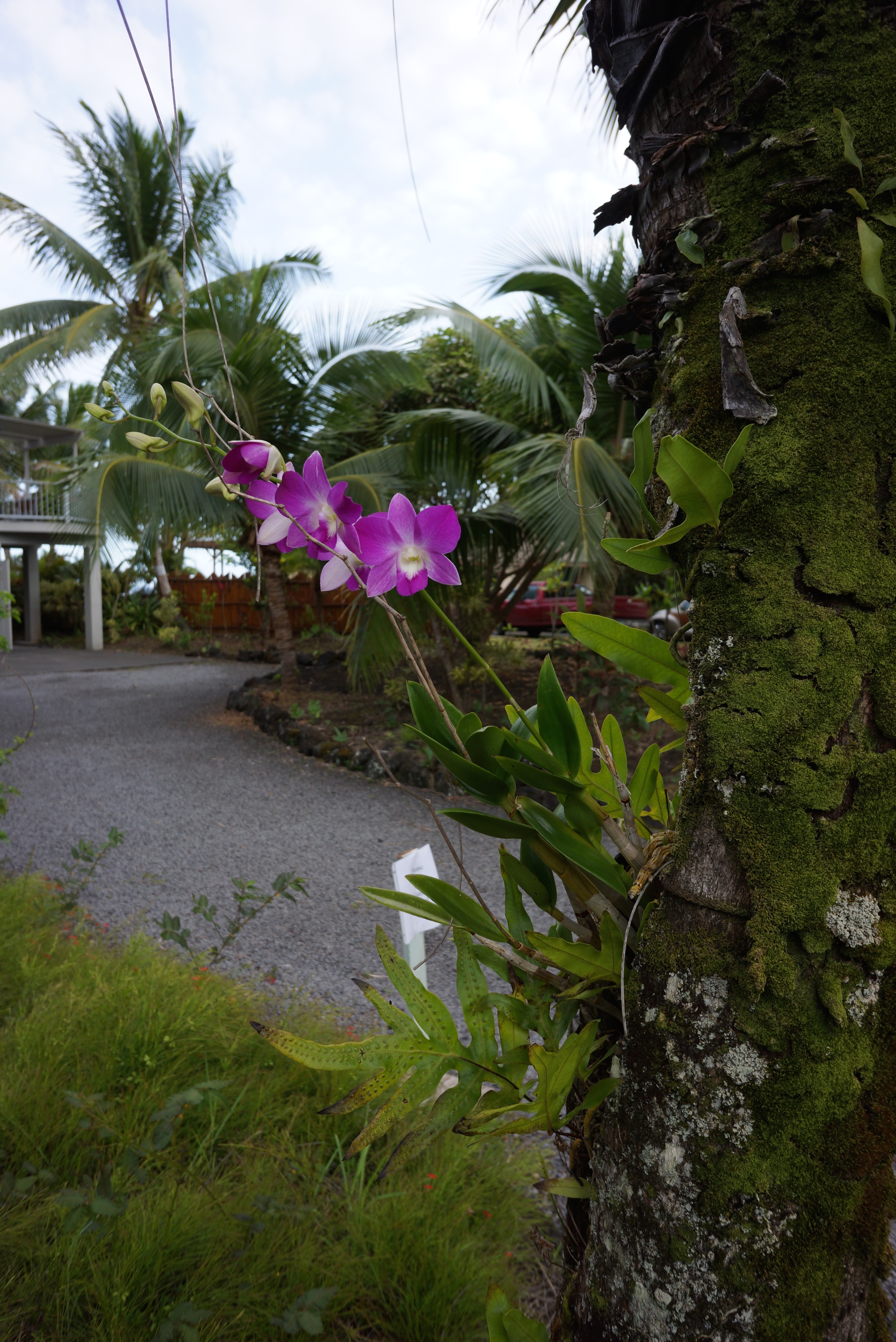
The random orchid on a tree trunk never failed to charm and amaze.
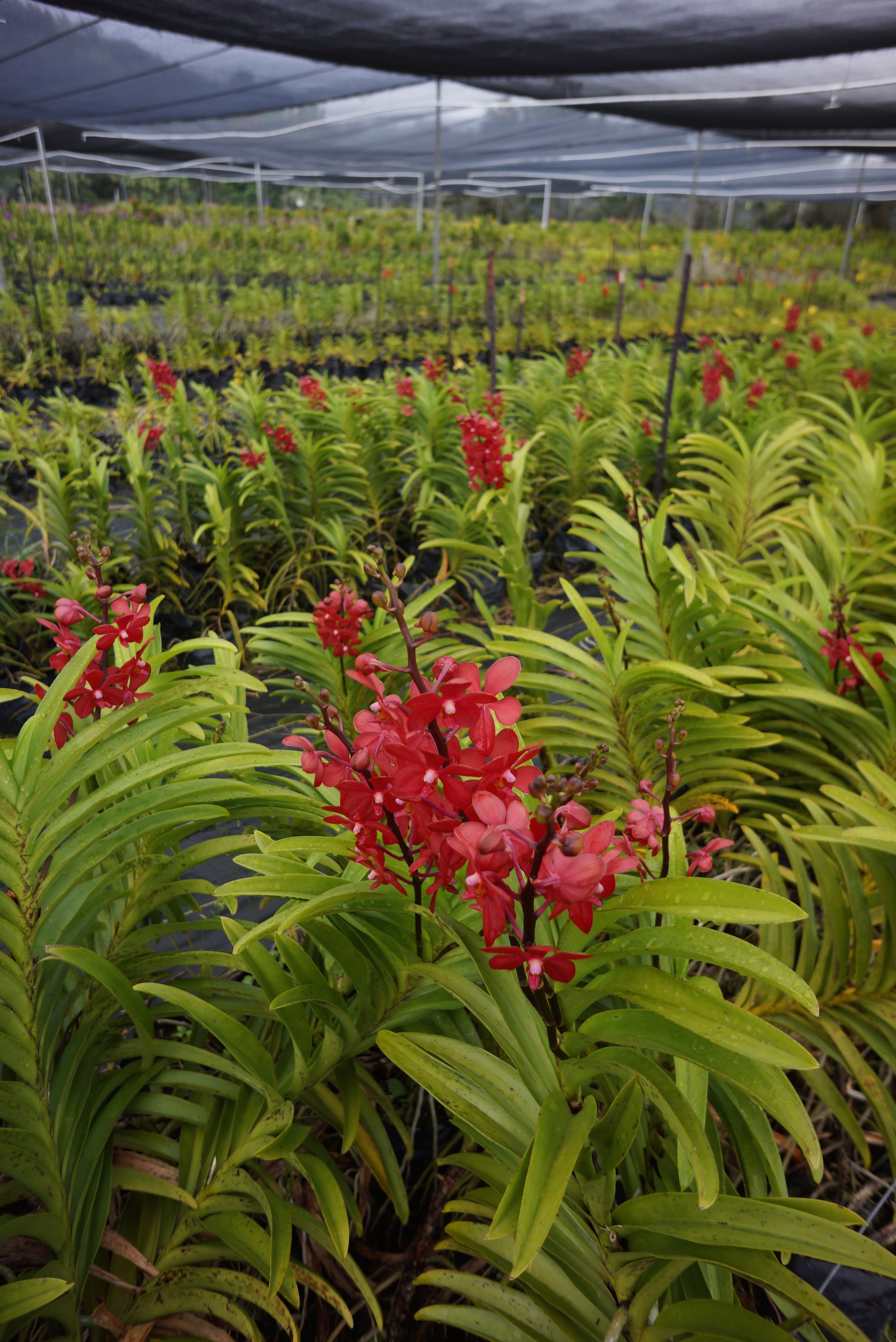
The east side of the Island of Hawaii is famous for it’s orchid nurseries. Mind-boggling numbers of orchids are grown in shade houses all over this side of the island.
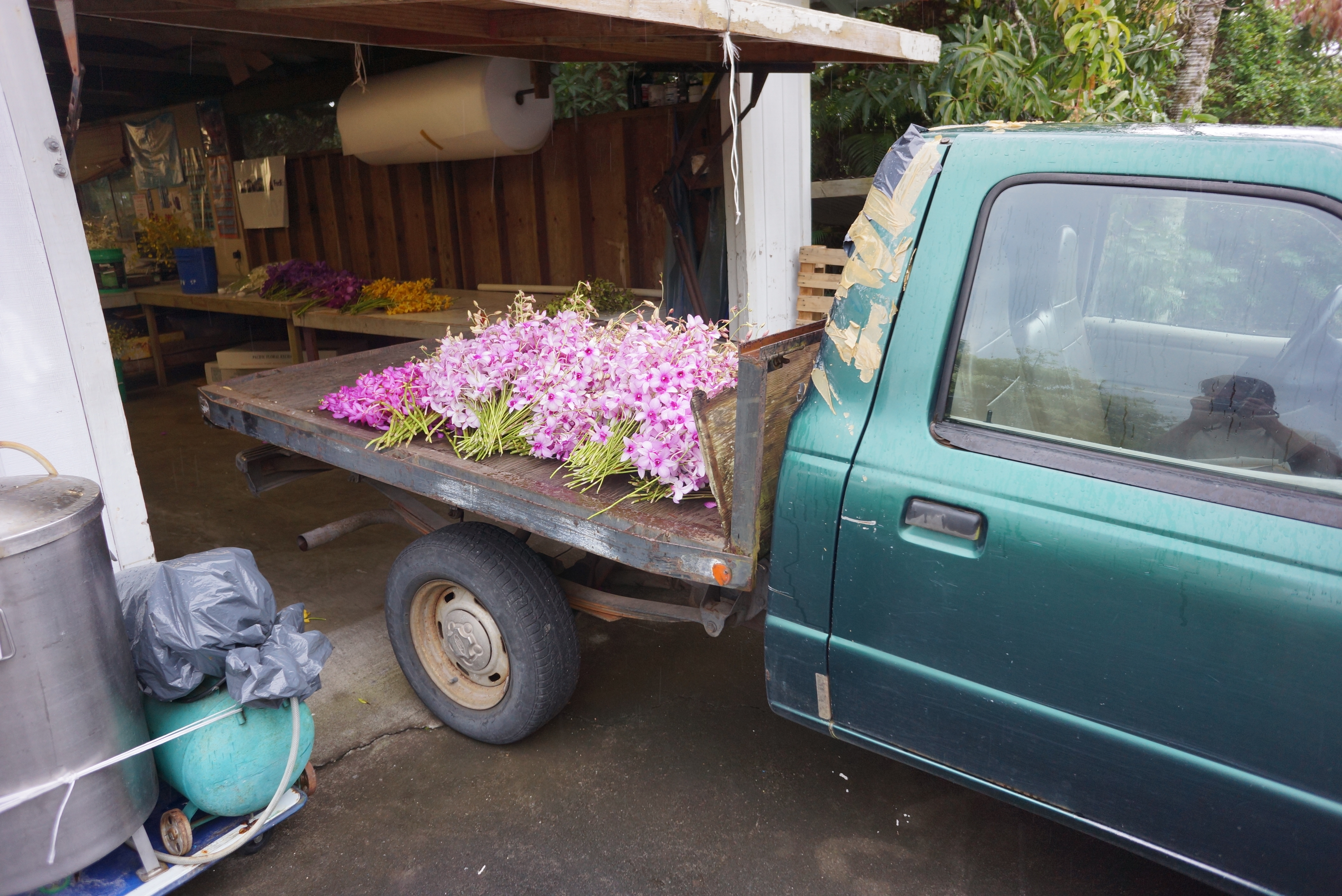
Vandas heading off to market.
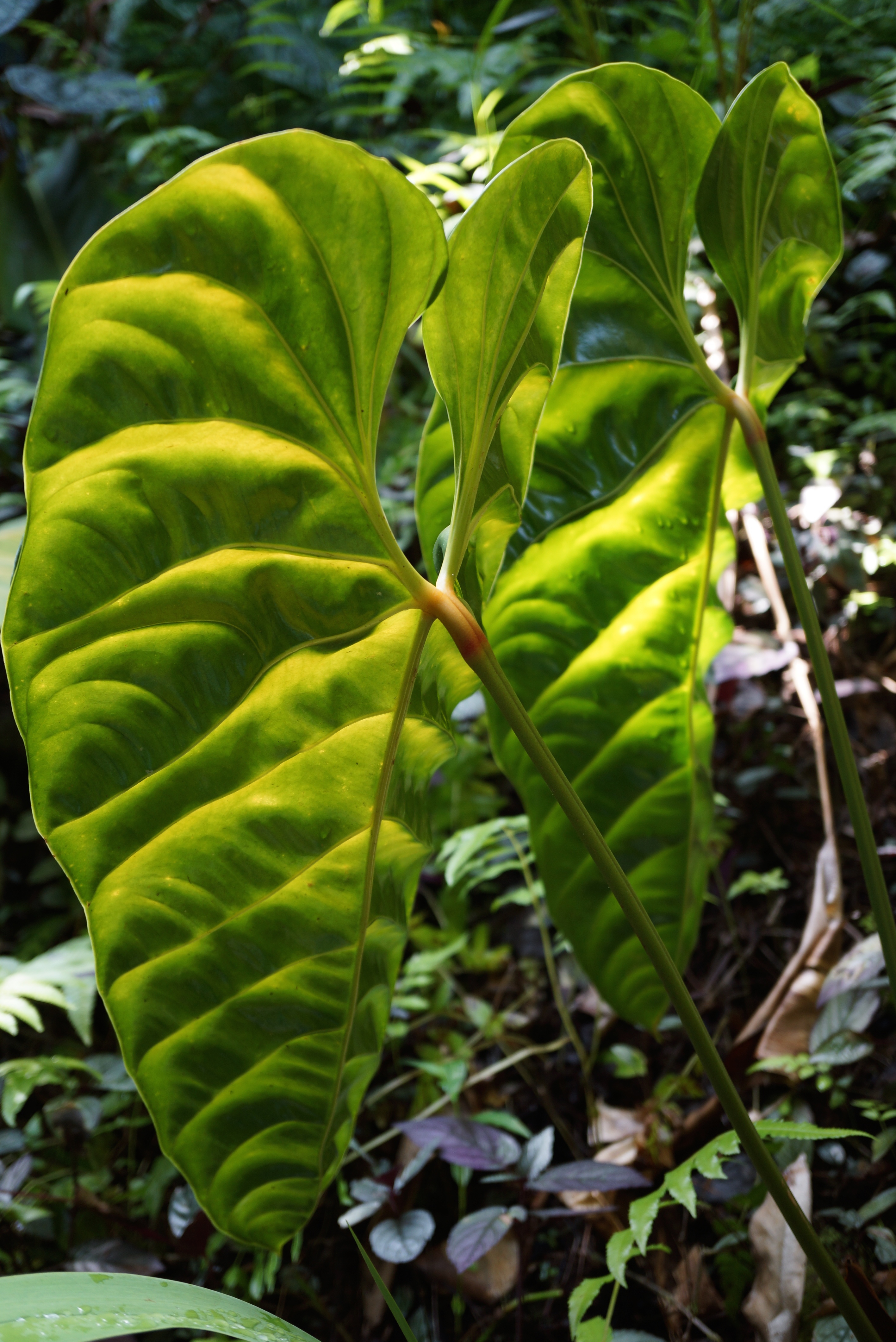
ANTHURIUMS: After orchids I think of anthuriums as the most iconic flower of the islands. We saw weedy stands in old gardens along the highway. But we also saw a large amount of them at the Hawaii Tropical Botanical Garden. Here’s a sampling:
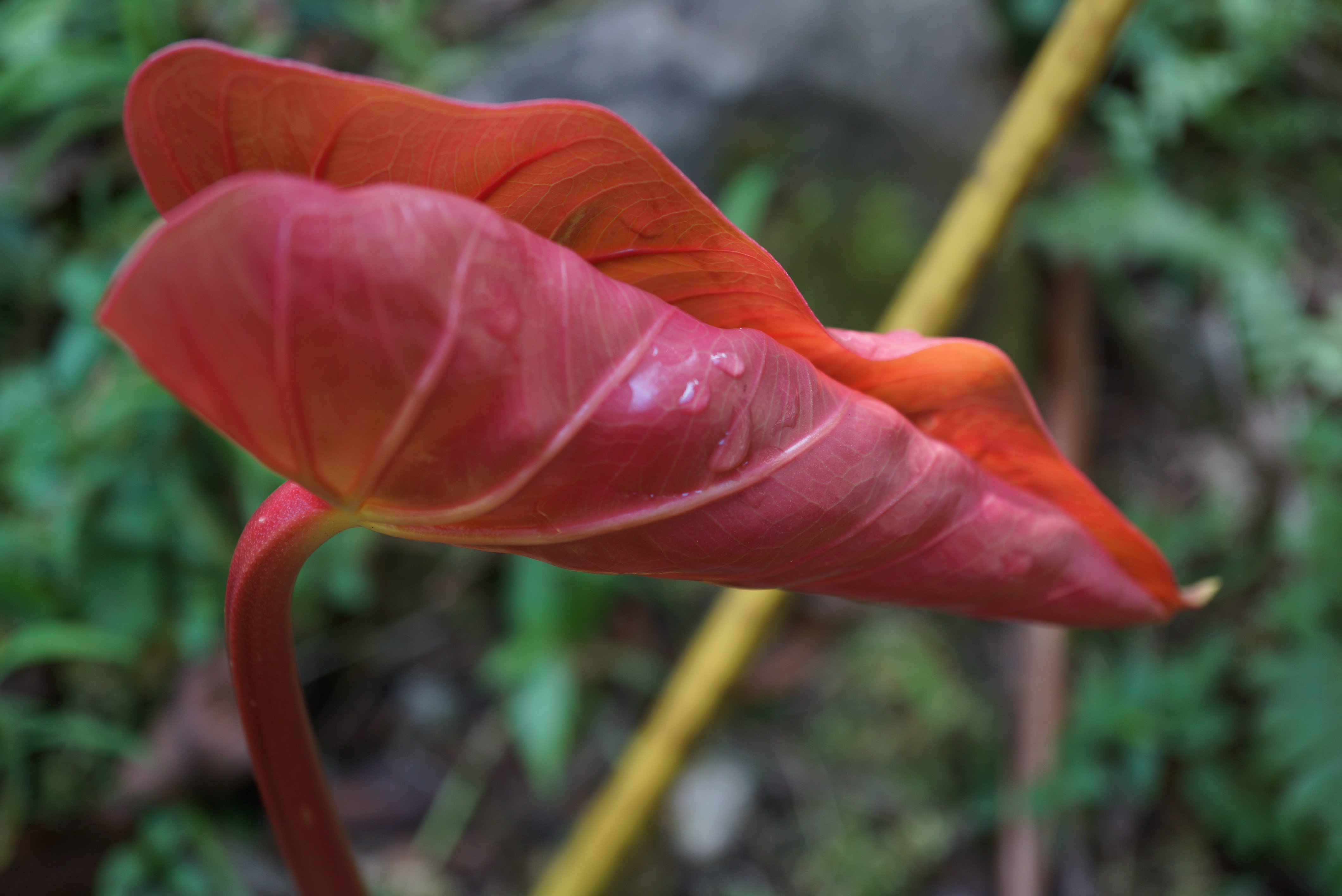
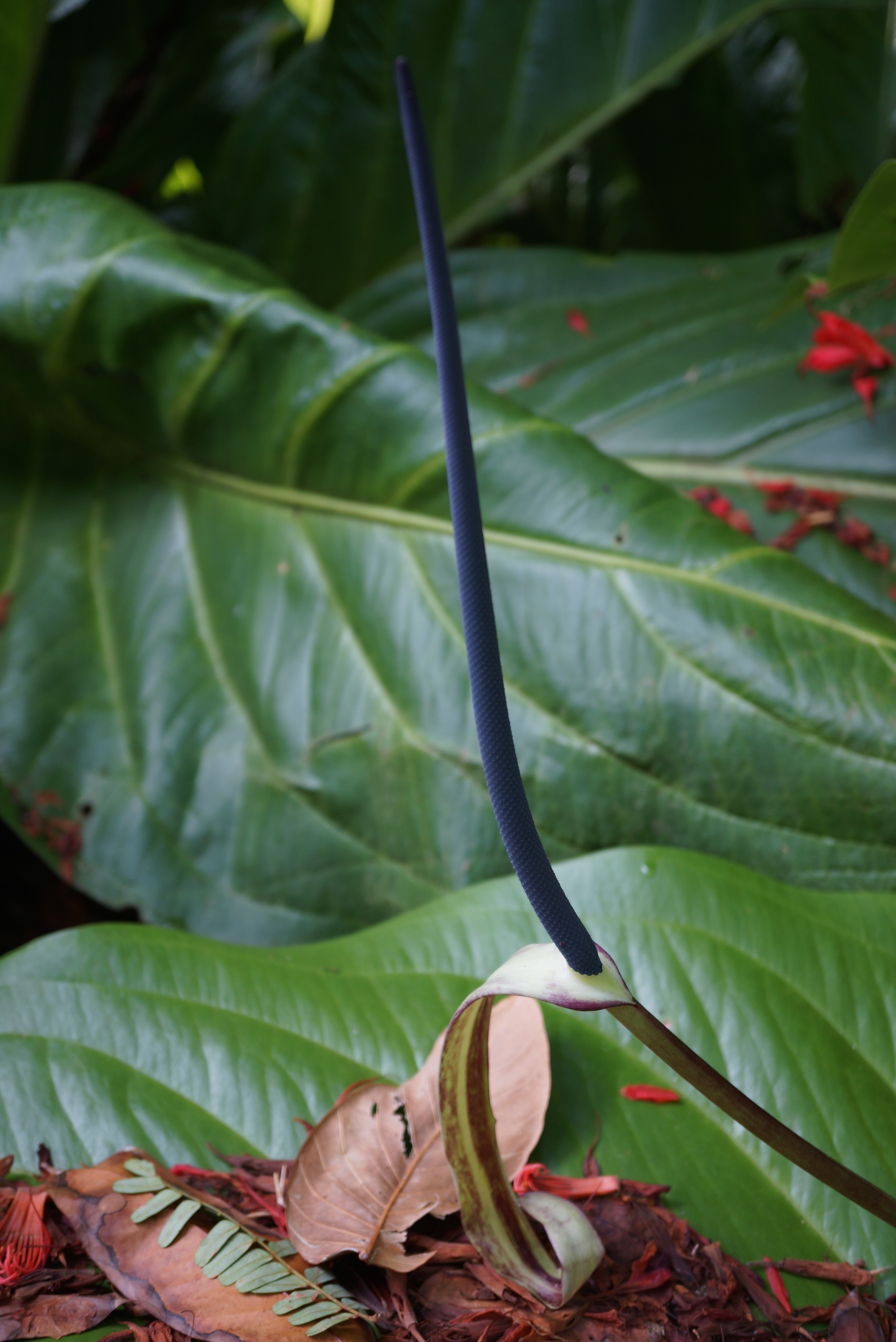
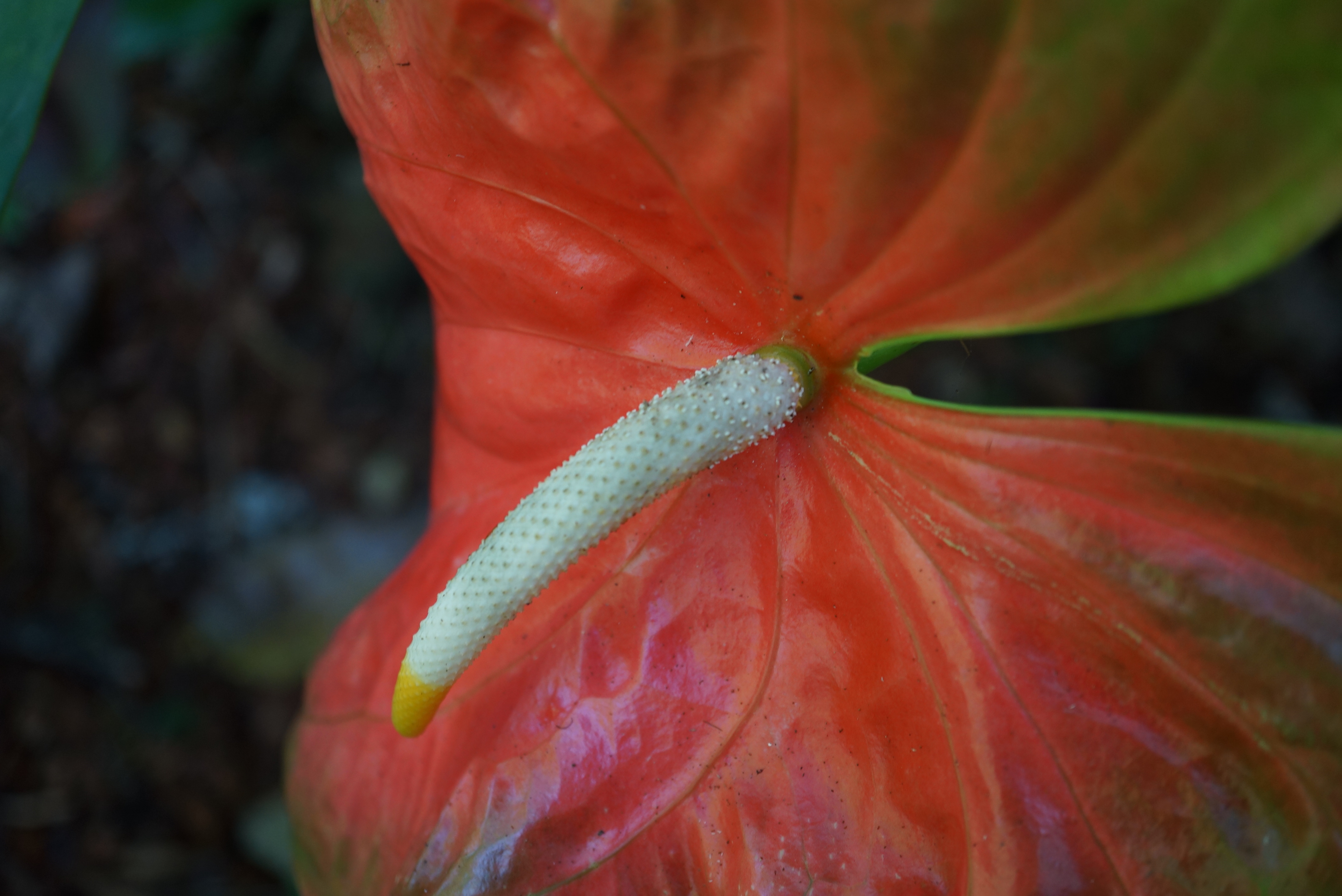
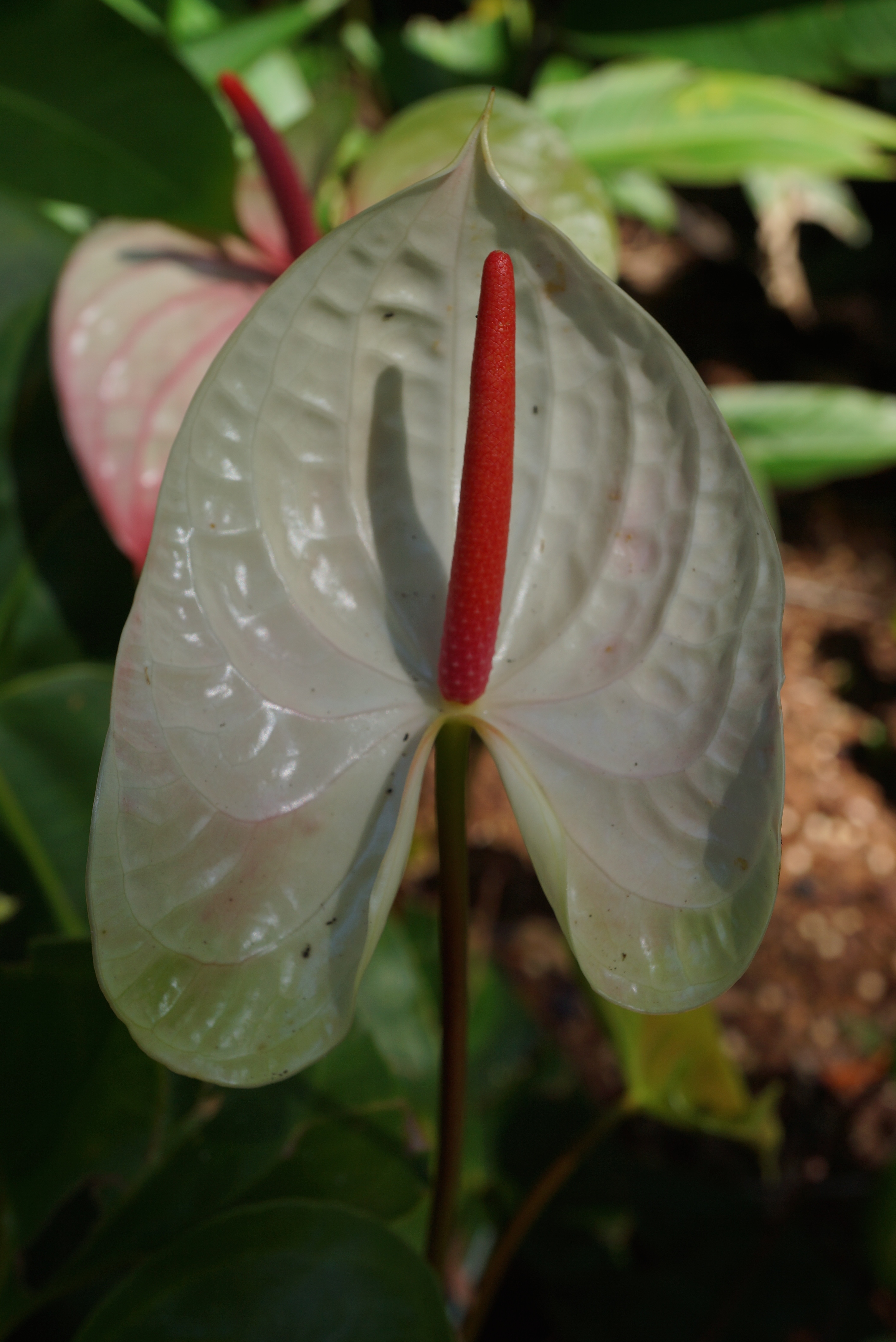
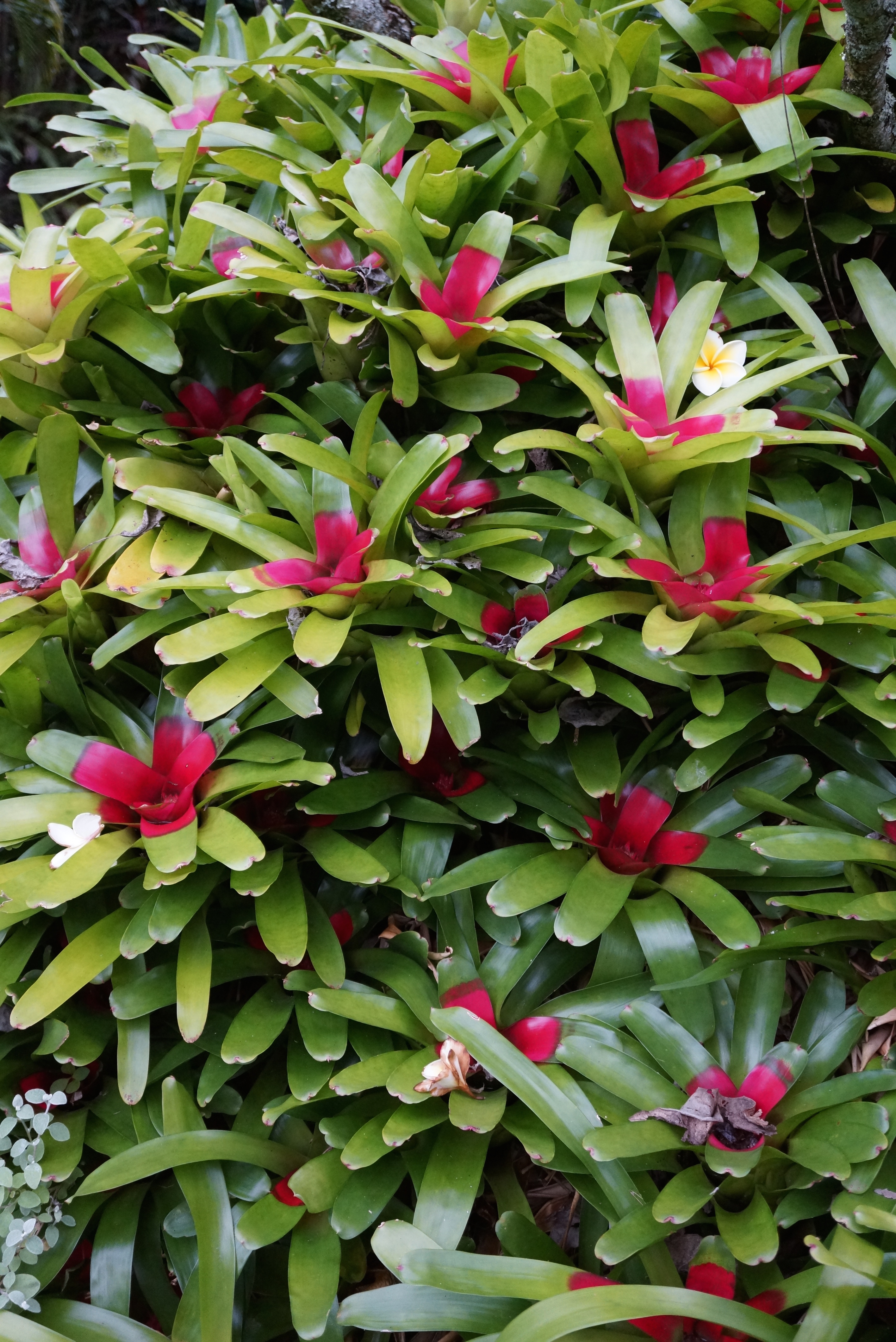
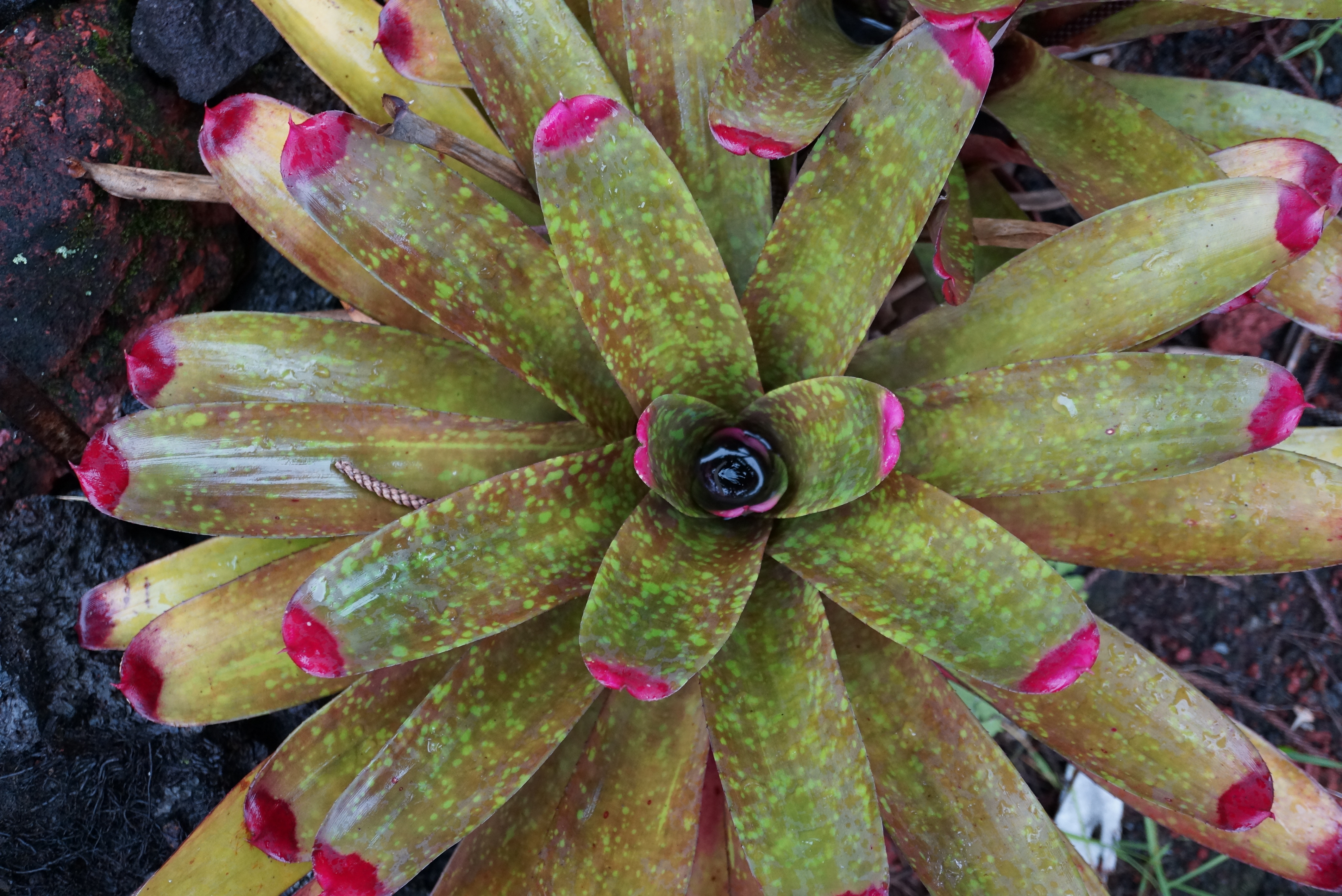
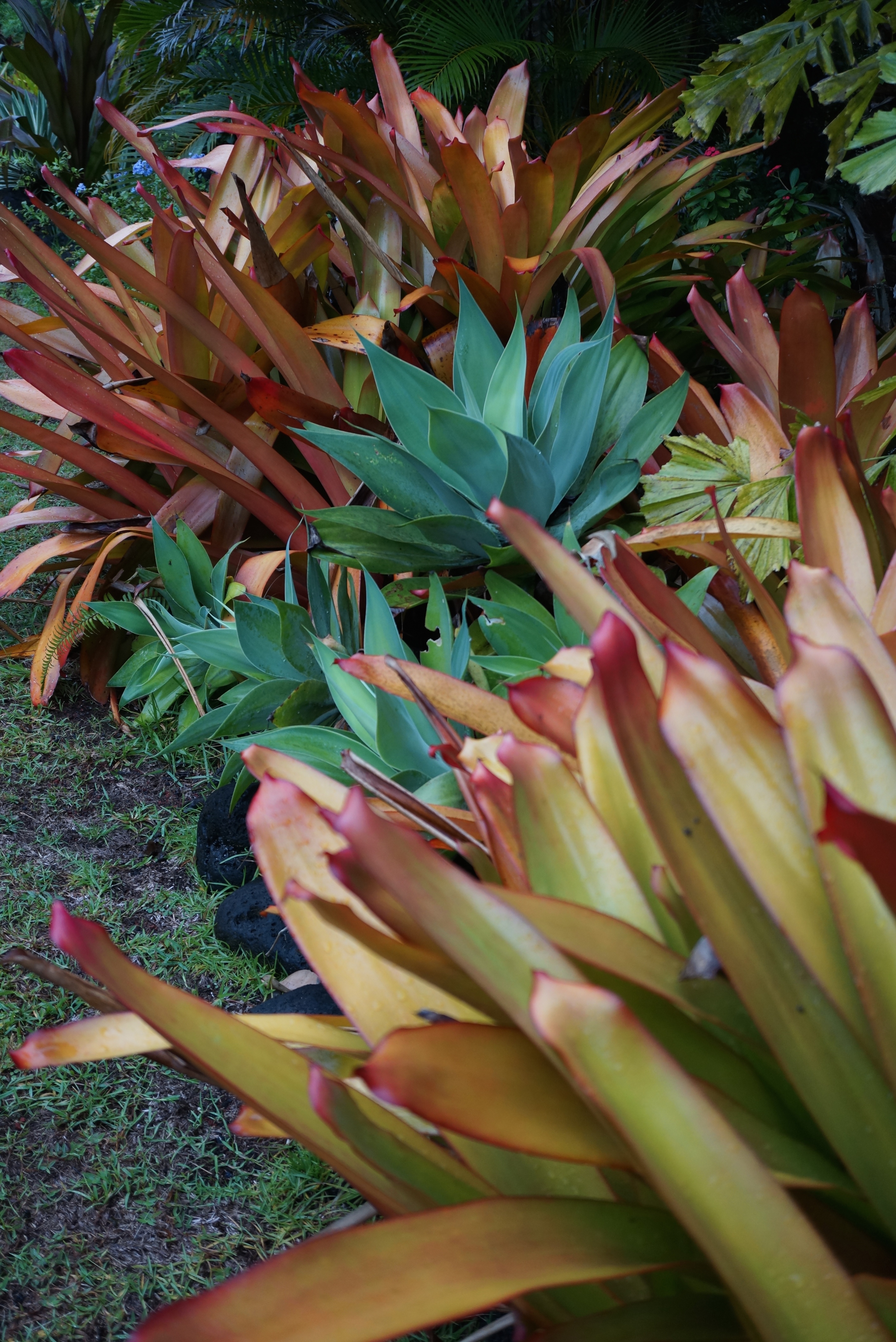
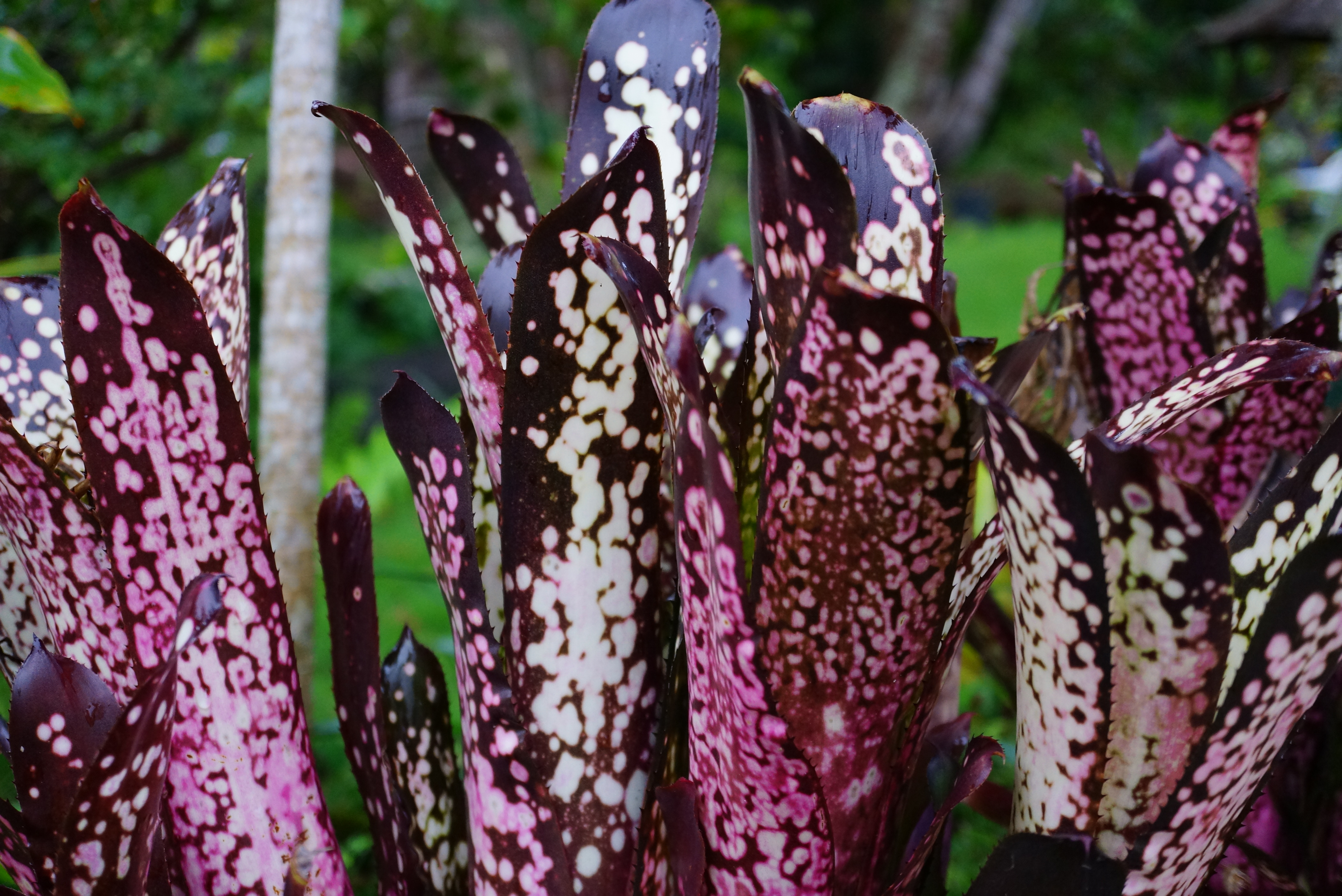
BROMELIADS: It took me almost a week to turn my camera to the bromeliads, absolutely everywhere. Such a variety of sizes and colors, even without flowers. How can you go wrong? I’ll definitely be planting bromeliads when I move to Hawaii.
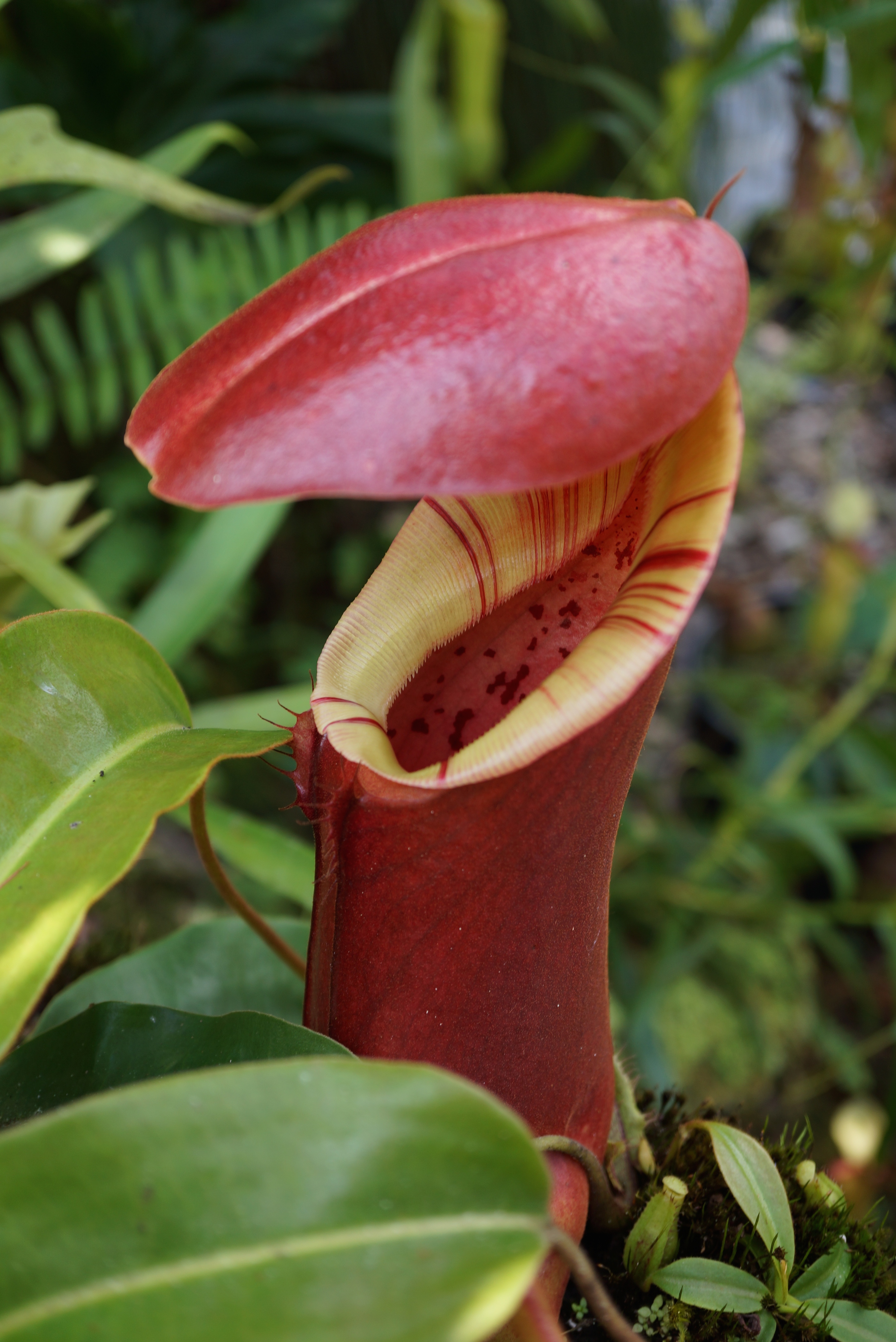
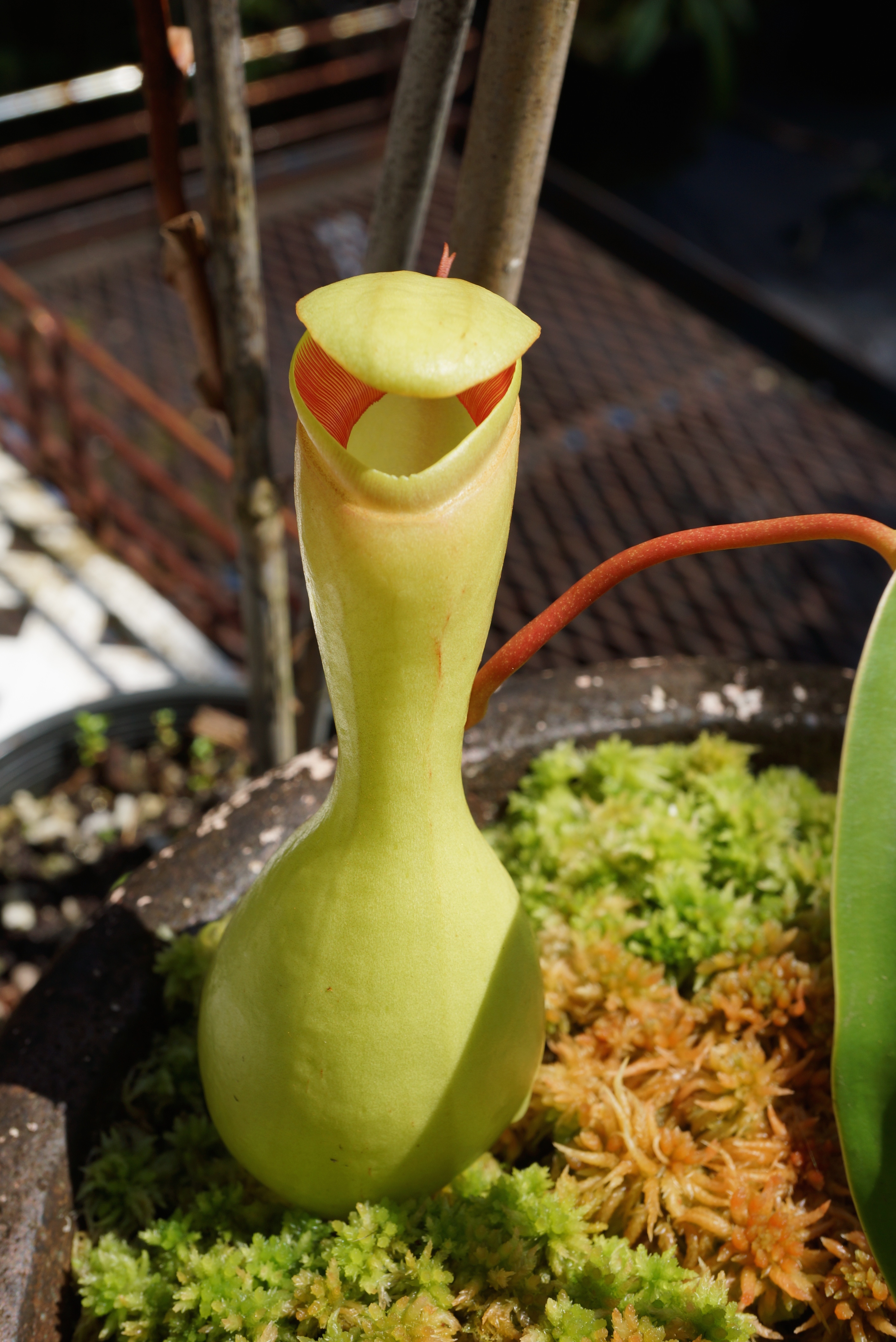
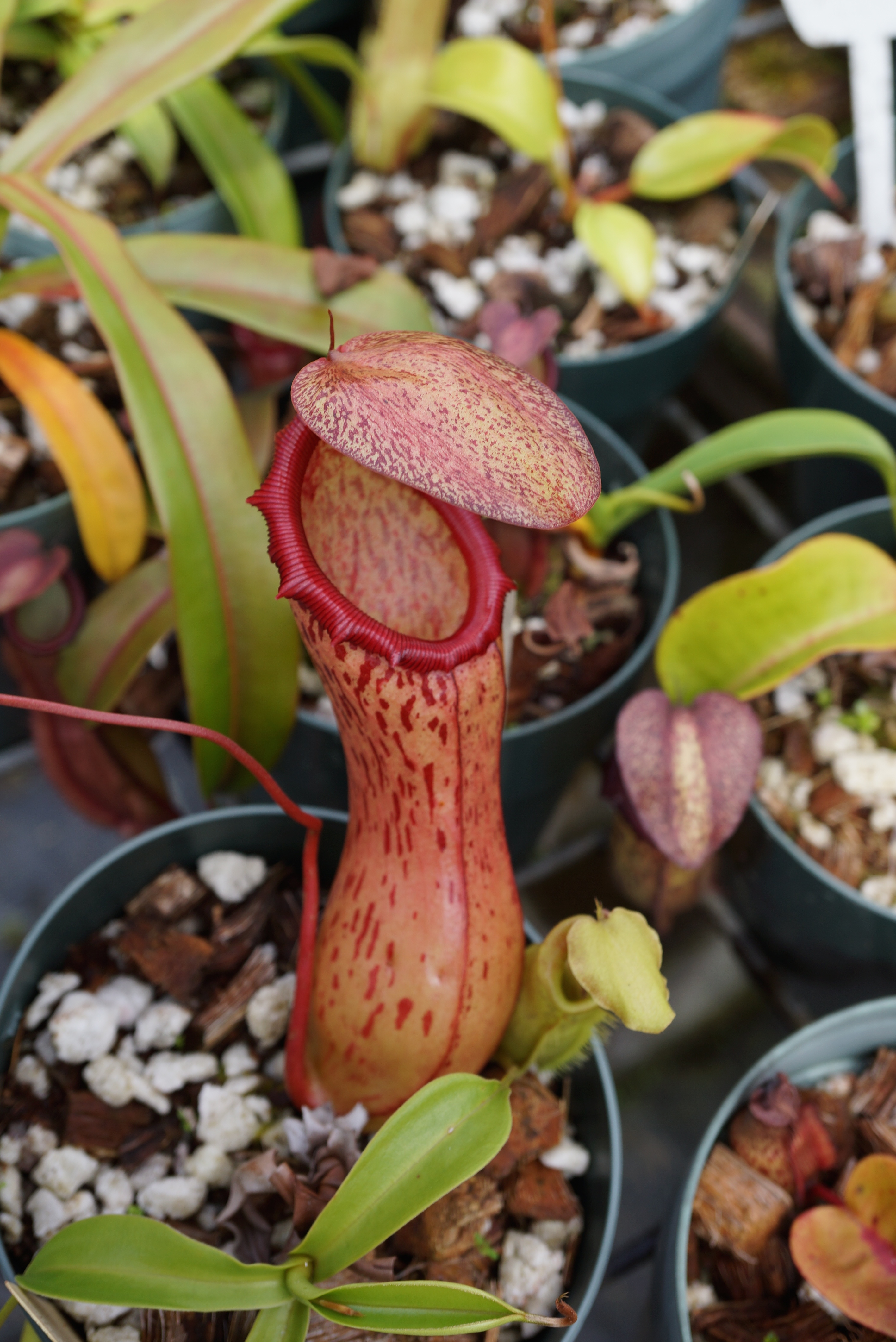
NEPENTHES: We visited Lelani Nepenthes Nursery where we got a personal glimpse into nepenthes hybridizing from owner and world-renowned hybridizer Sam Estes. We learned a lot. Firstly, nepenthes are photosynthetic vines that are only partially insectivorous, ni to swamp dwellers like most insectivorous plants. The pitcher develops on the end of the leaf and is often held high up in trees on the climbing ever green plants. Though the center of natural distribution is in Borneo and the Philippines, there is a species known from Madagascar and several from northern Australia. Sam holds one of the premier collections in the world and has introduced over 300 named hybrids, and had thousands more waiting for evaluation. I only have a n handful of photos of his work with this genus, visit his website to see the breadth to which this man is creating.
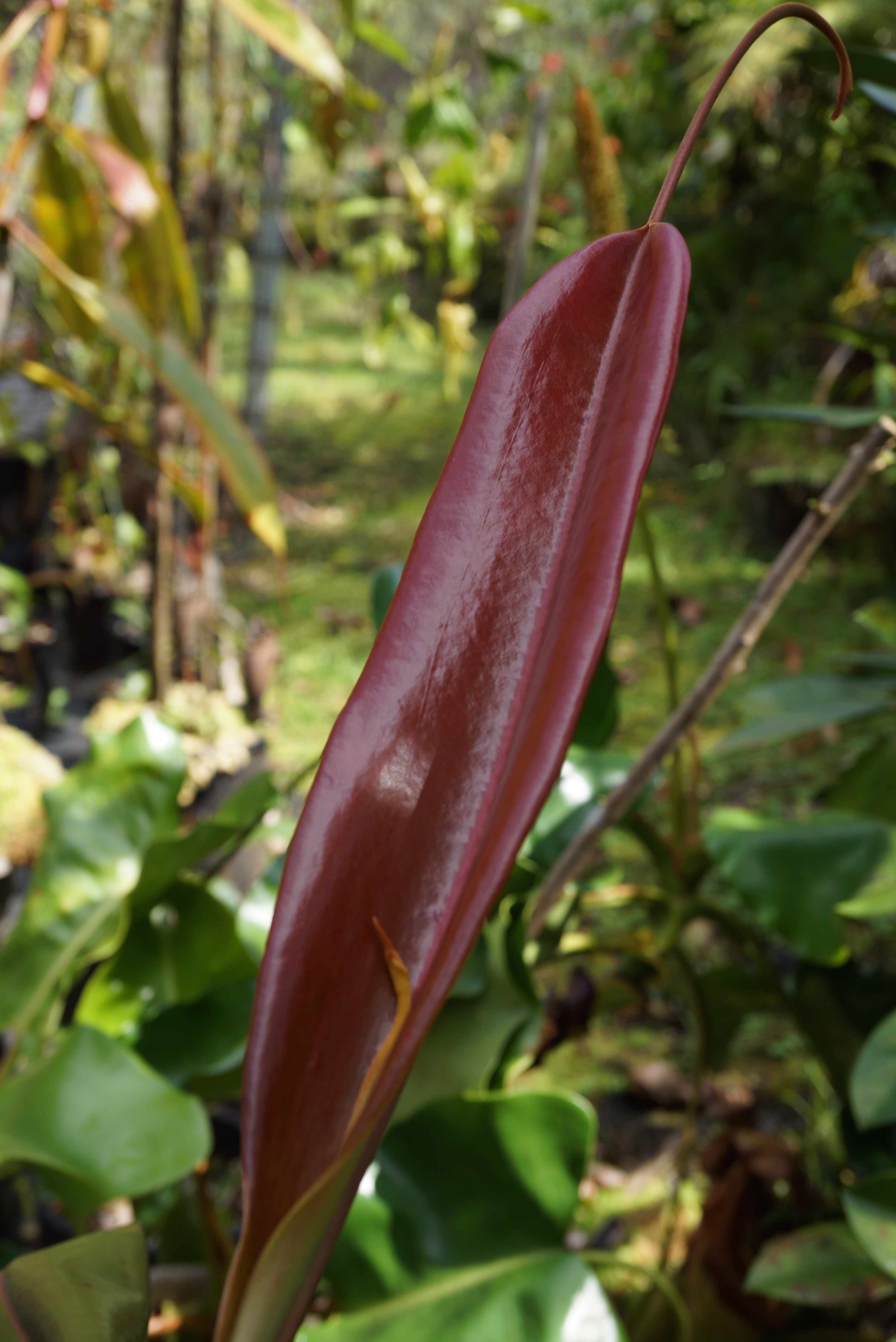
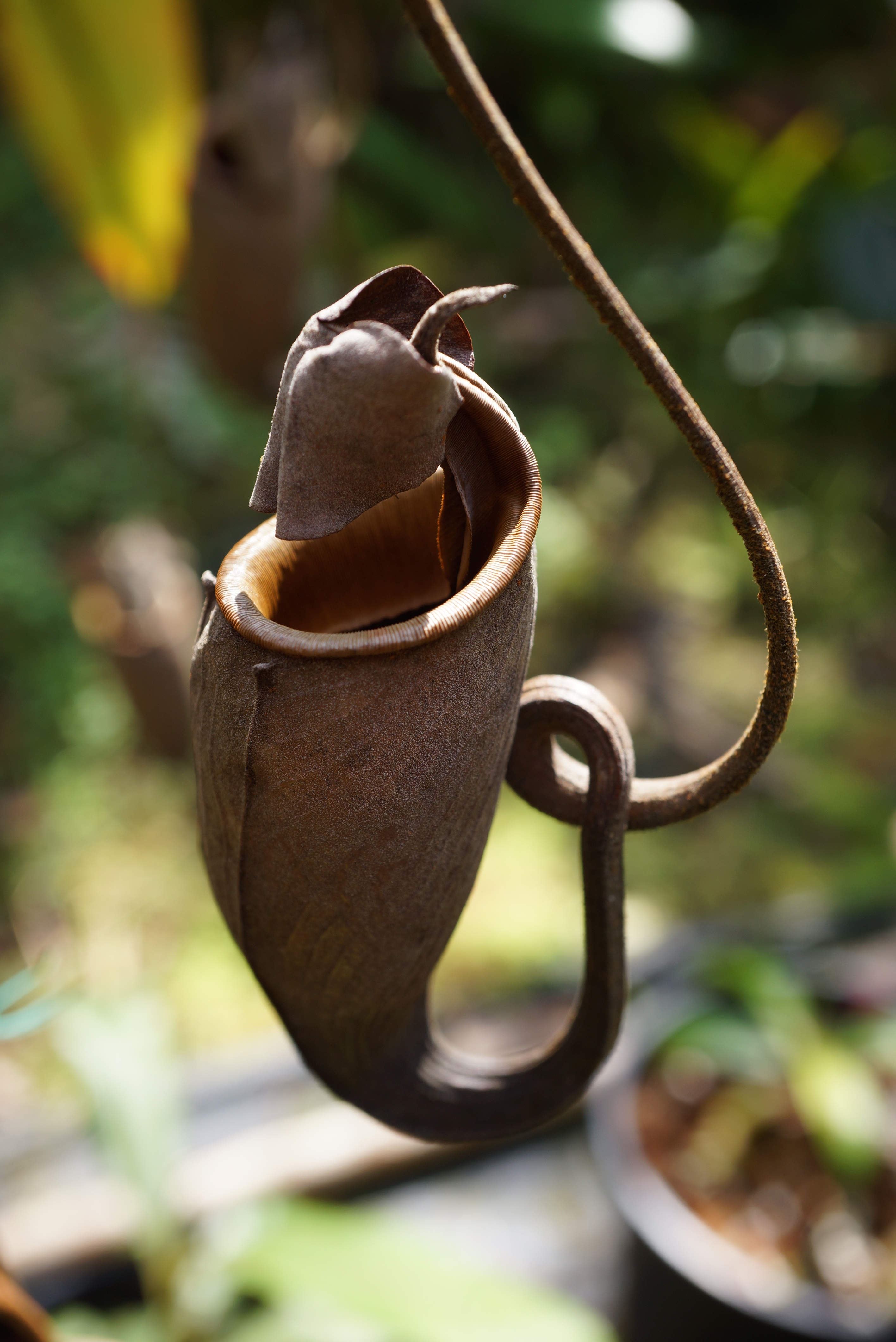
MISCELLANY: There are so many strange and beautiful plants on the island it would be hard to do any of them justice, whether native or non-native, just after 10 days there. Here are some of the plants that made me say “wow”, or just tickled a fancy or a taste bud. Enjoy!
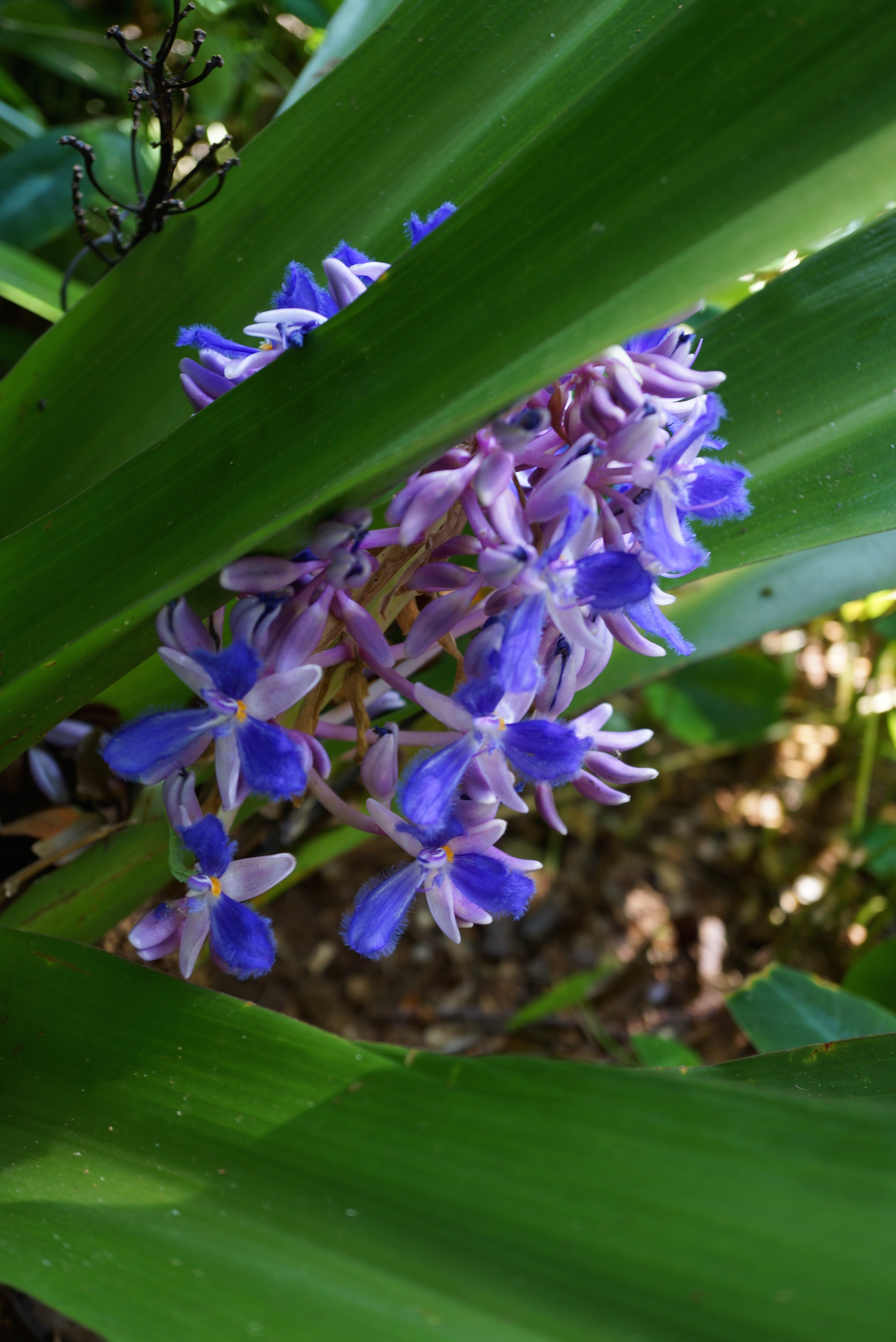
Dichorisandra thyrsiflora, or blue ginger, actually not a ginger at all but related to spiderwort, the east coast wildflower. Some of the bluest flowers I’ve ever seen.
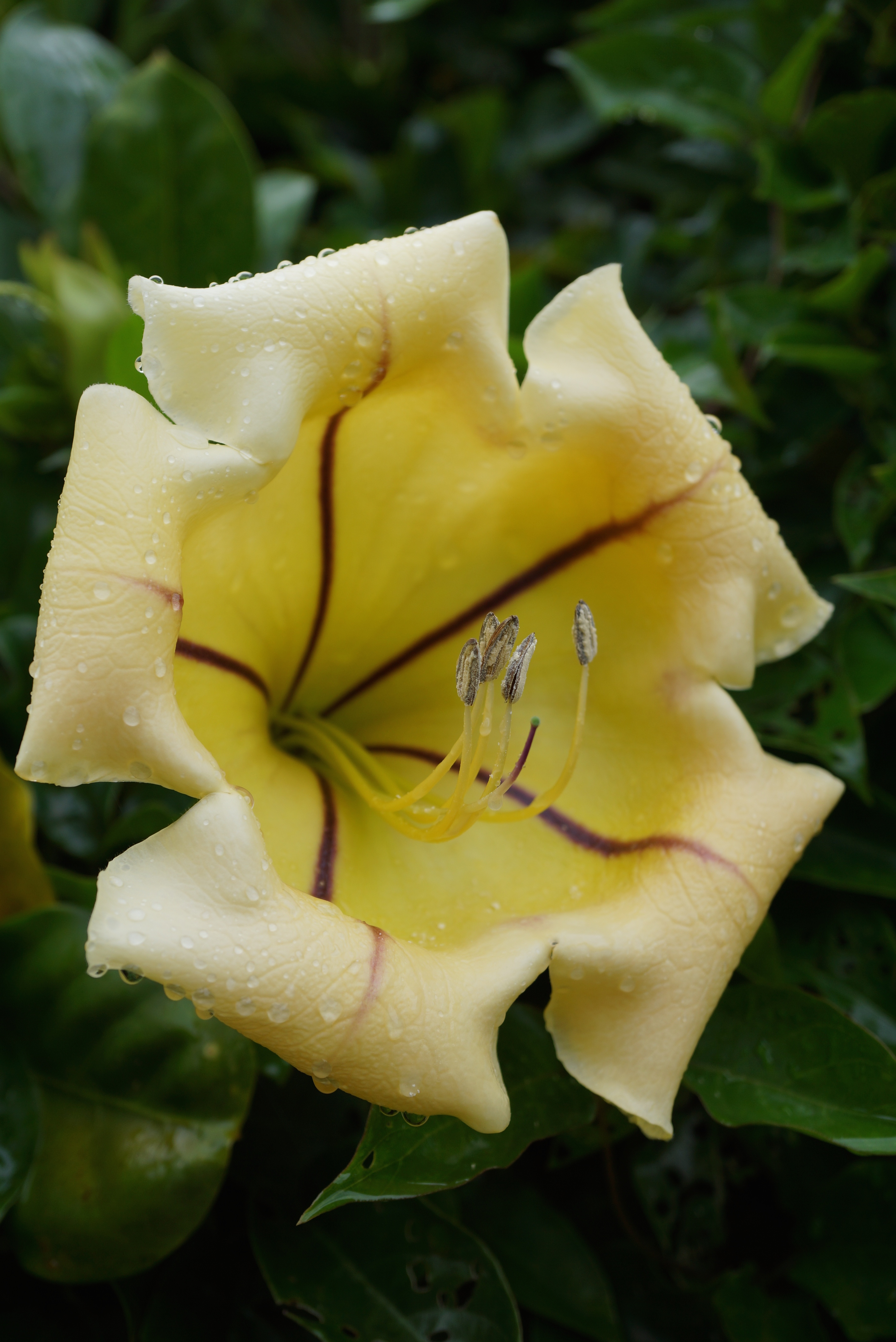
Solandra maxima, or cup of gold vine, is related to tomatoes and has a very lovely and distinctive fragrance.
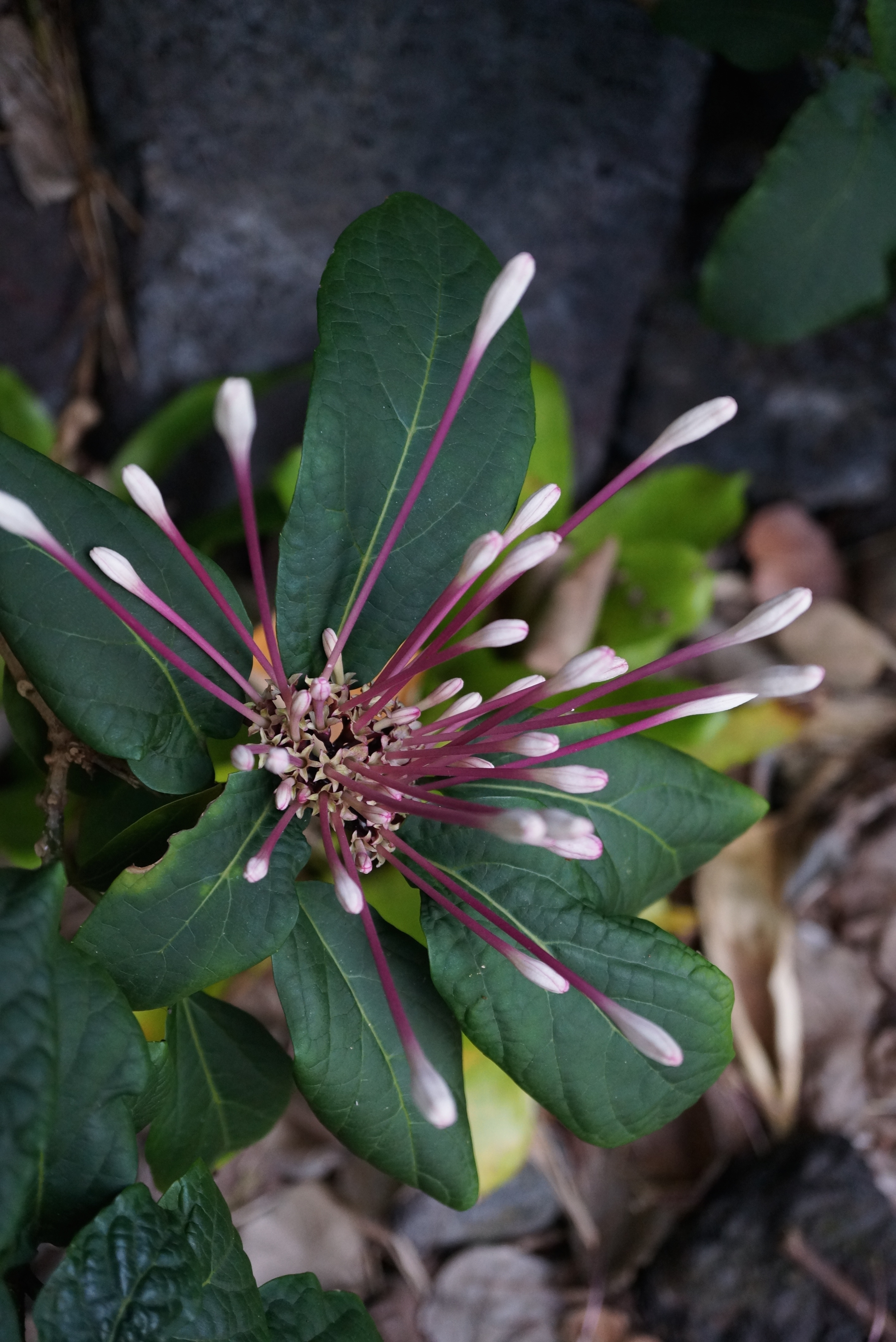
Clerodenrum quadriculare, or starburst, a stunning weedy shrub. I guess if you saw it enough you could bring yourself to eradicating it.
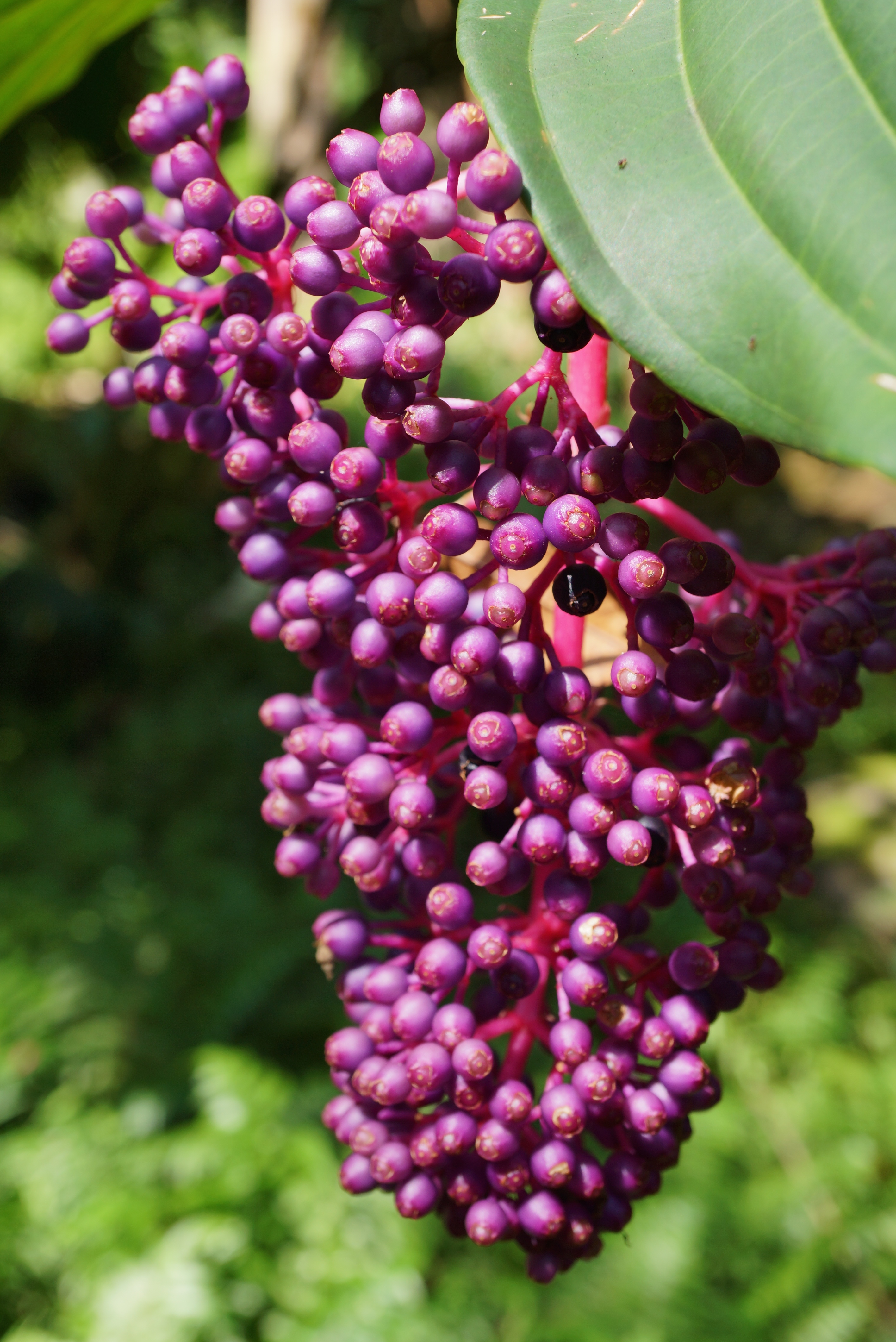
Medinilla magnifca is a epiphytic shrub that has gone crazy on the island. Such a shame that such beauty can be so invasive.
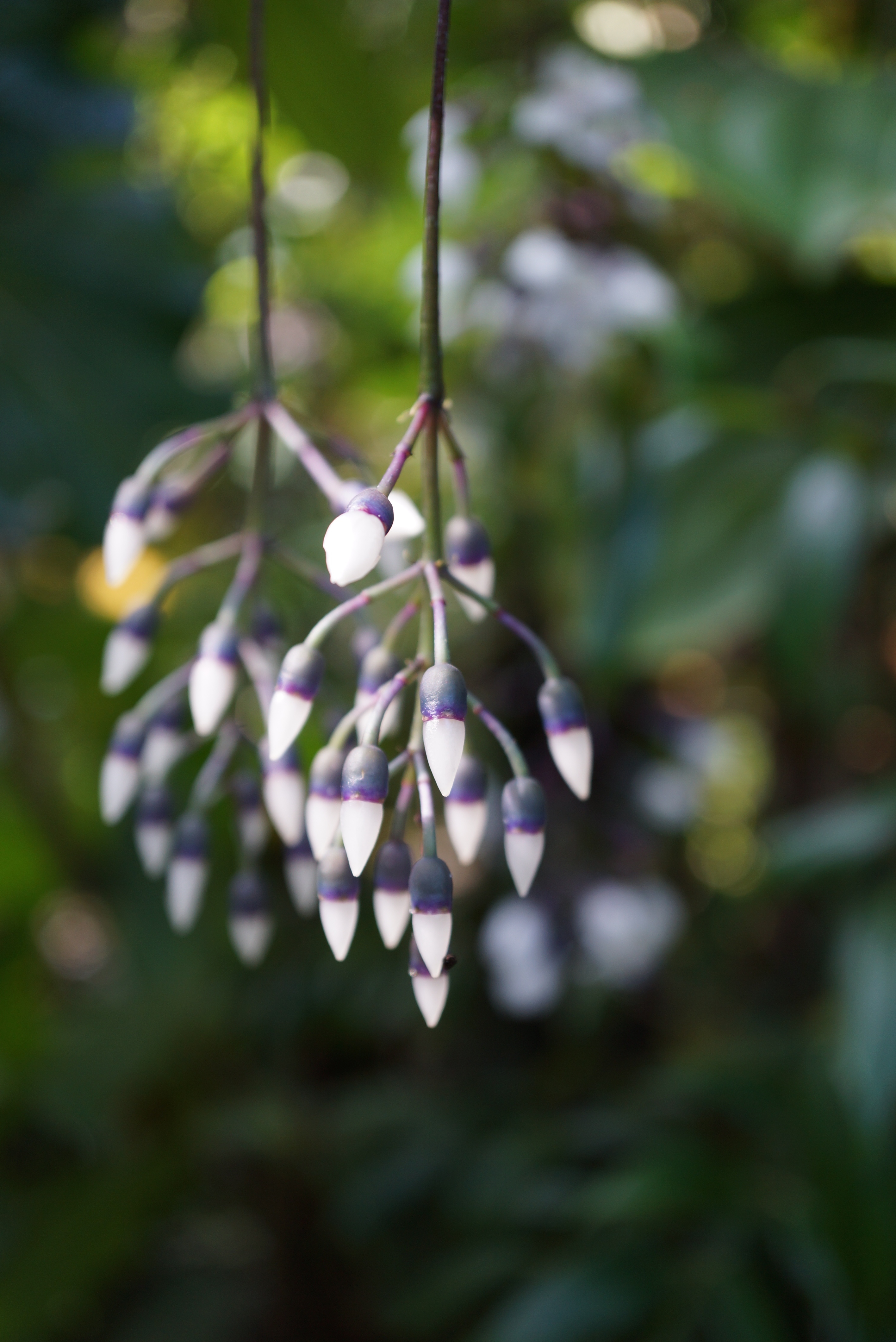
Another Medinilla sp , this one in a garden.
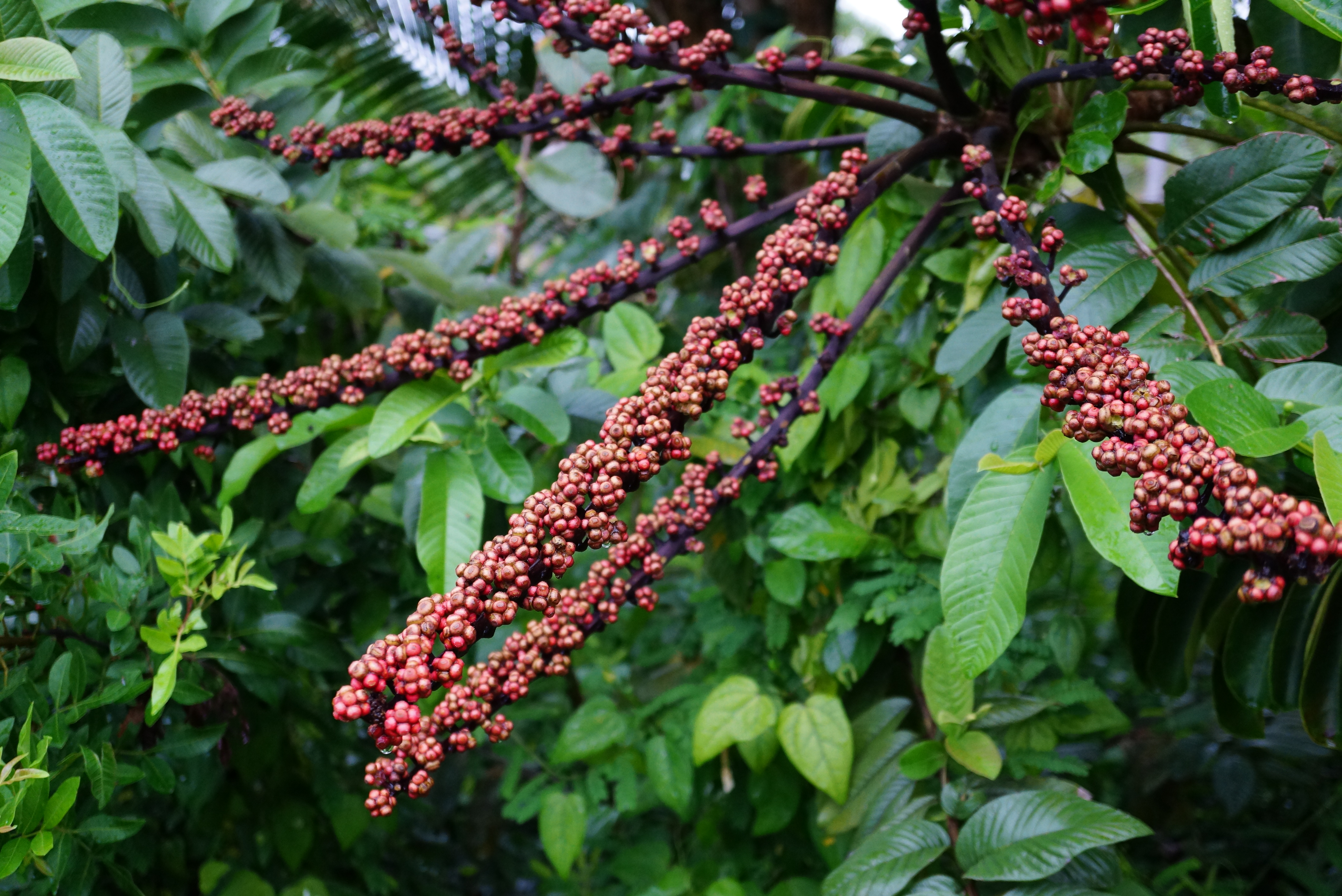
Schefflera actinophylla, or octopus tree, these sprawling infructescences are nearly 5 feet across, another plant that has found a welcoming home in Hawaii and has invaded many disturbed areas.
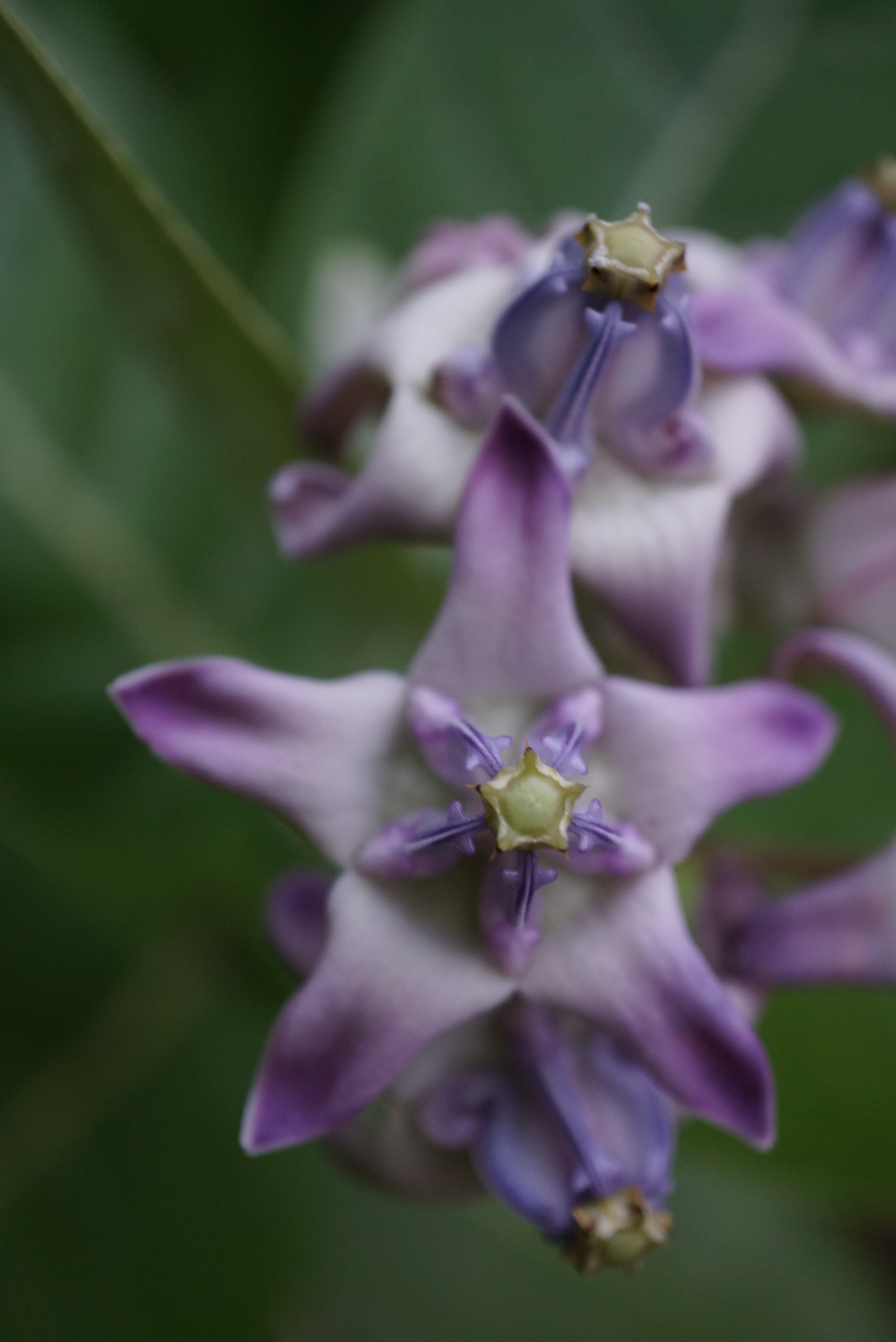
Calopteris gigantea, or crown flower, is a shrubby milkweed whose flowers were prized for the leis of nobility.
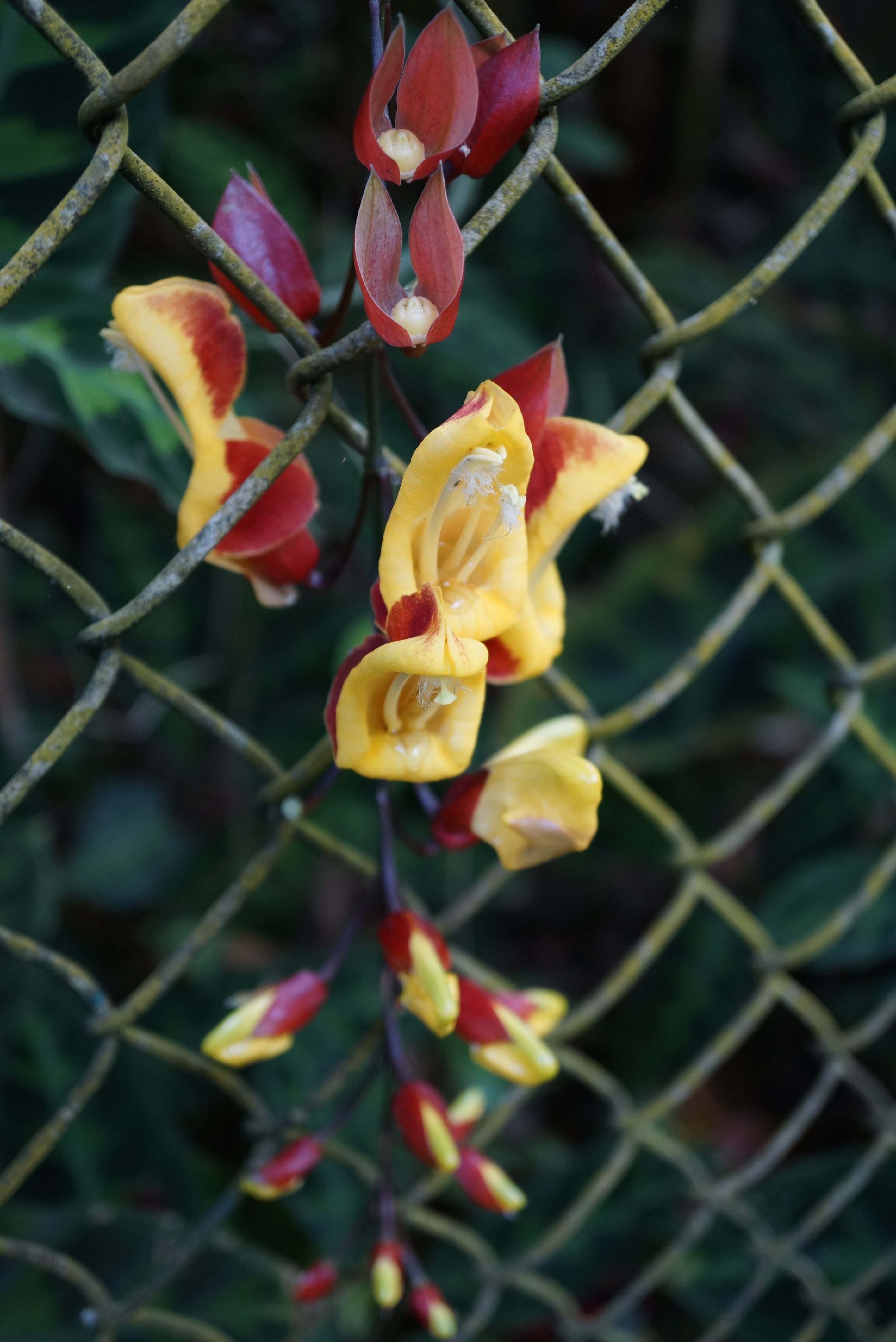
Thunbergia mysorensis, or brick and butter vine ( I don’t name these things), is a well behaved vine unlike several other species of Thunbergia which strangle forests with exuberant growth. We saw some up over 100 feet high in trees and covering acres.
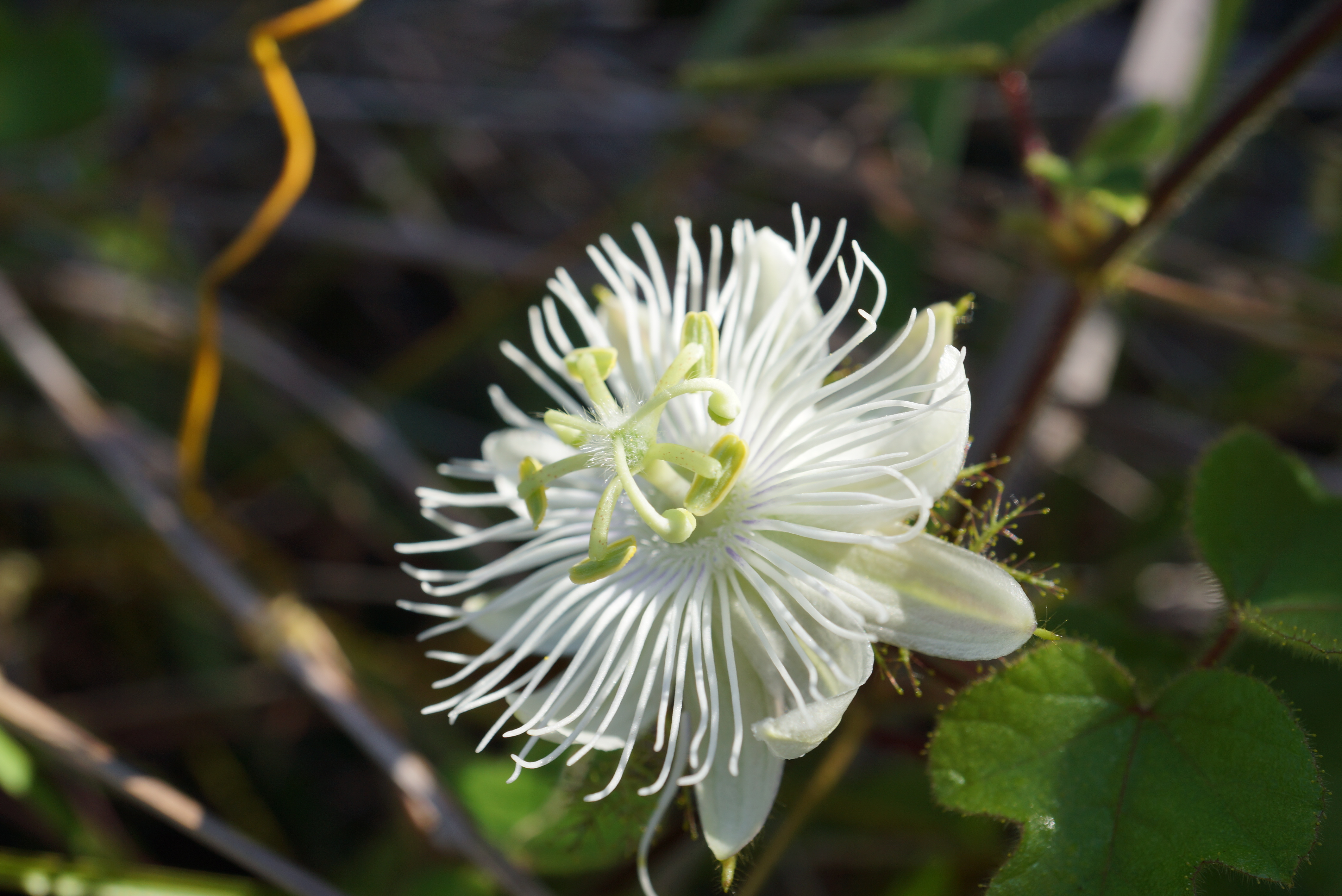
Passiflora foetida, or love-in-a-mist vine, is one of the more benign species of invasive passion vines on the islands. We saw one red flowered passion vine that cover a whole block which it cloaked from ground level to 100 feet into the trees. I could hardly keep the one I had in a pot a few years ago alive. Passion flowers are one of the worst weeds on the islands.
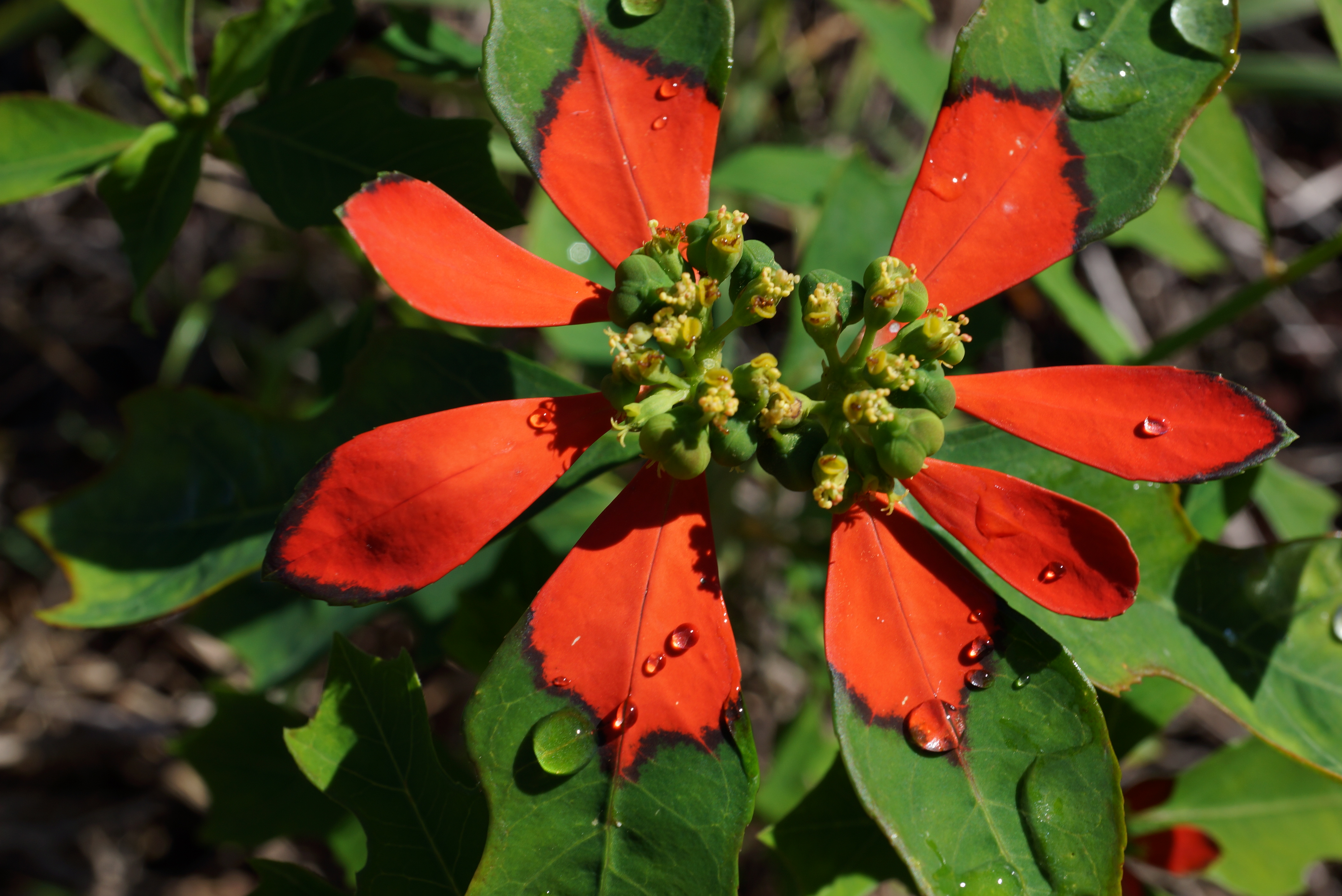
It was hard to miss this weedy Euphorbia cyanthophora on the side of the road.. can you tell what it is closely related to??
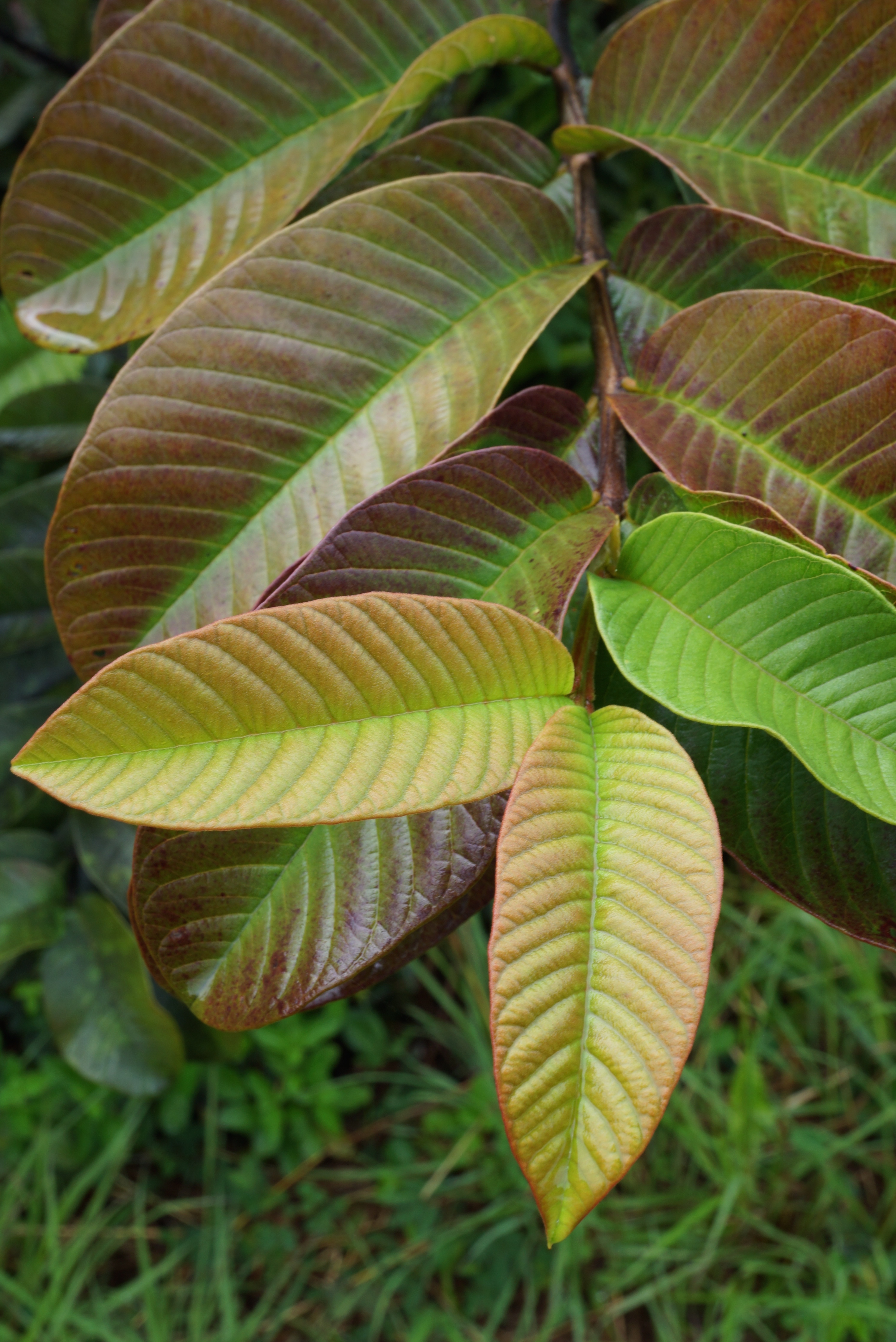
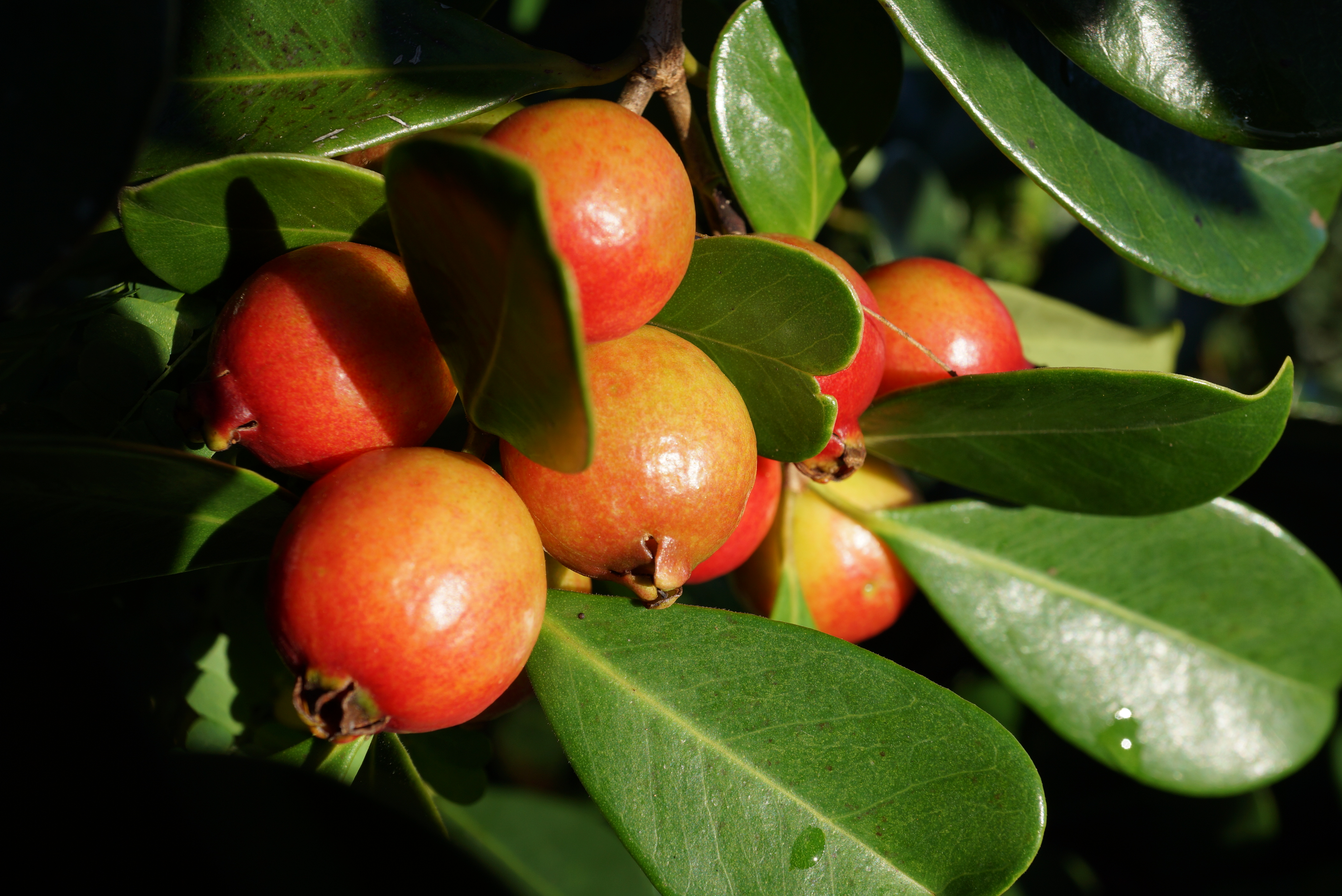
Like our beloved and hated Himalayan blackberries in the Northwest there are a fair number of fruiting trees and shrubs that have made the islands their home. Noni berry is everywhere, but I could not bring myself to eat it’s stinking, like rotten cheese, fruits. Guavas, Psidium guava on the other hand where a welcome treat we found popping out of the undergrowth. I never realized how beautiful their foliage was. But the real treat were the strawberry guavas P. cattleianum (pictured below) which grew in profusion around Kapaho.
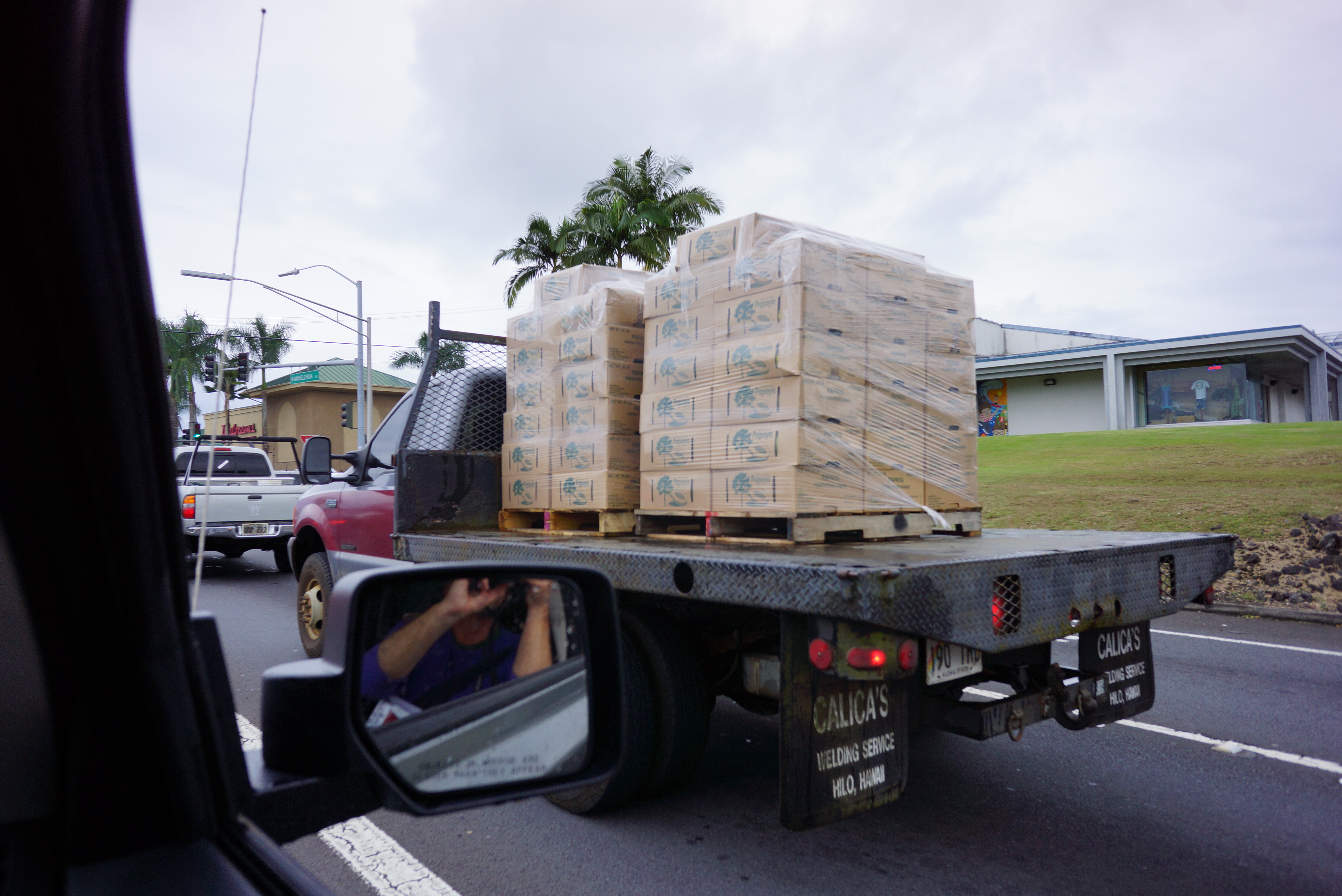
We ate plenty of cheap and deliciously ripe papaya when we were in Hawaii, but many more get flown to markets on the mainland. We were racing this truck load of papayas to the airport on our last day.
Now that I’m back in the temperate rain forests of the Pacific Northwest I realized I never even looked at the palms, or birds of paradise, or Macadamia nuts without much more than a glance when owe were win Hawaii. So much to take in. I’m fully home and the amazing flora of the Big Island seems more and more like a dream each day. I turn my head and hands towards the plants at home, the gardening season ahead. And yet another flood, our third in the 2 weeks since we’ve returned. Time to haul some plants out of the greenhouse, which stands to get over 3 feet of water in it again, tonight.
Mar
10
2014
0The Big Island of Hawai’i is nearly smack-dab in the middle of the Pacific Ocean. The chain of islands that make up Hawai’i is the remotest on earth. It’s 2656 miles from Seattle to Hilo, as the crow flies. Of course crows don’t fly by Alaska Airlines, so we had an 18-hour lay over in Honolulu before heading to our destination, Kapoho Tide Pools just south of Hilo, the island’s capital.
Hawai’i is the youngest of the 132 island Hawaiian archipelago, when we talk of Hawai’i we usually are referring only to the 8 main habitable islands. The oldest lava flows on the island are about 375,000 years old, and the youngest less than 10. We stayed on top of a dormant lava flow that spilled into the sea in 1960. It put us at a wondrous vantage point at sea level and right on the incredibly beautiful and alive tide pools carved into the lava rock. But we also made it up to an elevation of more than 7000 feet on the flanks of Mauna Loa, one of the islands 5 volcanos. The variety of plant life between sea level and the sub-alpine ecosystems was astounding. And confusing.
If you are like me when you think of Hawaiian plants you think of anthuriums and gingers, and orchids. Well none of them are native. Yes, there are 3 species of orchids native to the islands but they are so small and rare that even island botanists rue never having seen one. The Hawaiian Islands are one of the most compromised ecosystems on the planet with the highest rate of extinction. When Captain Cook arrived in the late 1700s there were between 1200-1300 species of flowering plants on the island, 90% of those not found anywhere else on earth. 10% of those plants are now extinct another 30% are considered endangered. Much of this is due to habitat destruction and the introduction of alien plants, which have naturalized readily. Actually when driving or walking the island it is hard to find a stand of pure native vegetation and much that you see is huge tracts of non-natives plants.
The Polynesians, who first arrived to the islands nearly 2000 years ago, brought some of their favorite plants with along with pigs, rats and dogs. The changes began when they arrived, but after the arrival of Captain Cook the number of introduced plants has increased from 30 to 800, nearly a complete flora compared to the beleaguered 1,000-1,100 native plants left on the islands.
I know most of us go to Hawaii for some downtime, beaches and Mai Thais under coconut palms (a non-native plant). This idea of paradise is so engrained in us we can barely see what Hawai’i looks like. I am a restless sort, though I love my shorts and flip-flops, brightly colored beach towels and hours on a sandy beach are wasted on me. I am curious, and luckily for me so is Michael, so we did a little looking for and at the native plants of the Big Island. I divided the following gallery by the sites we visited, each unique and marvelous in it’s own way. I listed Latin and common English and Hawaiian names if I could. And any other notes of interest after the photo.
(If you return in a few days, I’ll have posted all the non-native wonders we saw.)
KAPOHO TIDE POOLS: We were so lucky to be able to park ourselves for 10 days on the edge of the ocean. We could watch the sun rise over the Pacific from our bed and nearly dive off our deck into the tide pools below.
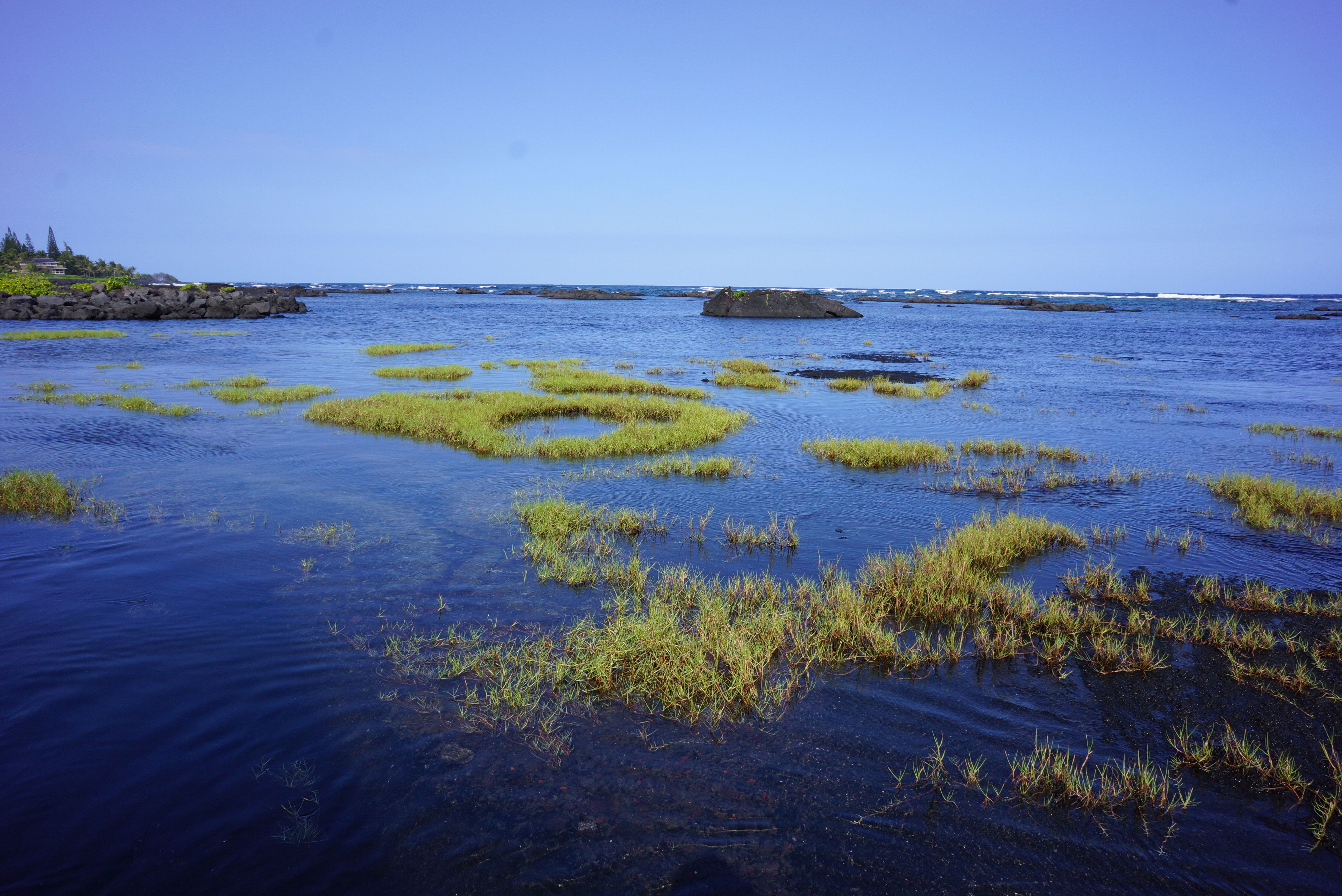
Of course with the tides coming and going it wasn’t always a safe dive.
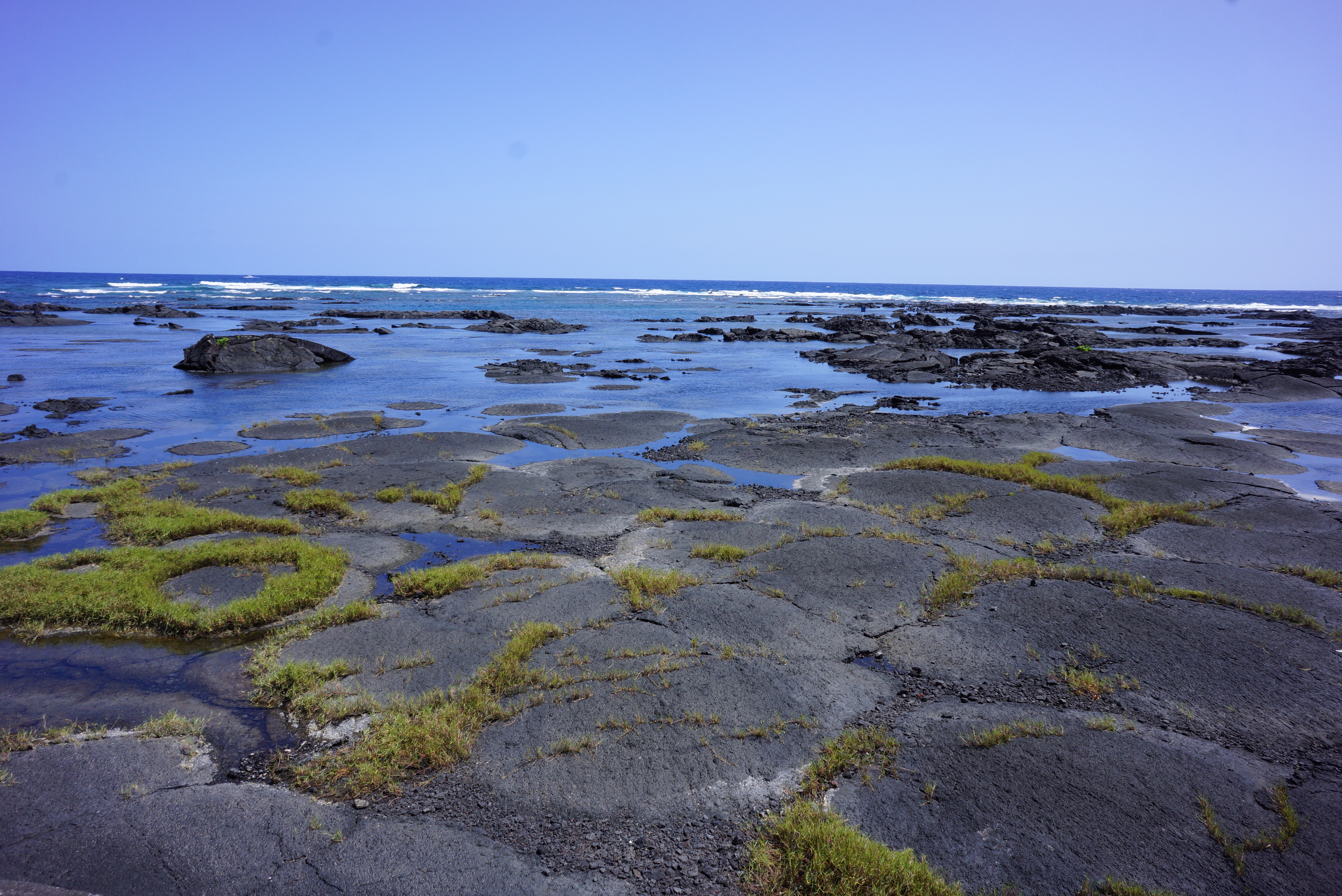
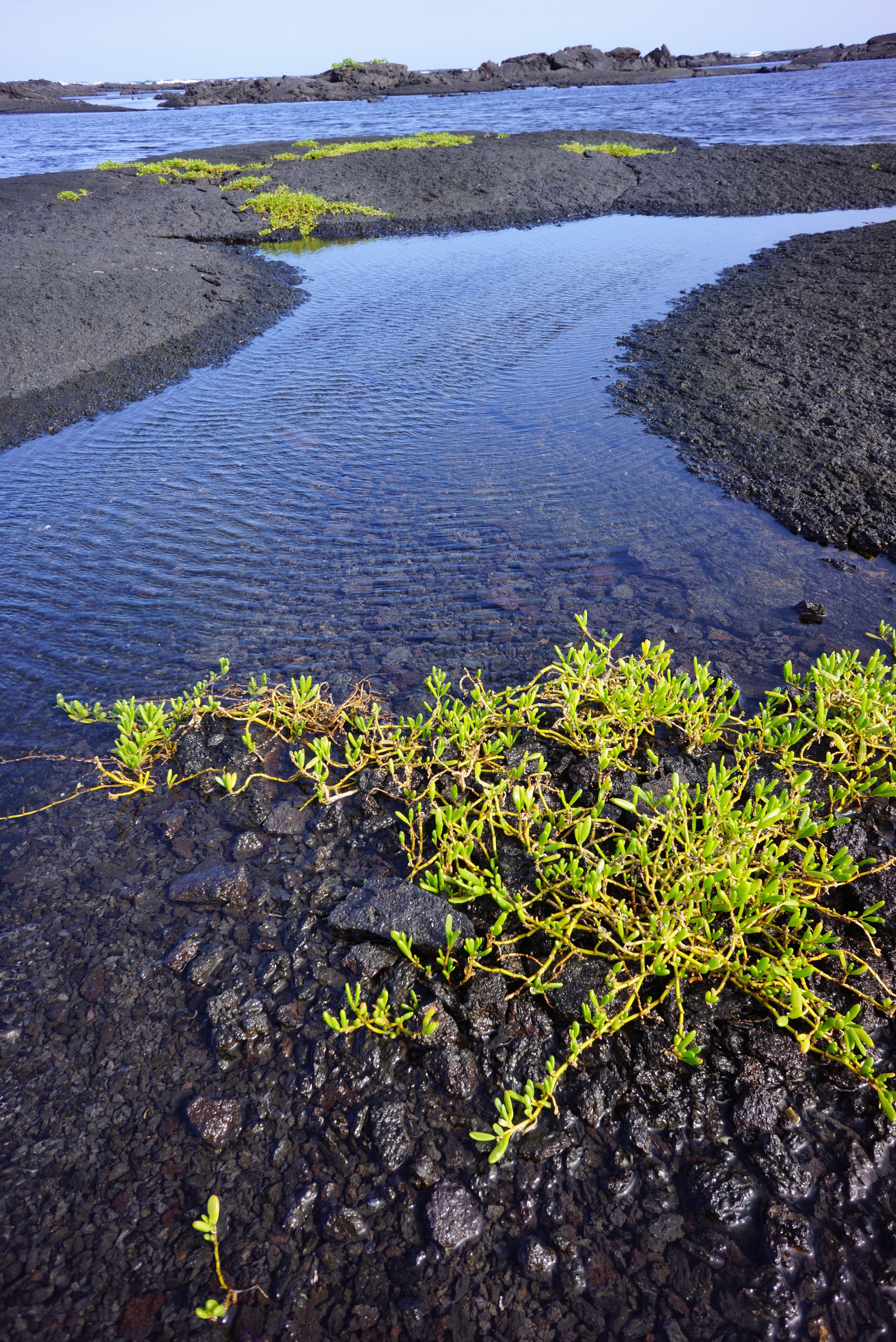
Sesuvium portulacastrum, ‘Akulikuli or sea purslane grows right our of the lava rock and is repeatedly inundated by salt water. Noticing it similarity to garden purslane i couldn’t help but take a taste. It is a succulent but salty treat.
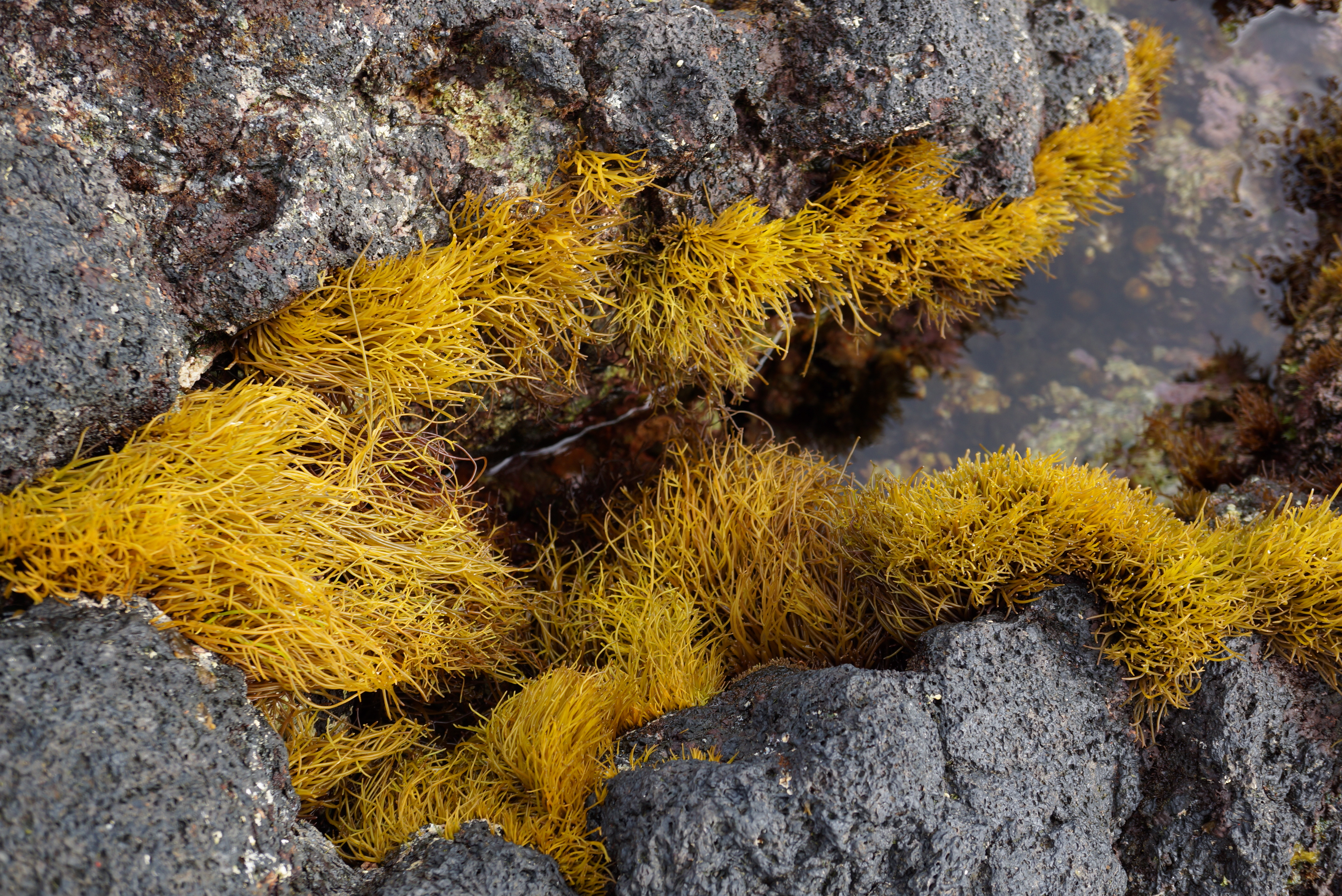
The receding waters exposed all sorts of marvels, including i this golden seaweed… sorry no identification on this one.
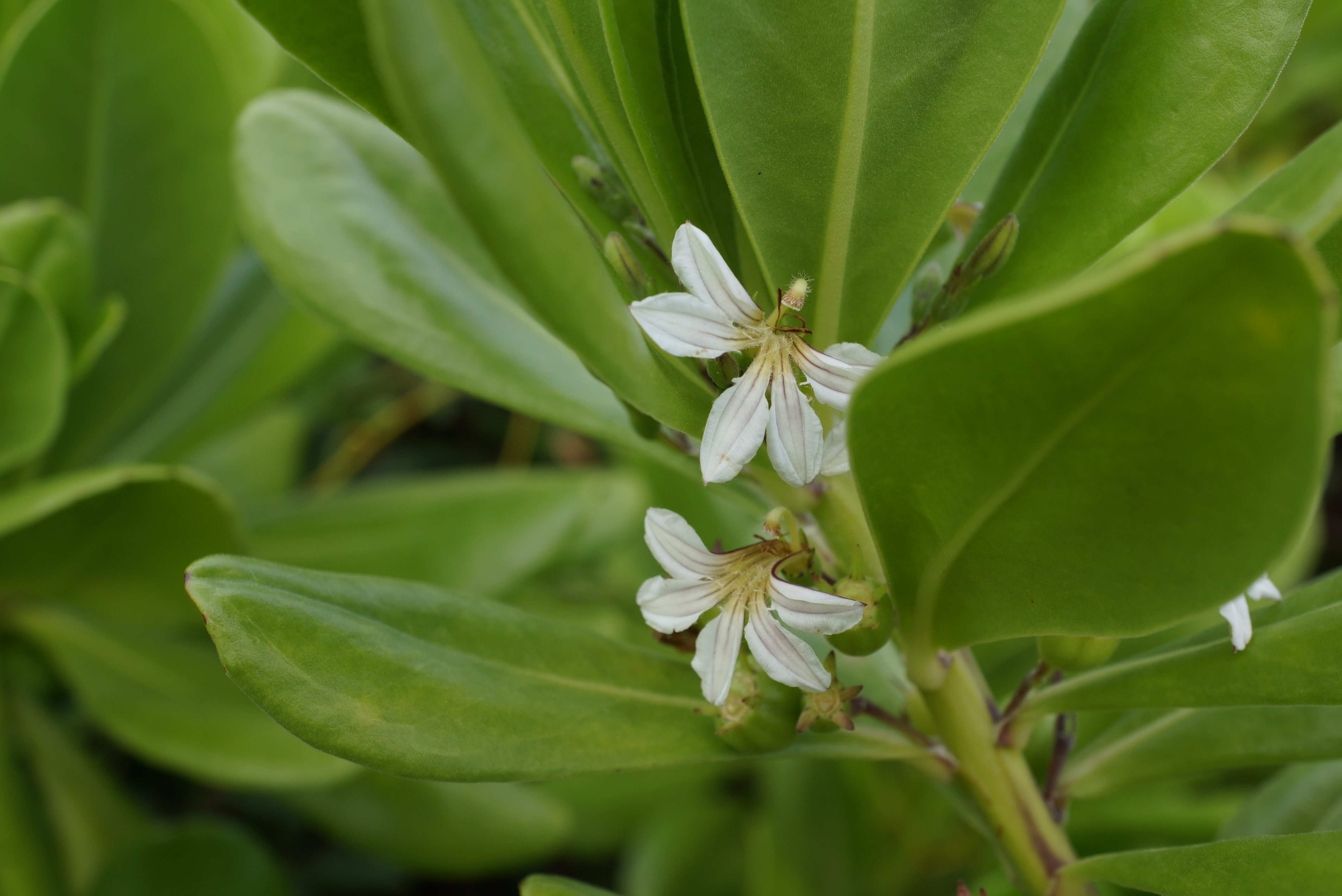
Scaevola sericea or Naupaka grows abundantly just above the high tide and is colonizing the lava flows around Kapoho. Hawaiian legend says the “half-flowers” of this and the more montane species S. gaudischaudiana represent young lovers torn apart by the jealous Pele, the goddess of volcanoes, who is said to have set up permanent residence on the Big Island. You may recognize these flowers from the beautiful blue floweres annuals used in hang in baskets. The latin name means ” left-handed” referring to the petals all facing one direction.o
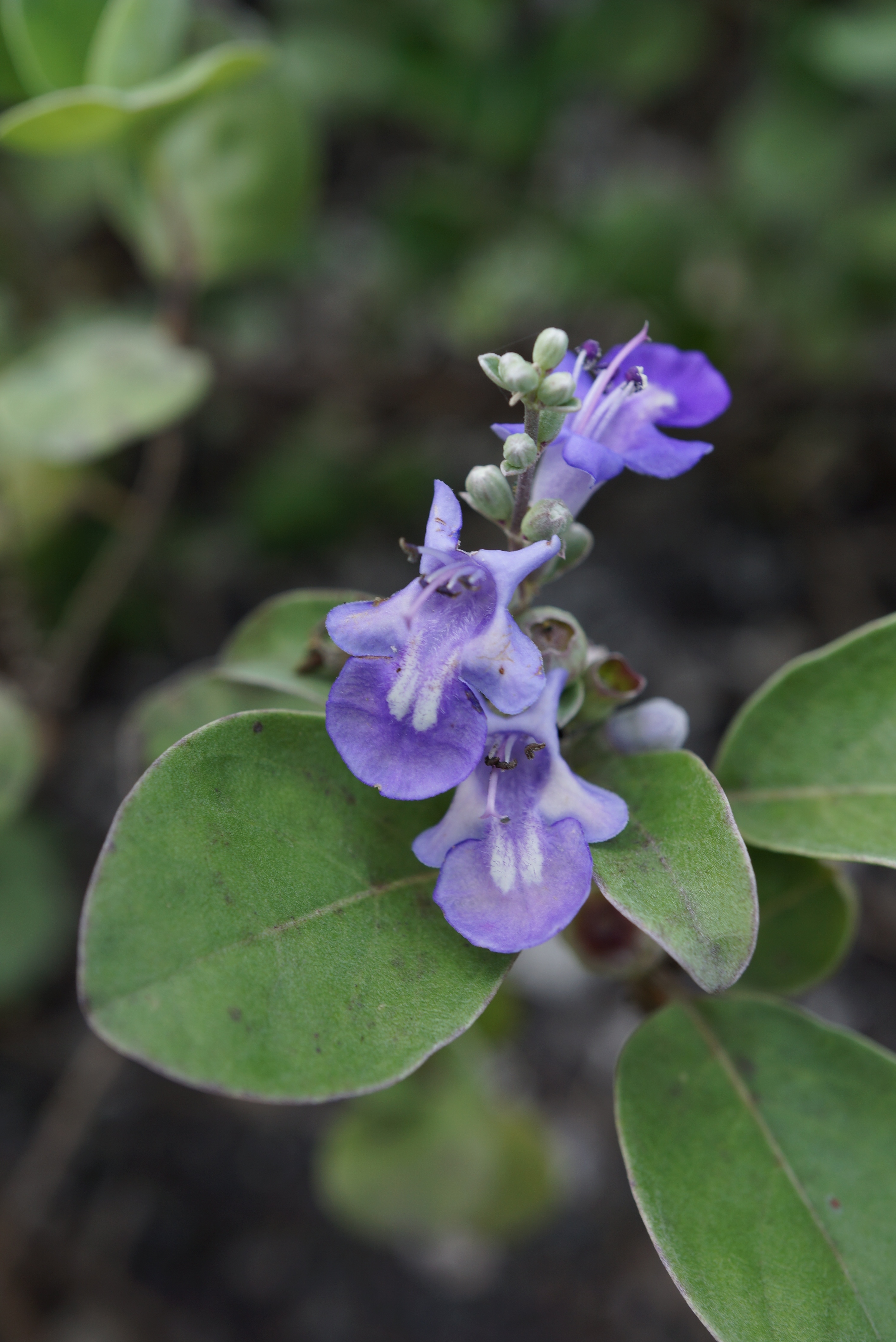
I only saw Vitex rotundifolia or Pohinahina in one location, where it was probably brought in by a home owner who was aware of this native plants beauty and ability to stabilized coastal soils.
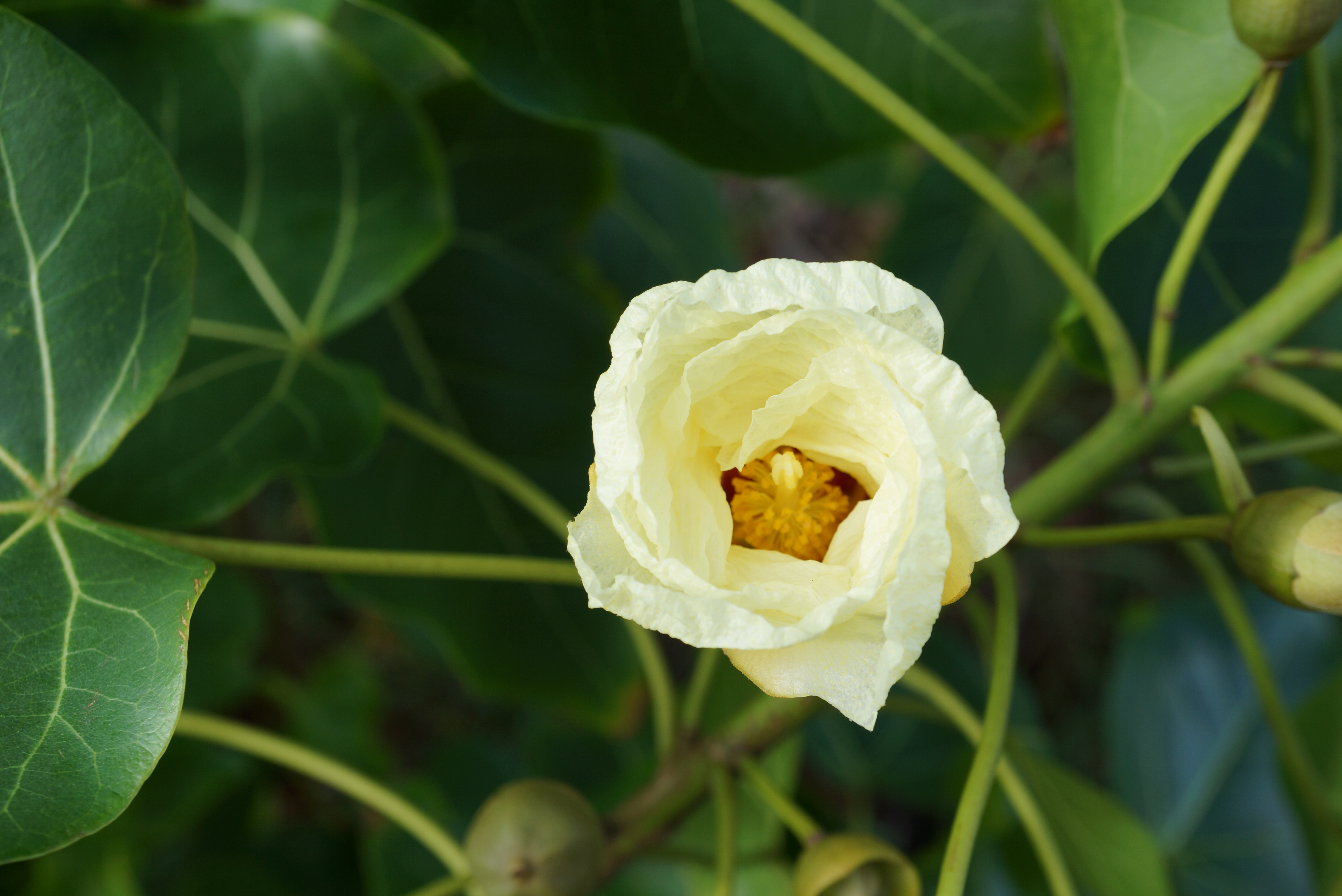
Thespesia populnea or Milo is one of those plants that botanist can’t decide whether it was introduced by humans, more than likely the Polynesians who used the wood for many things and the seed pods for dye, or if it had arrived on its own. Either way it is not seen as threat to the native flora, some books list it as native, though it form huge colonies along the coast where we were.
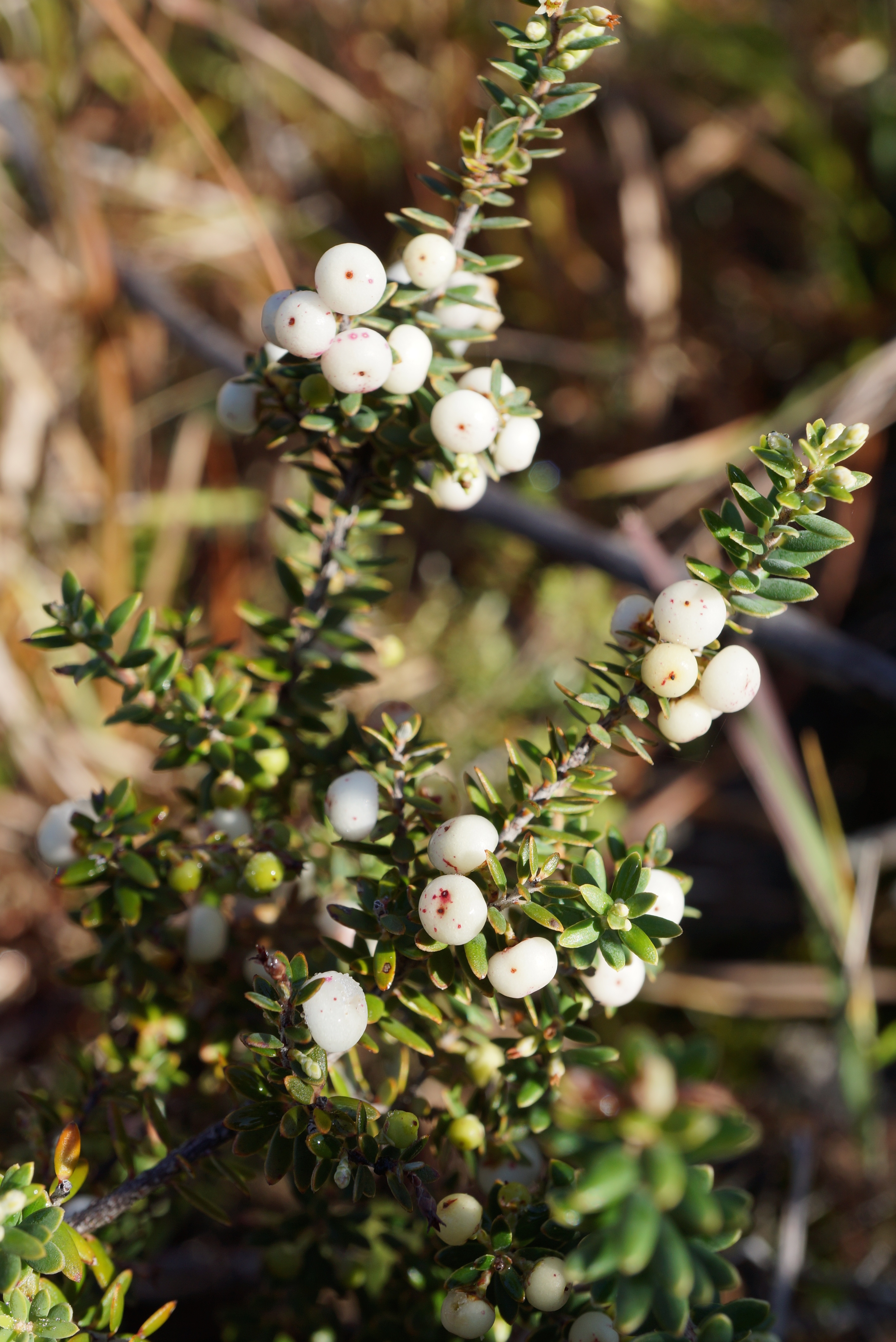
Just a little inland from the salt spray and winds of the Pacific and tucked into a matrix of non-native plants colonizing the 50-year old lava flow I found a few specimens of Styphelia tameiameiae, or pukiawe, more commonly found at higher elevations. Once a single representative of the Epacris family ( Epacridacea) in the Hawaiian Islands since 2002 it has been included in the heath family (Ericacea)– a family well represented there. You can see it’s striking resemblance to heather and blueberries.
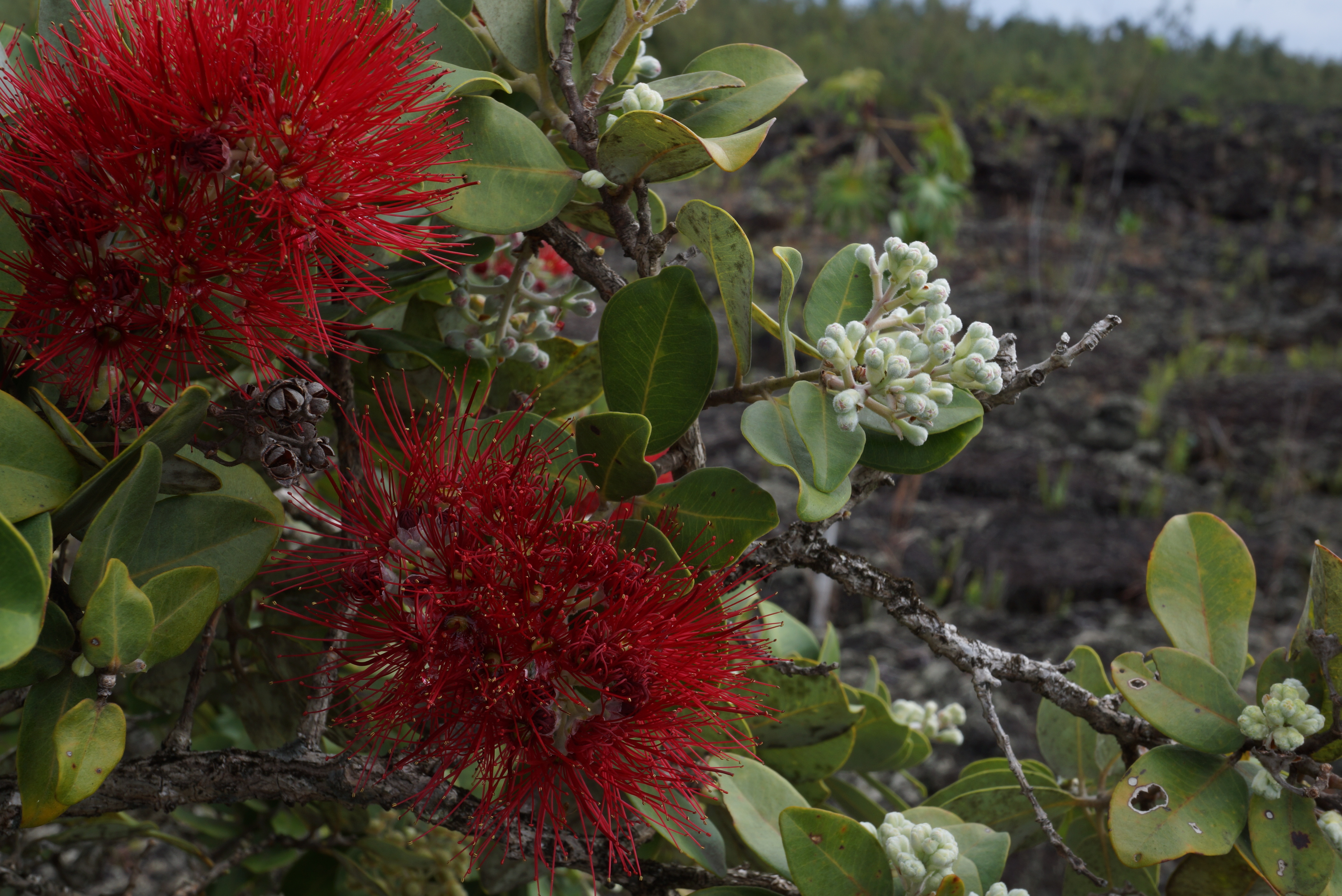
We saw Metrosideros polymorphs or Ohi’a lehua, growing on the sea level lava fields and the sub-alpine flanks of Mauna Loa. It was as ubiquitous as dandelions, yet highly revered by the native Hawaiians as well as all new comers to the islands. It is a beautiful tree related to eucalyptus.
OLA’A FOREST RESERVE: We drove up from sea level to about 1900 feet on the side of Mauna Loa to this rain forest reserve which promised to be a nearly pure stand of native vegetation. It is truly a tropical rain dorset with an average of 295 days of rain a year and an average of 240 inches of rain a year. It was wet. We hiked nearly 5 miles through this dense incredible jungle, which is mostly used for research by the University in Hilo. We didn’t see a human for hours, and were constantly accompanied by the beautiful songs of ‘elepaio, ‘apapane and i’iwi birds high in the canopy of ohi’a and sandalwood trees. Most impressive were the giant tree ferns ( Cibotum ssp.) some 20-feet tall. I had attached the macro lens to my camera, making it near impossible to capture the massiveness of this forest. Luckily the understory is cloaked with epiphytes.
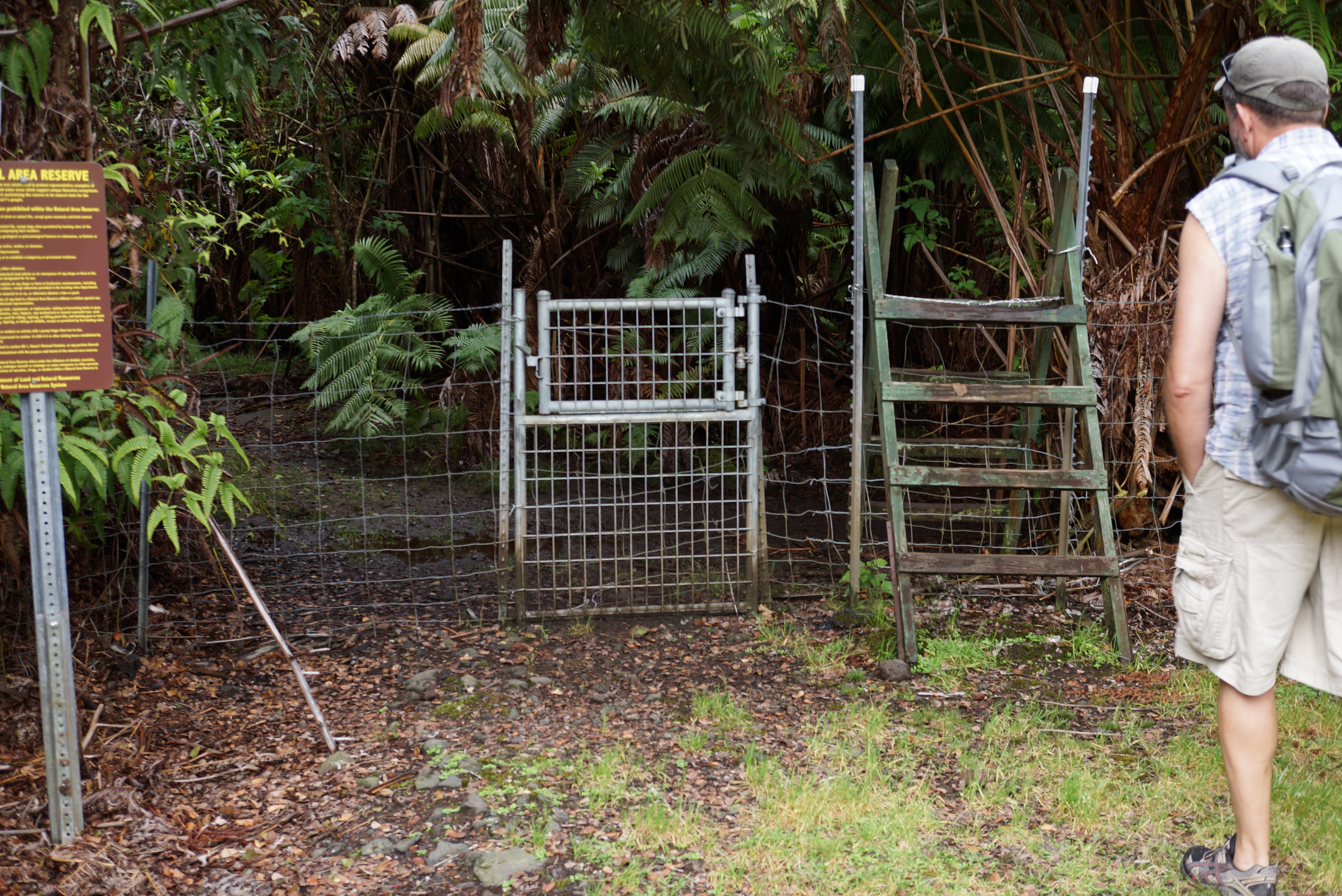
The 9000 acre parcel of pure native forest is surrounded by a fence to keep marauding boars and goats out.
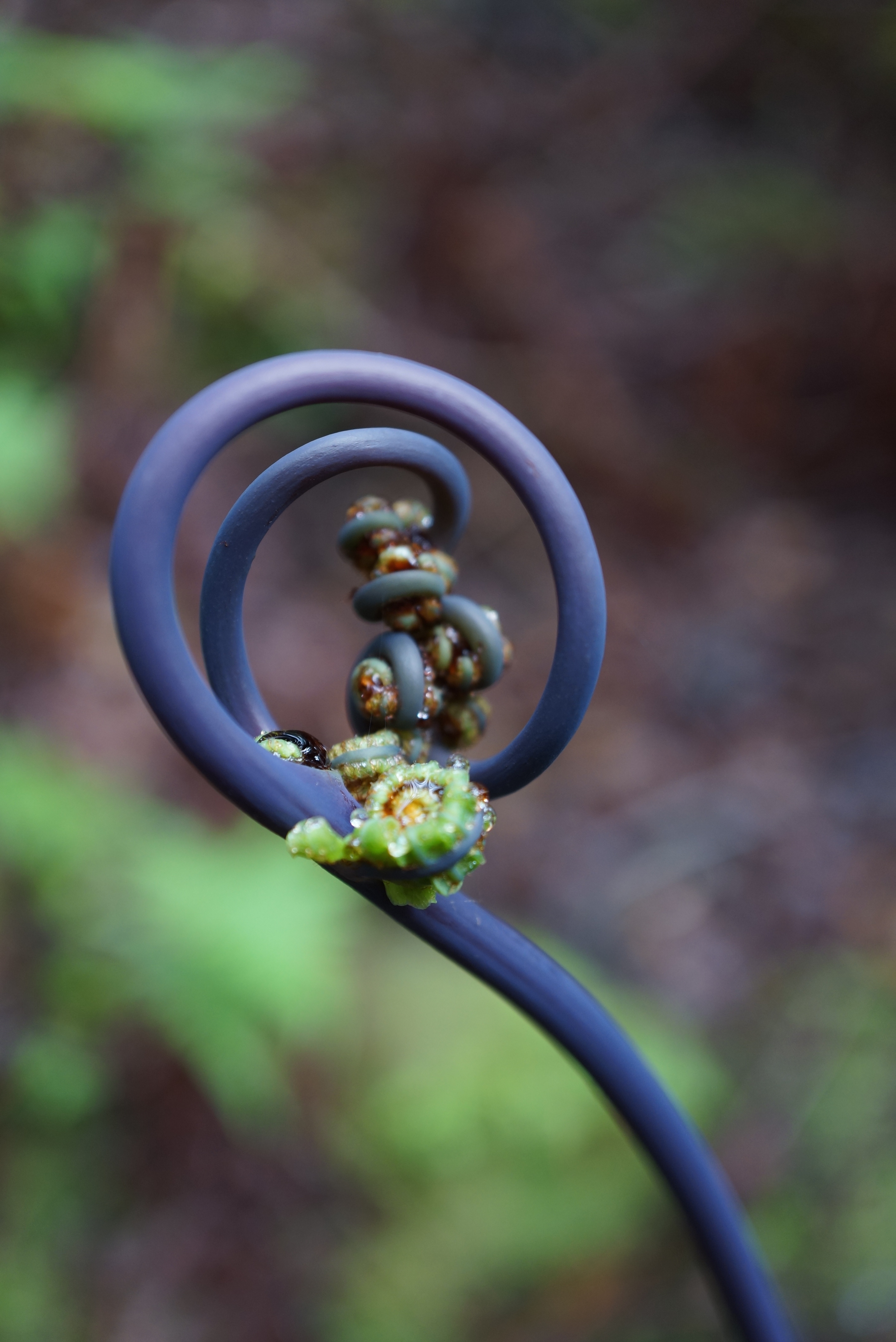
As I said ferns: Dicranopteris linearis, or uluhe, is a climbing fern with such vigor it creates impenetrable thickets, as it unfurls is stunningly blue new grow it has it’s moment of beauty.
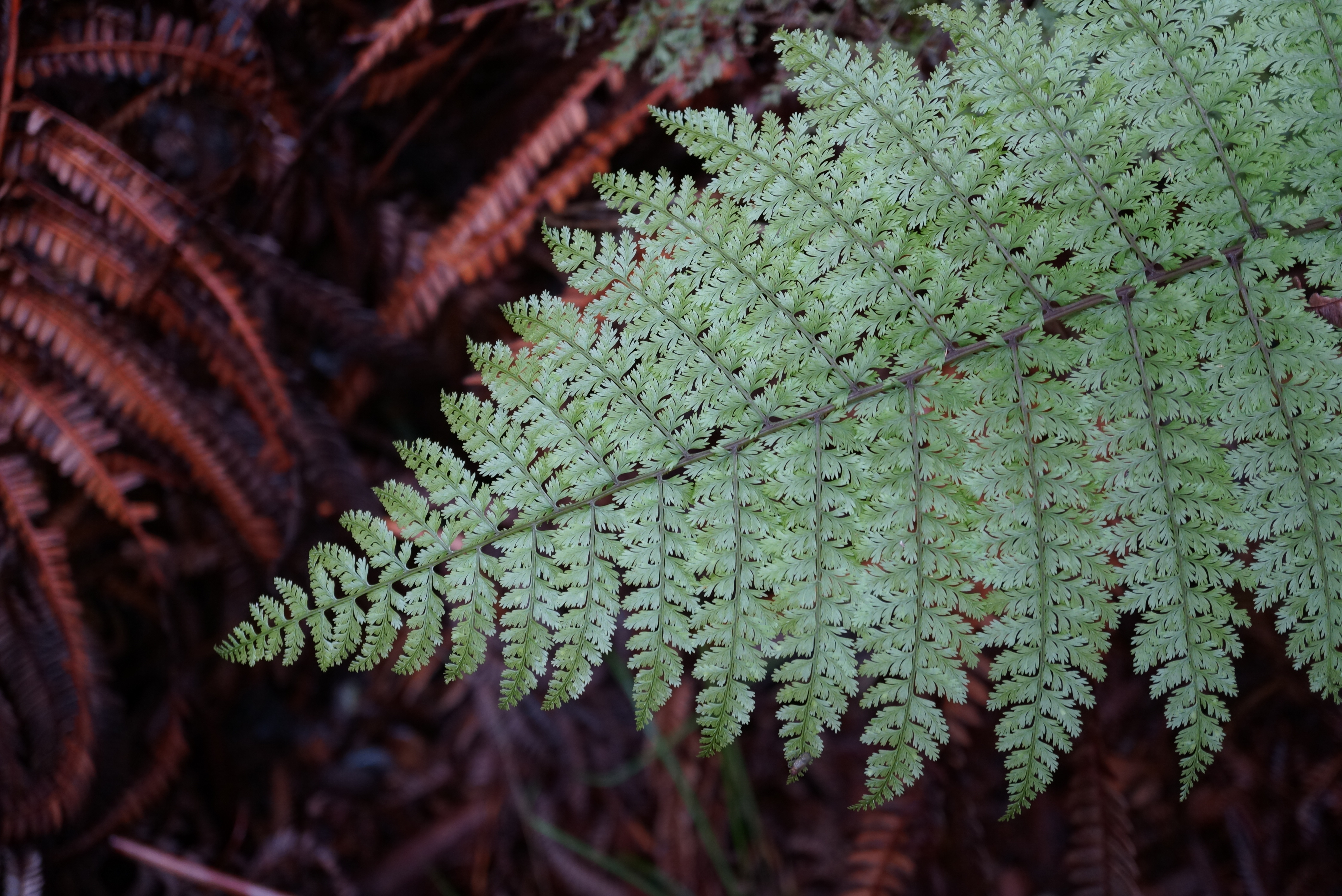
There are 54 genera of ferns on the islands. I have the feeling we h may have seen all of them that day. An unidentified but beautifully lacy understory fern.
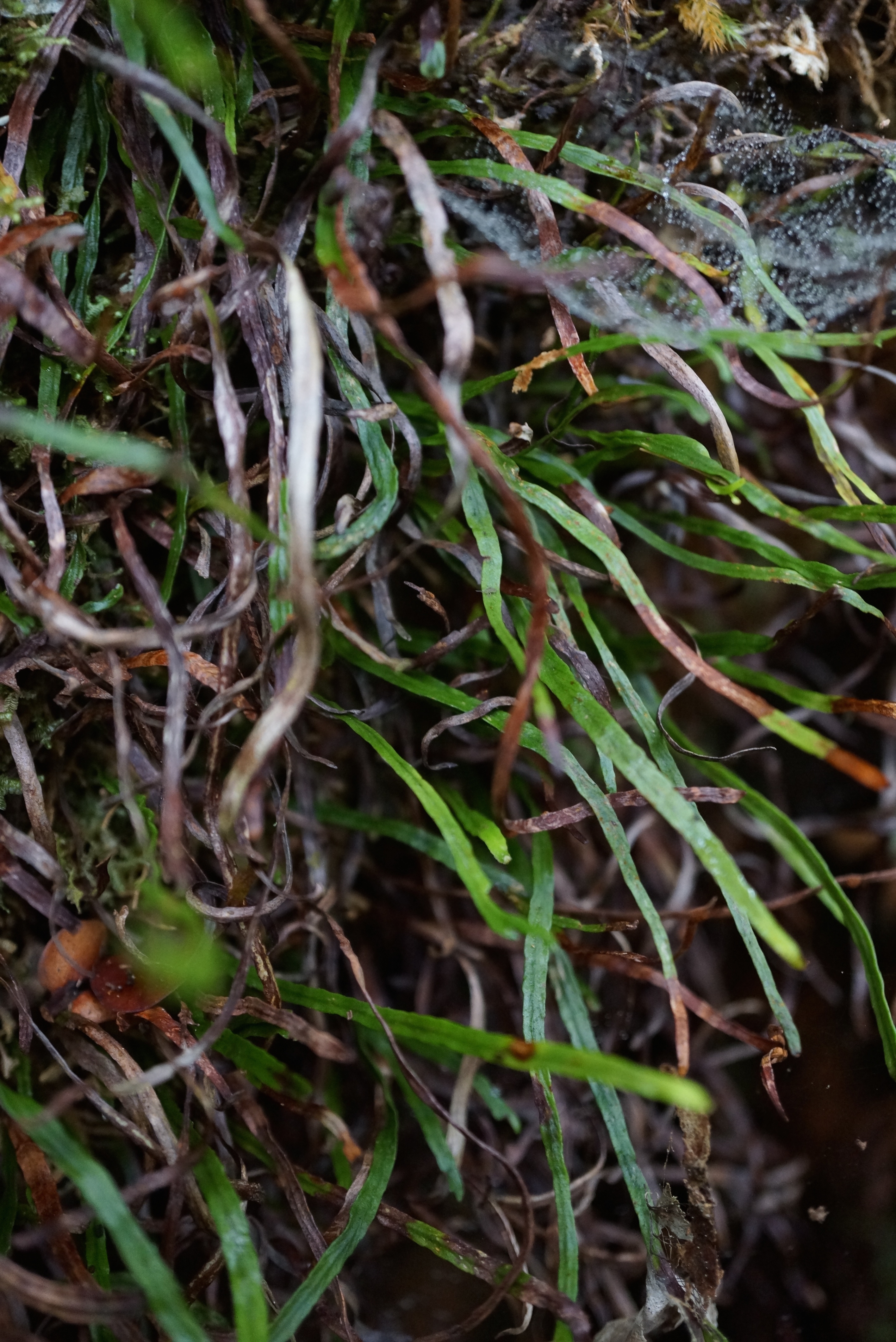
This lovely epiphytic fern, Grammitis tennela or kolokolo clung to mossy trunks everywhere.
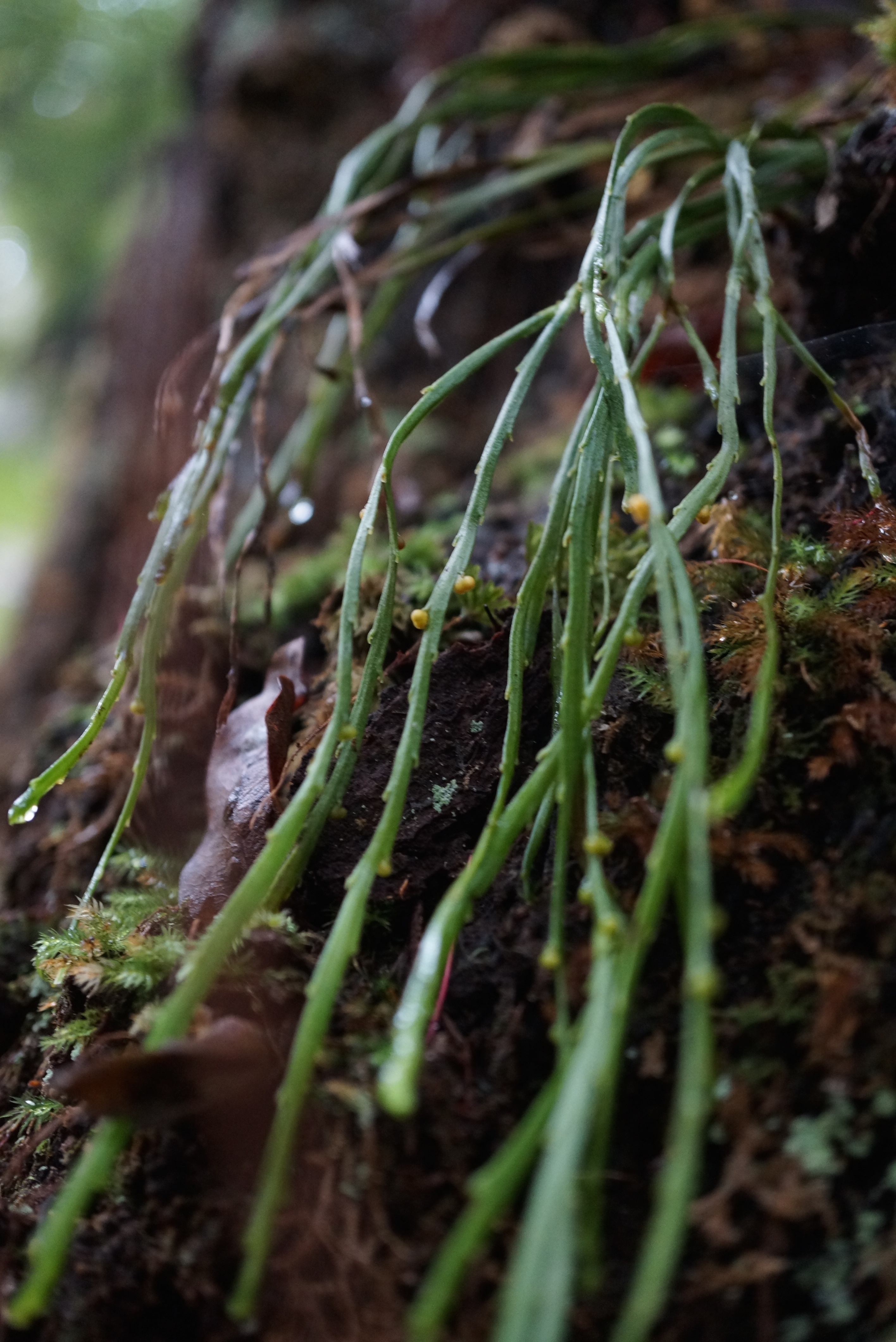
Psilotum complanatum, moa or whisk fern, is a strange little fern ally that is also epiphytic.
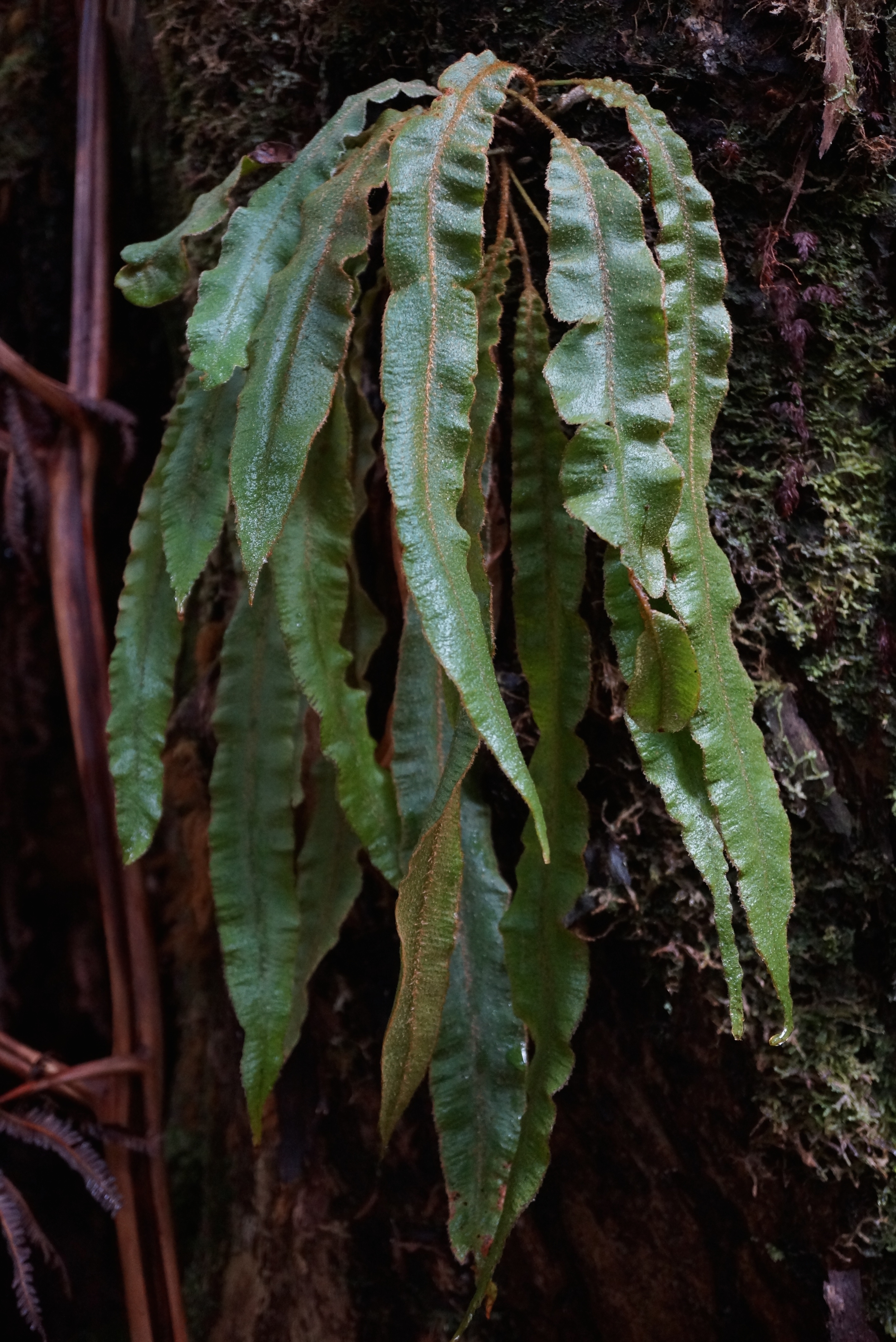
Elaphoglossum palaceum, maku’e or stag’s toungue fern is a fern found also in tropical Americas and Micronesia.
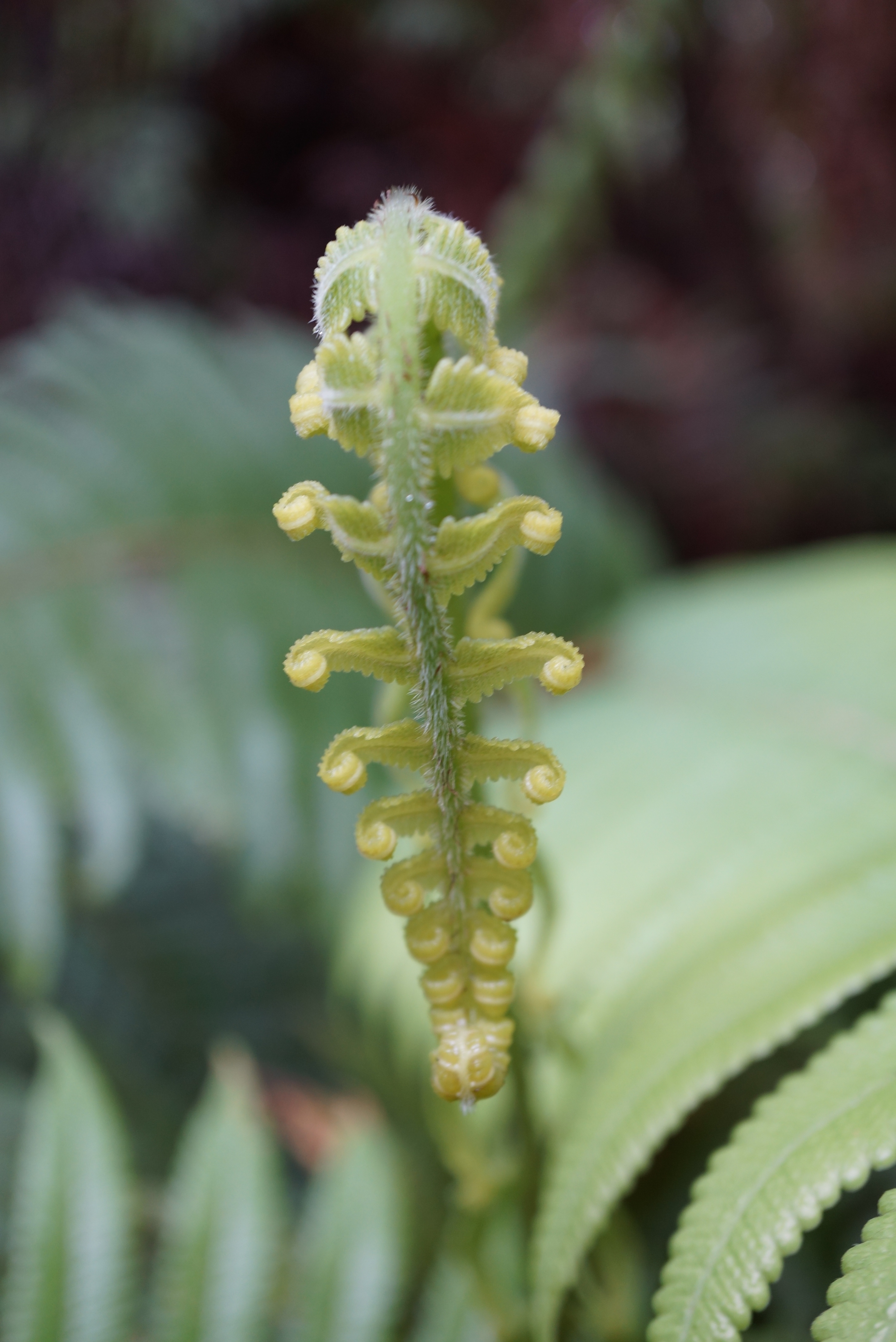
Everywhere a beautiful unfurling; in the dark understory of the trees and tree ferns opening frond were like flowers to eyes wearying of the lush and sodden greenness. This was our second 5 mile hike in the day and a slippery one at that.
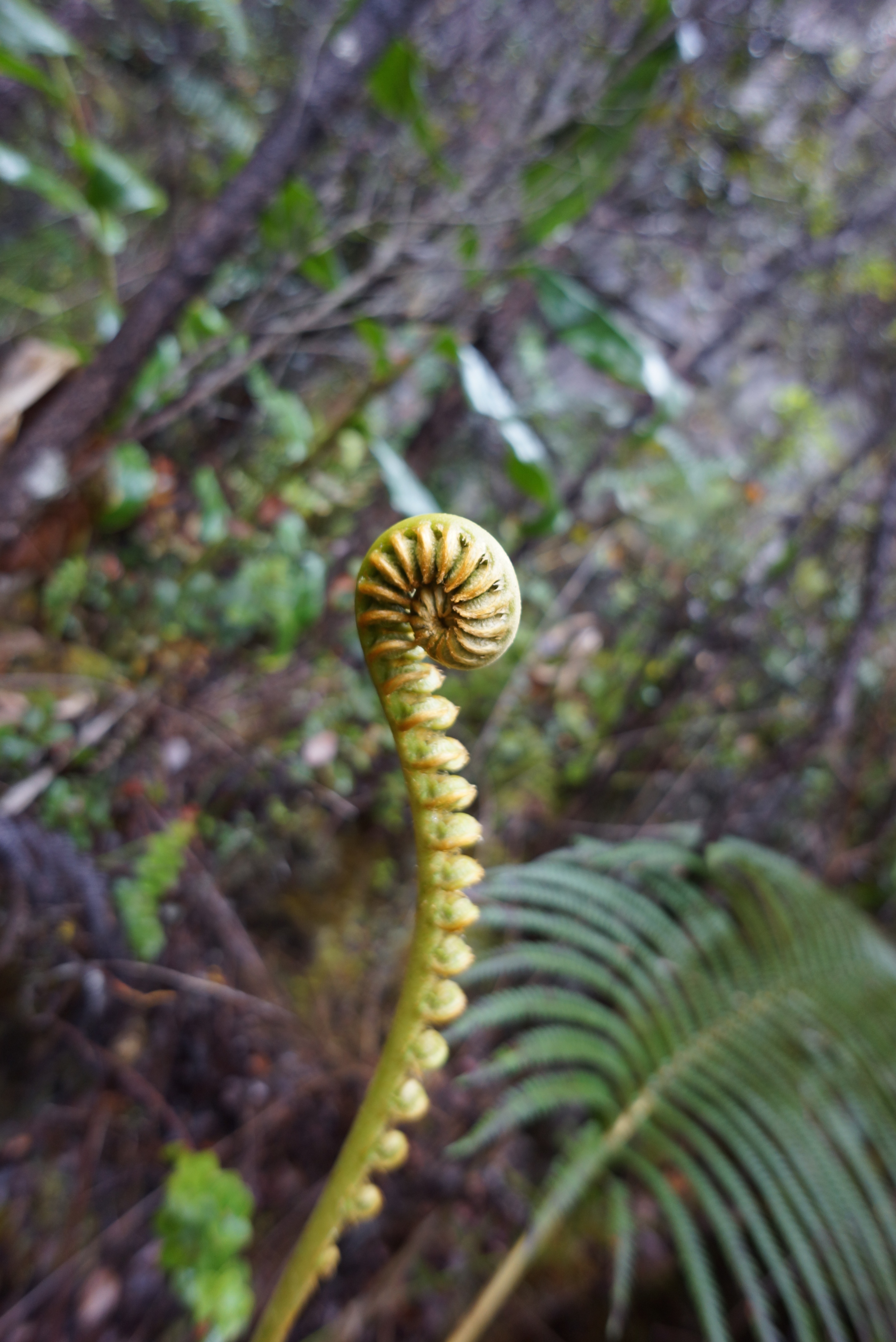
The reptilian beauty of the ferns made this one of the most primordial forest hikes I’ve ever been on.
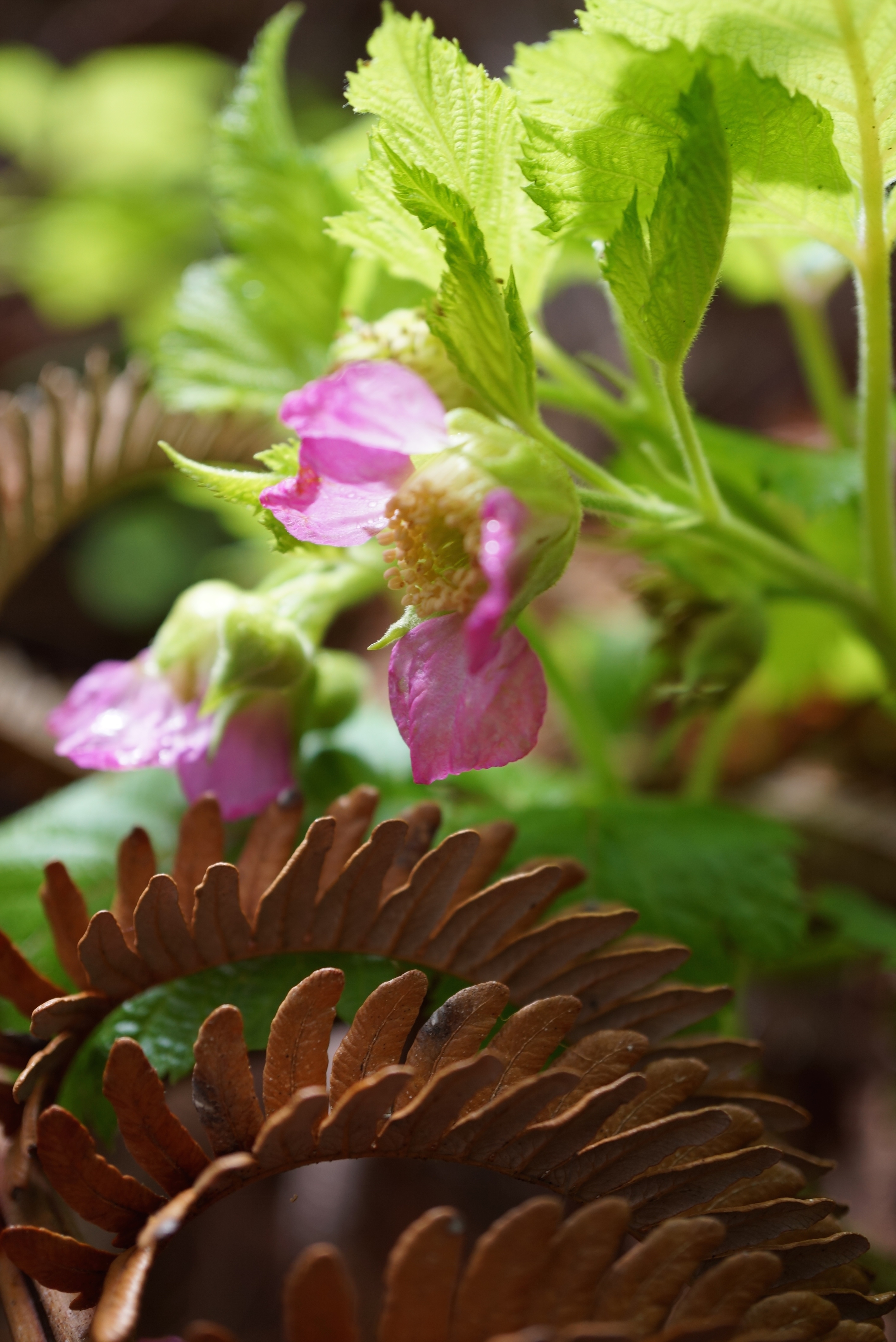
Of course among the ferns there were flowering plants in the understory. Rubus hawaiiensis or Hawaiian blackberry, which grew in abundance, is said to be closely related to R. spectabilis, or salmonberry, so common around here, and dominating large portions of our property. Maybe we don’t live so far from the tropics after all.
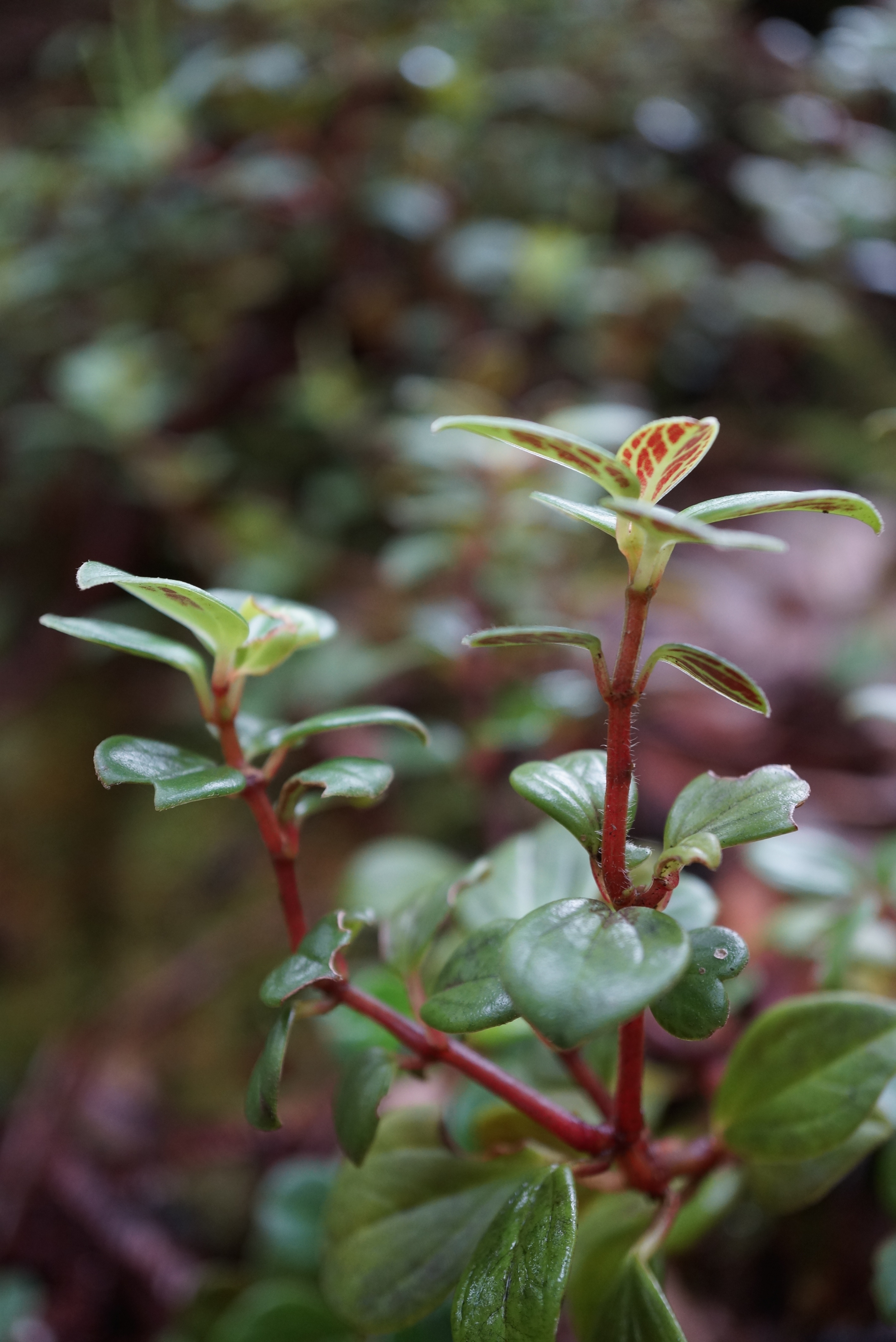
Peperomia is most widely represented genera of the islands with over 50 species. Above:P. cookiana, or ala ala wai nu, is an endemic.
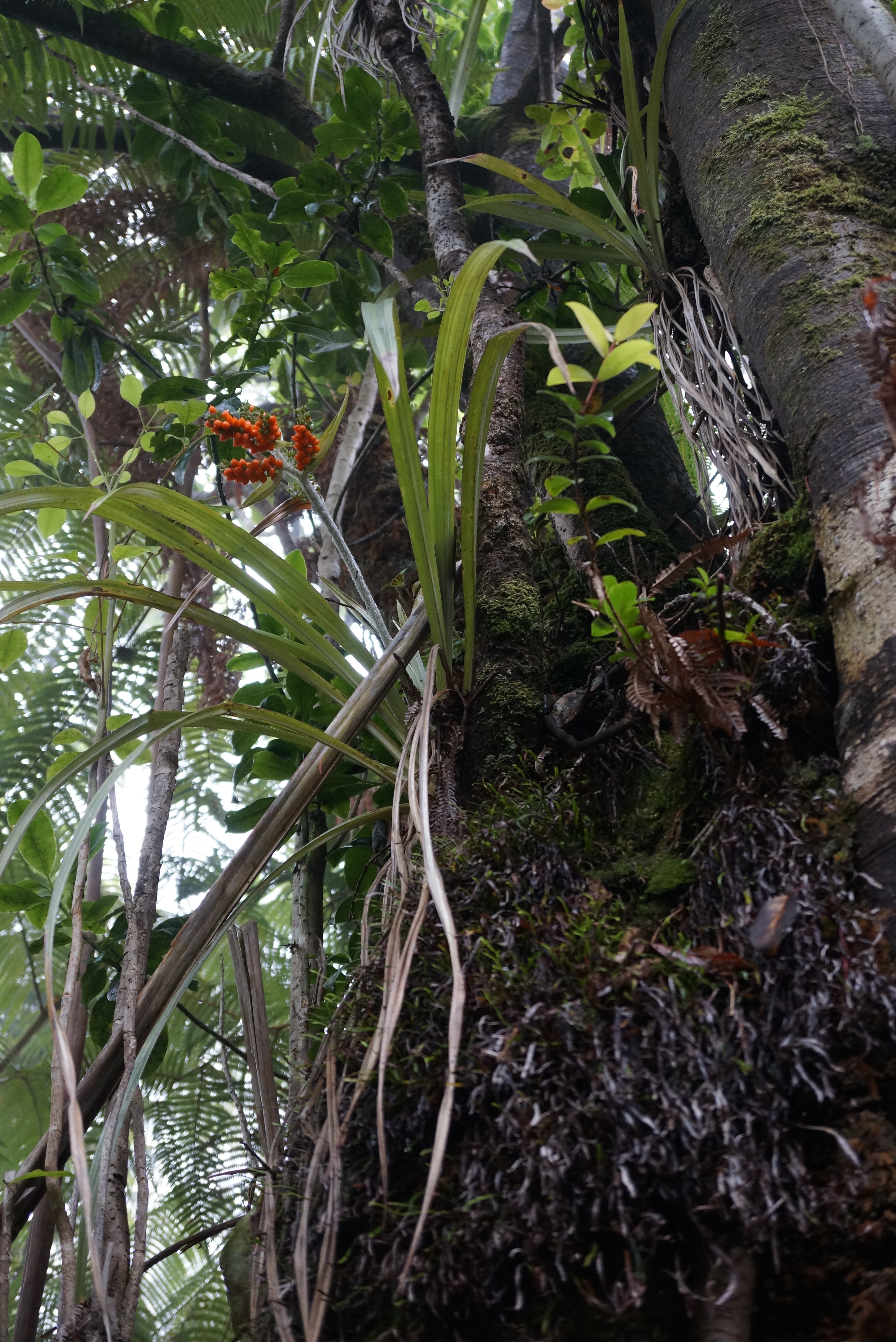
Astelia menziesiana, or kaluaha, high on the trunk of a tree, where birds, which seem to rarely make it to the forest floor, can feed on its bright orange fruit.
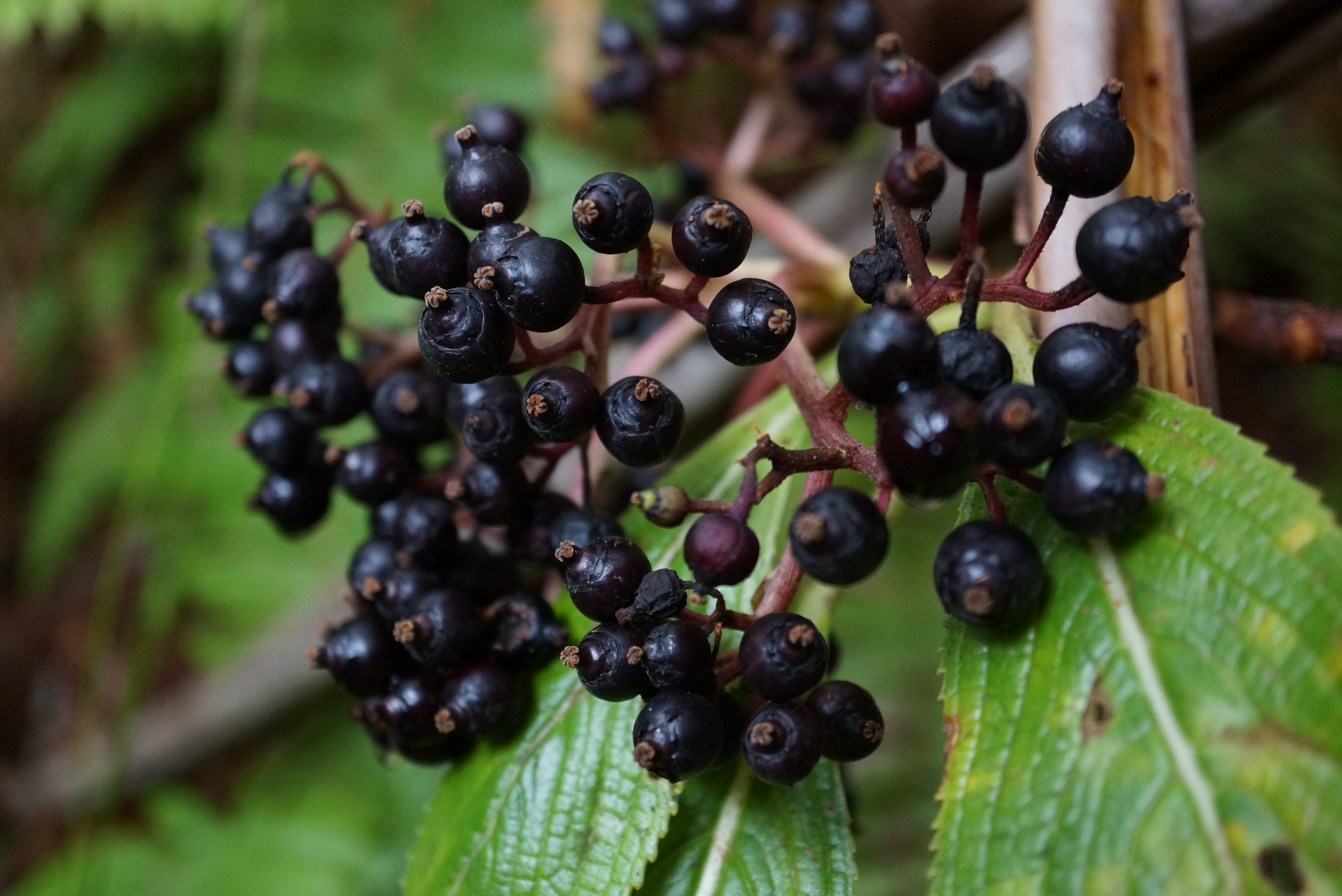
Along the road to Ola’a trailhead we saw banks of Hydrangea macrophylla which had naturalized into the forest edges. Broussaisia arguta, or kanawao, is the only member of the hydrangea family (Hydrangeaceae) native to the islands, and an endemic genus at that.
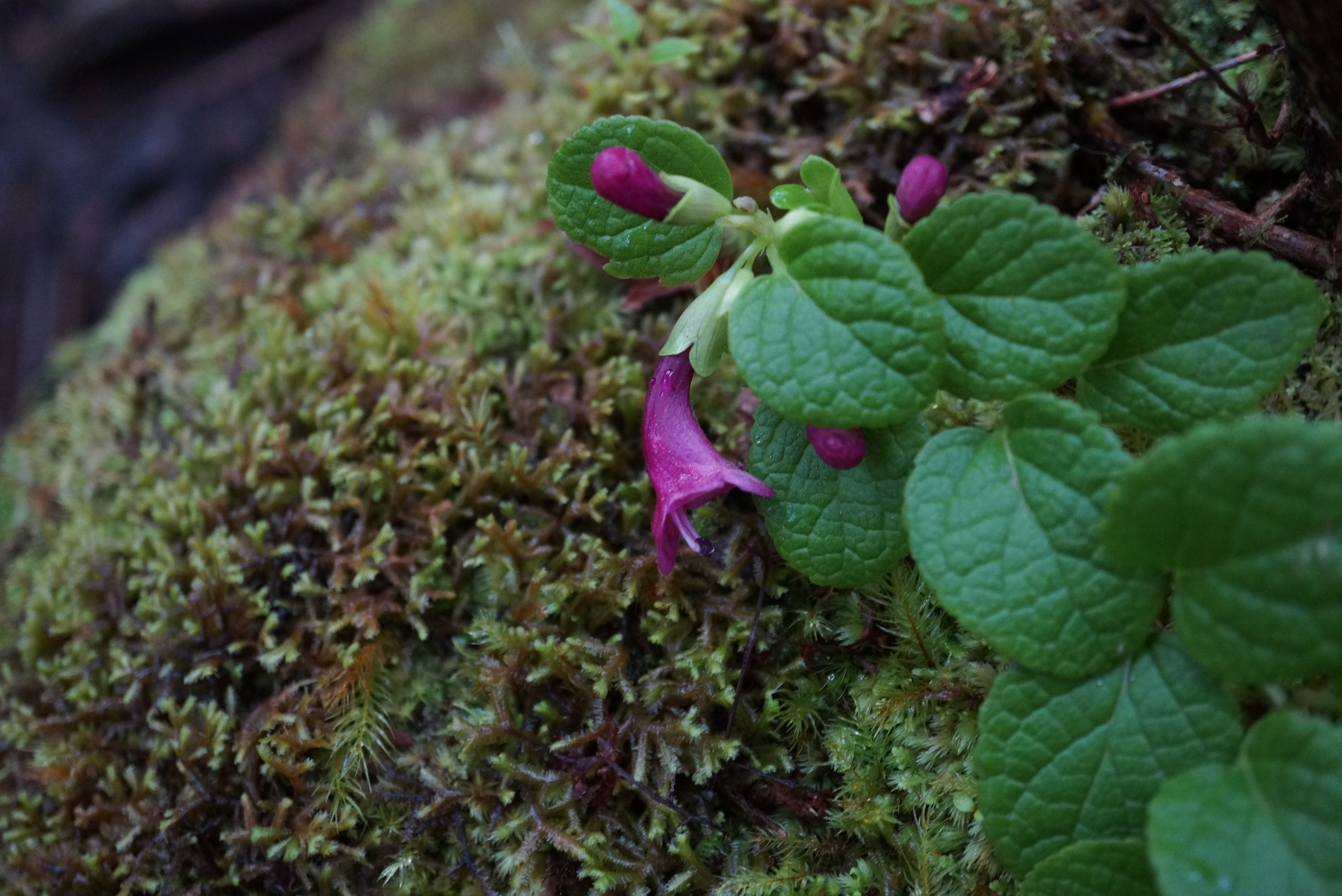
Near the end of the hike I saw this sweet little climbing mint. I’m sure at other times of the year we might have seen many more flowers. Just one more reason to go back.
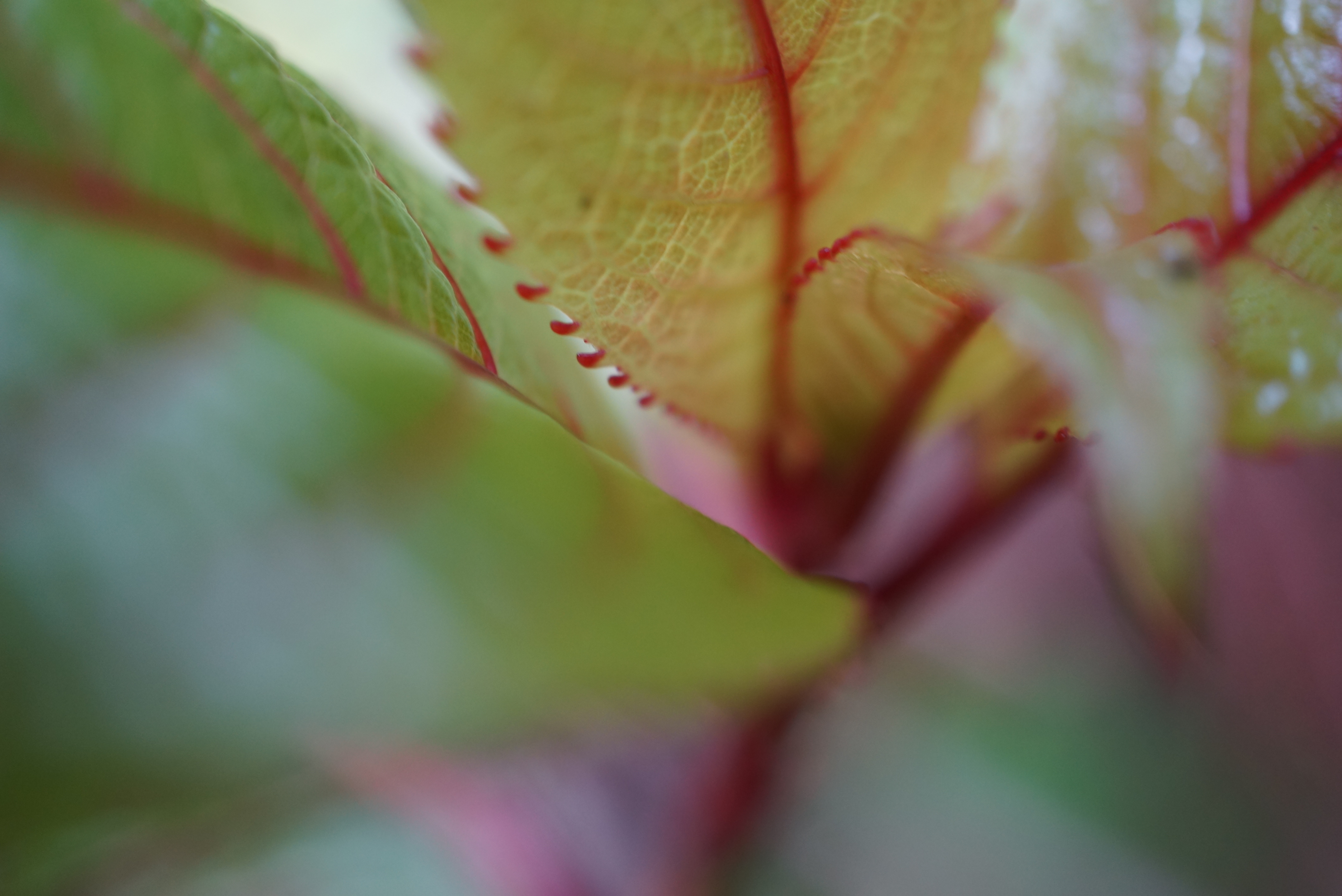
Though I am avid to know and identify all the plants I see, sometimes I can revel in the beauty of a mystery too.
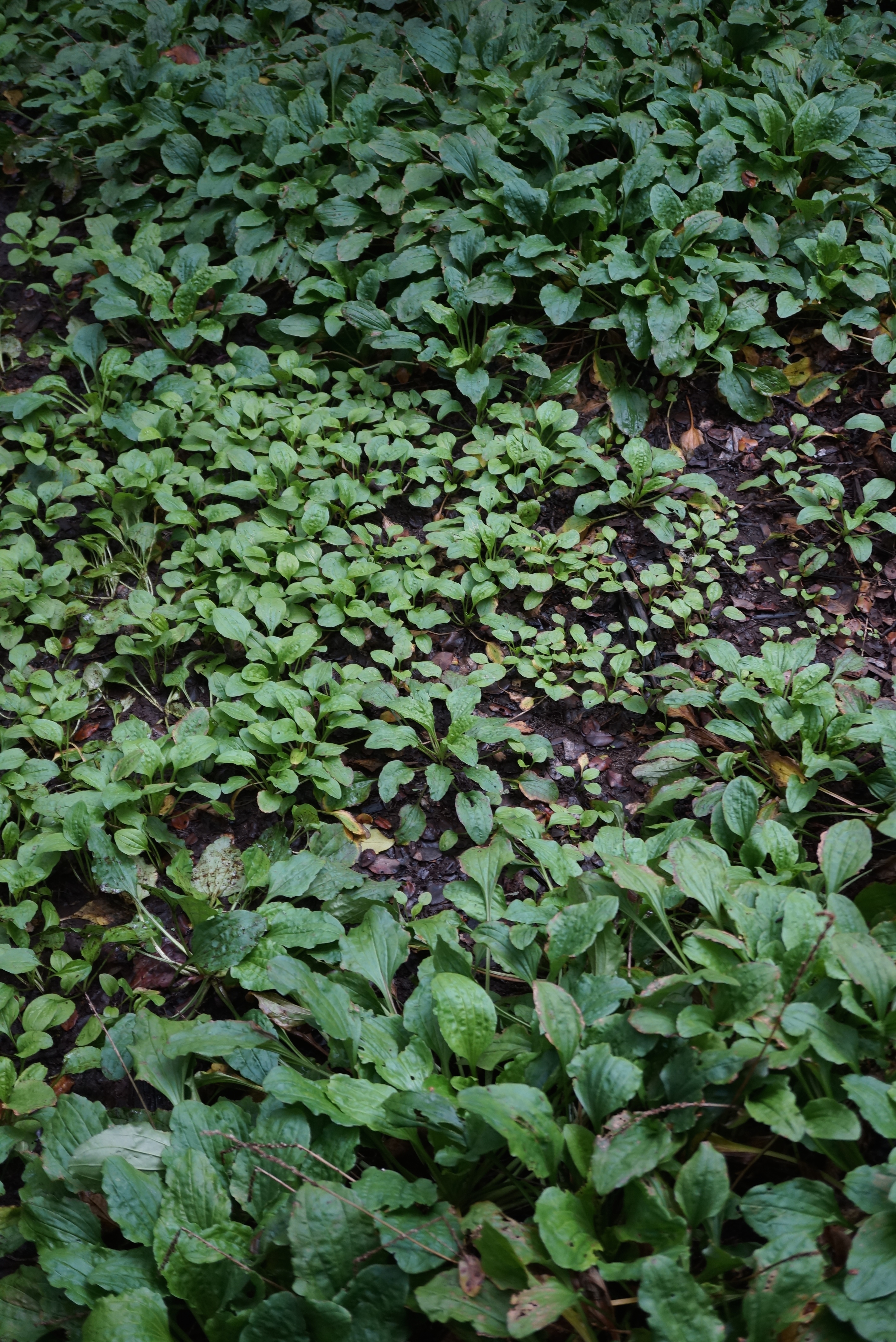
It was no mystery what this plant was; Plantago major, great plantain or white man’s foot print. I was surprised to see it so abundant along the paths of this relatively pristine forest.
KILAUEA IKI TRAIL: This trail in Volcano National Park is about 1300 feet above sea level in drops down into the second caldera of Kilauea volcano named ‘iki’, or small. In 1959 it was a lake of molten lava, now cooled it is a dramatic landscape surrounded by lush forests.
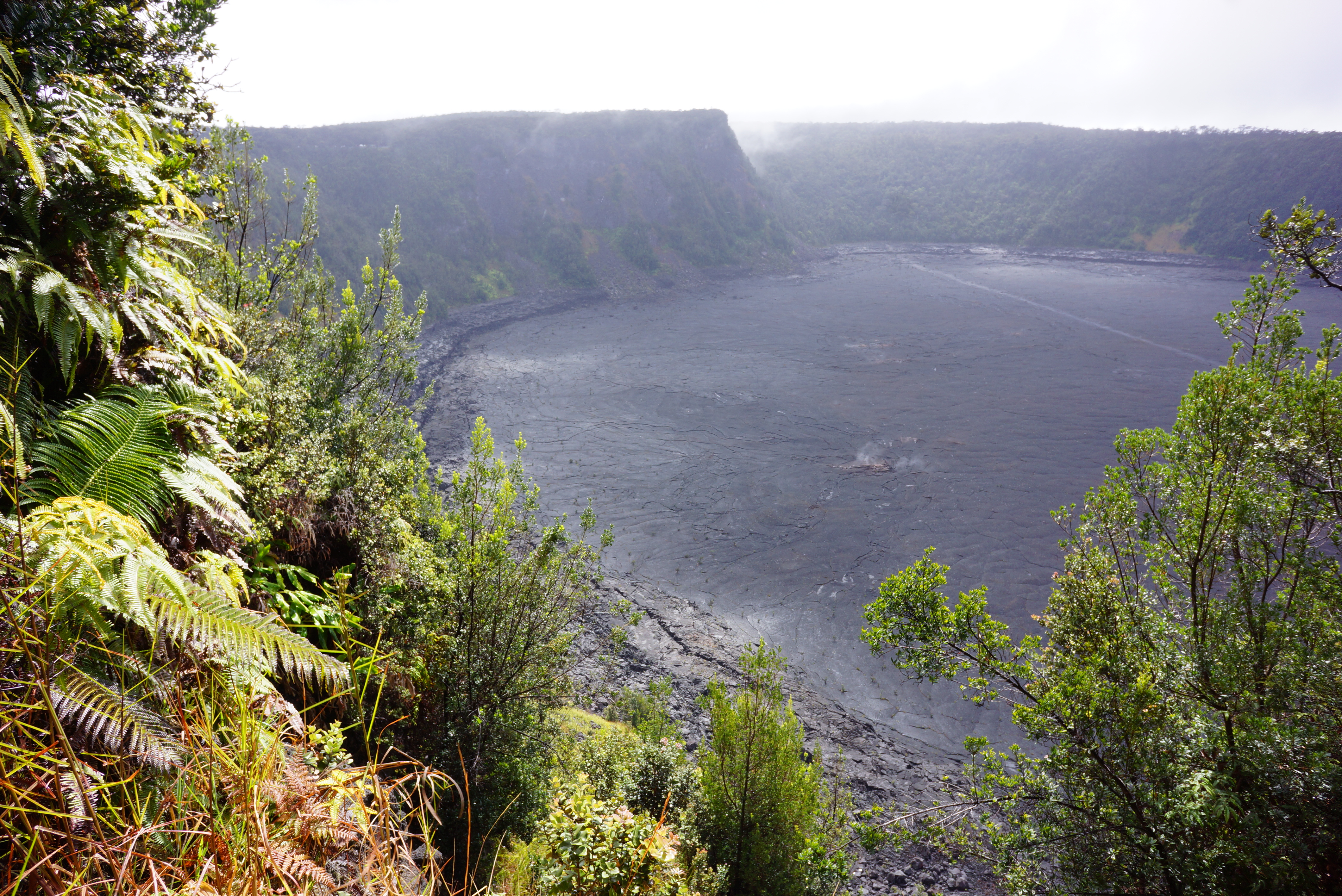
The trail drops 400 feet to the bottom of the crater, you can see the trail crossing the lava field.
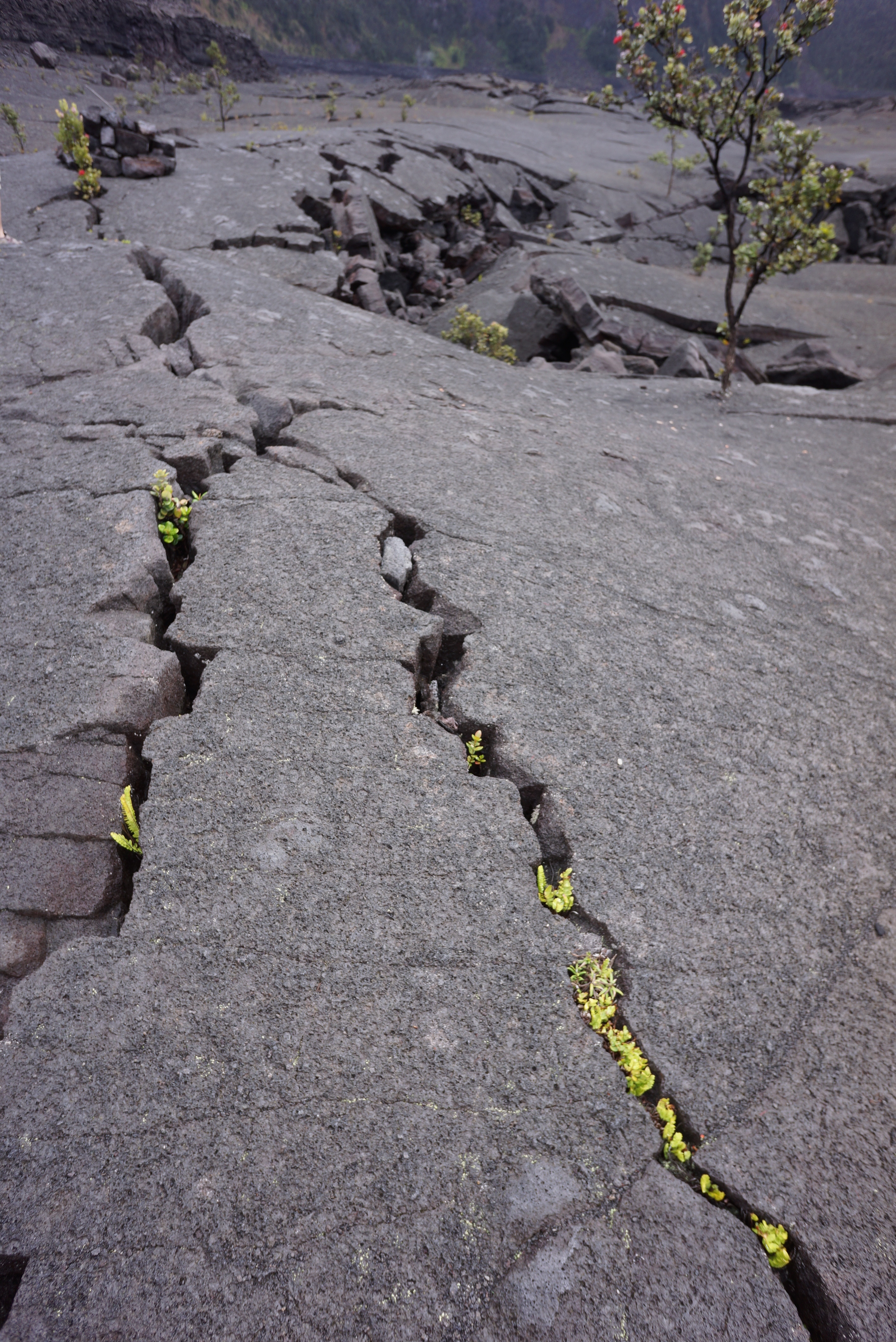
Every little crack and crevice that could support a plant did. Notice the ohi’a tree in the upper right corner. Definitely one of the first species to colonized cooled lava flows.
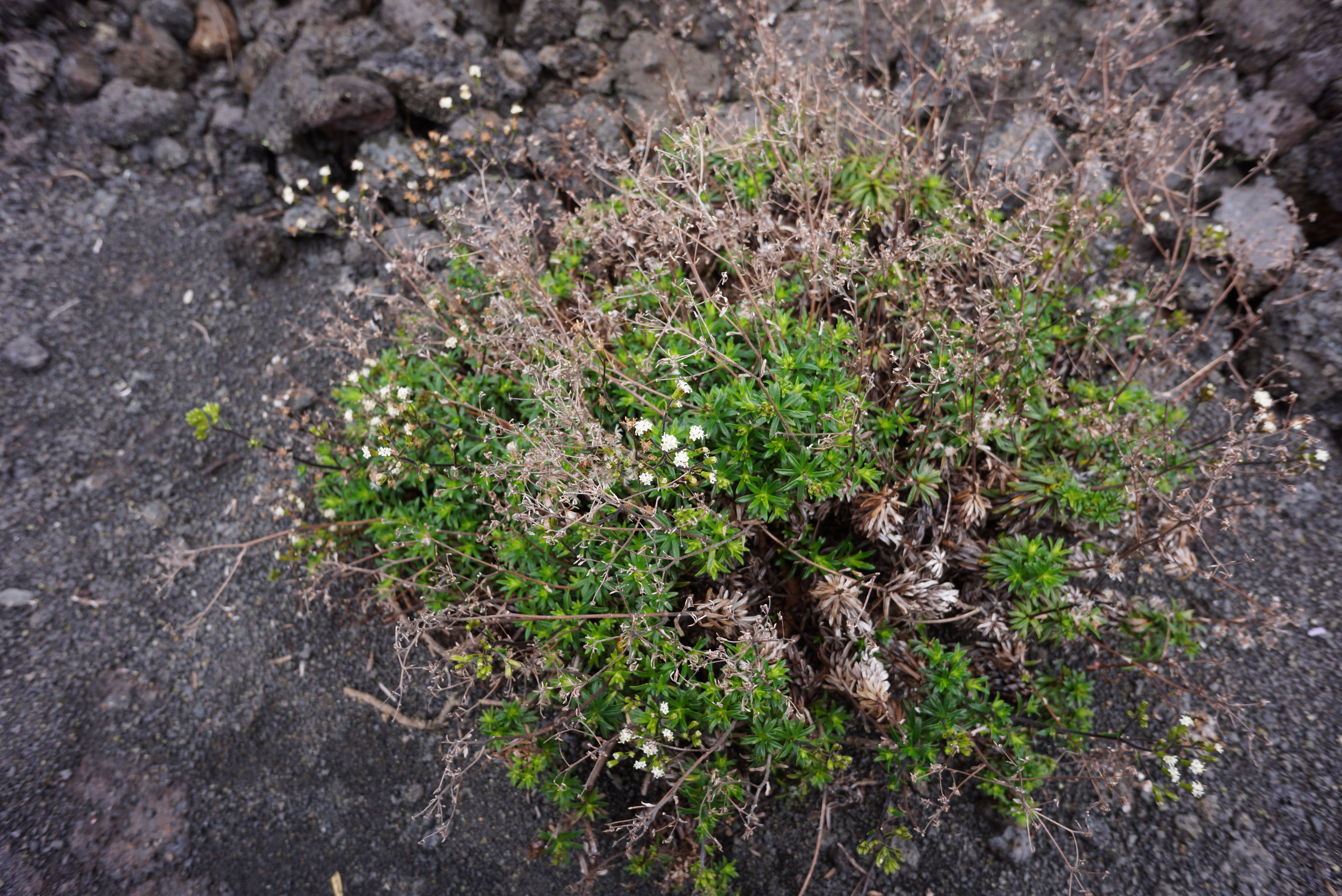
This scrappy little aster relative Dubautia scabra, or na ‘ena’e , is one of the first colonizers of the crater it creates lots of debris which eventually becomes soil for other plants seeds to germinate.
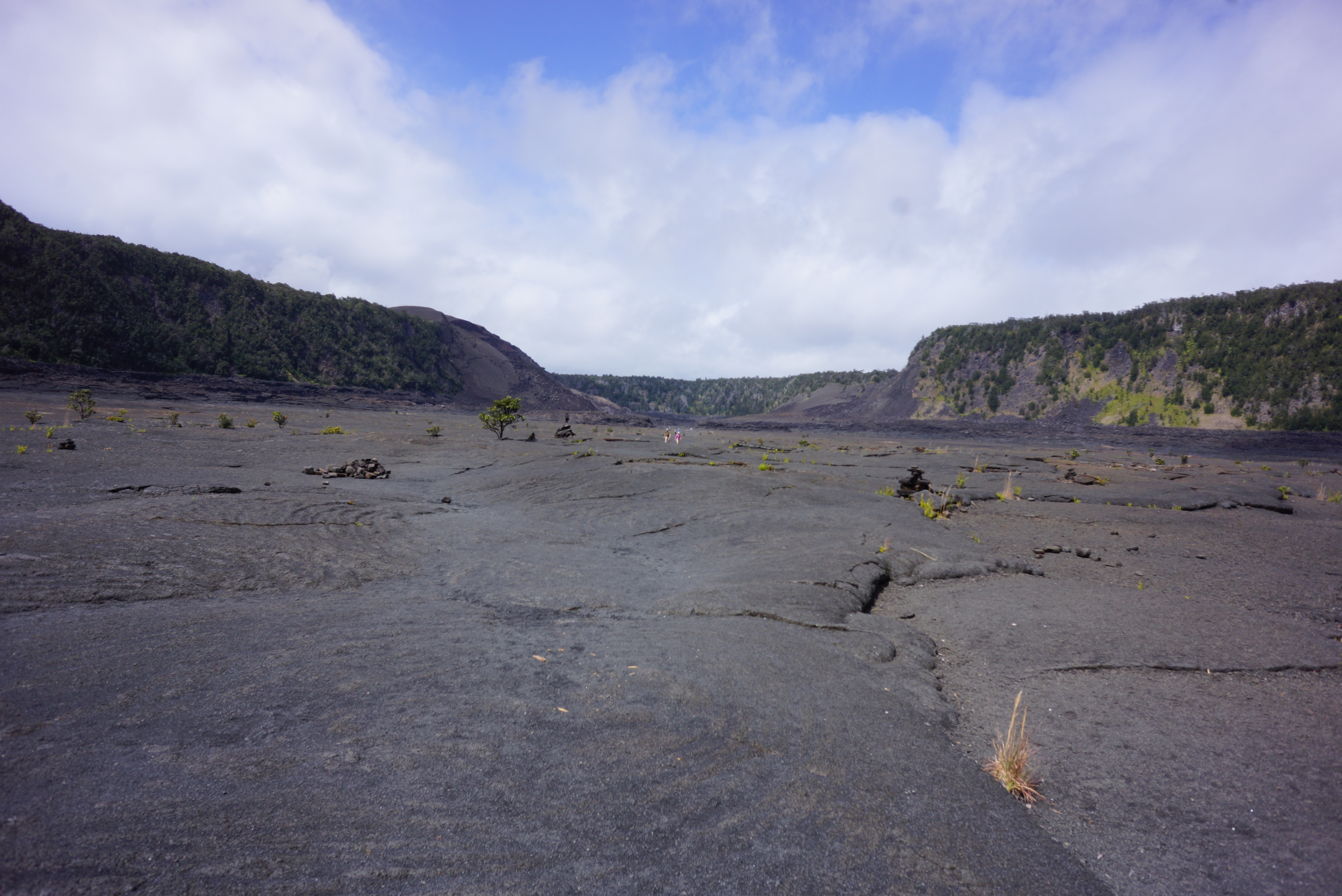
It is hard to imagine anything wanting to grow in this harsh soilless landscape.
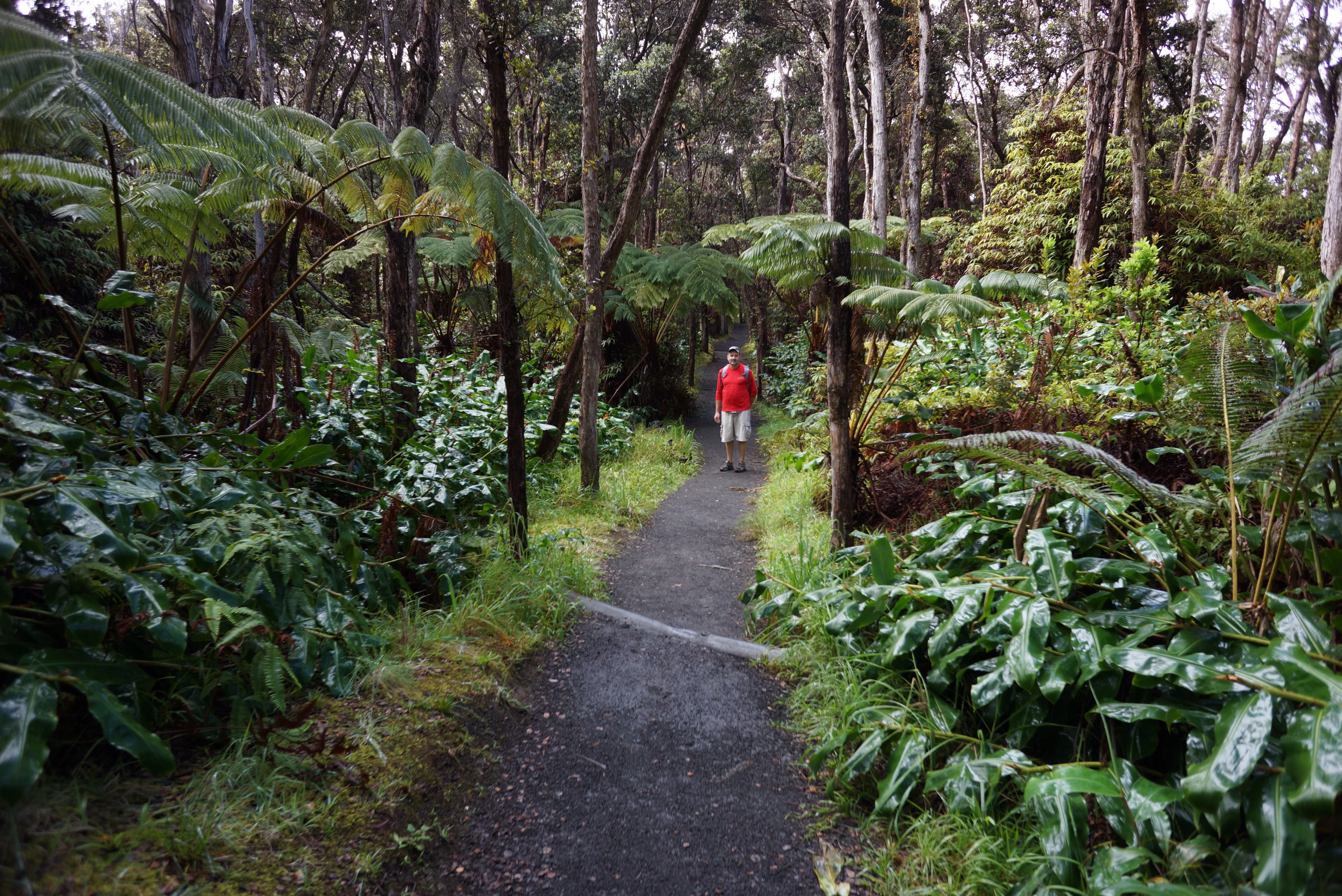
It is also hard to imagine anything a disparate as the crater floor and the lush jungles just 400 feet above. The swathes of ginger are invasive and on other parts of the trail we saw efforts to control. Not a job I would like.
MAUNA LOA TRAIL: Our last day we headed up the side of Moana Loa which peaks at 13,769 feet. We weren’t planning a hike, just a park ‘n’ look but the incredible beauty of the landscape drew us up a few miles to over 7000 feet, a long way from the top nearly 11 miles beyond, but enough to give us a taste.
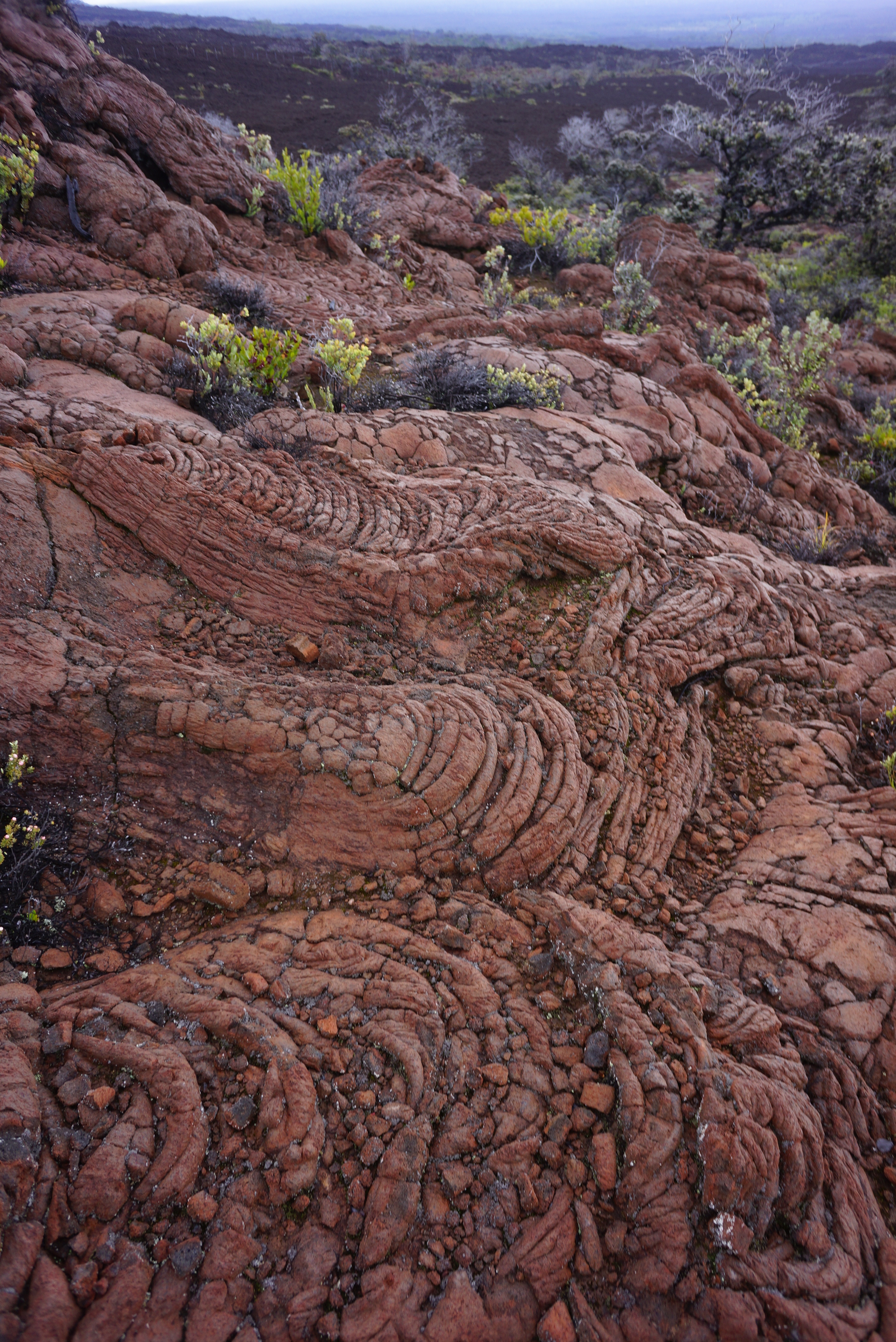
The still sparsely vegetated lava flows we crossed were laid during an eruption in 1880.

Moss is still building soil in the crevices of this ribbony terrain.
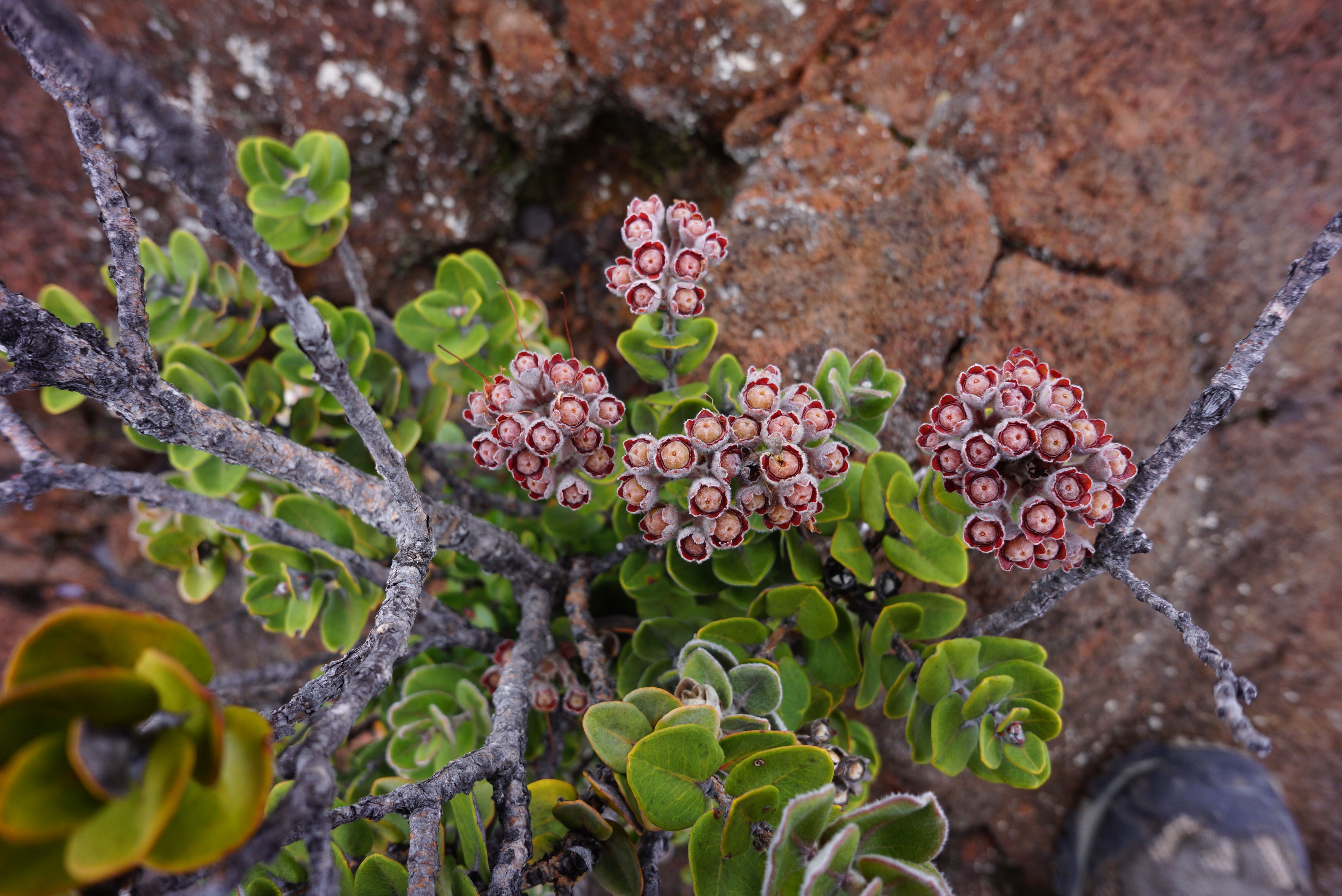
Of course the Ohi’a tree is everywhere present, even some of very large ones, though most are gnarly shrubs like this one on the verge of blooming.
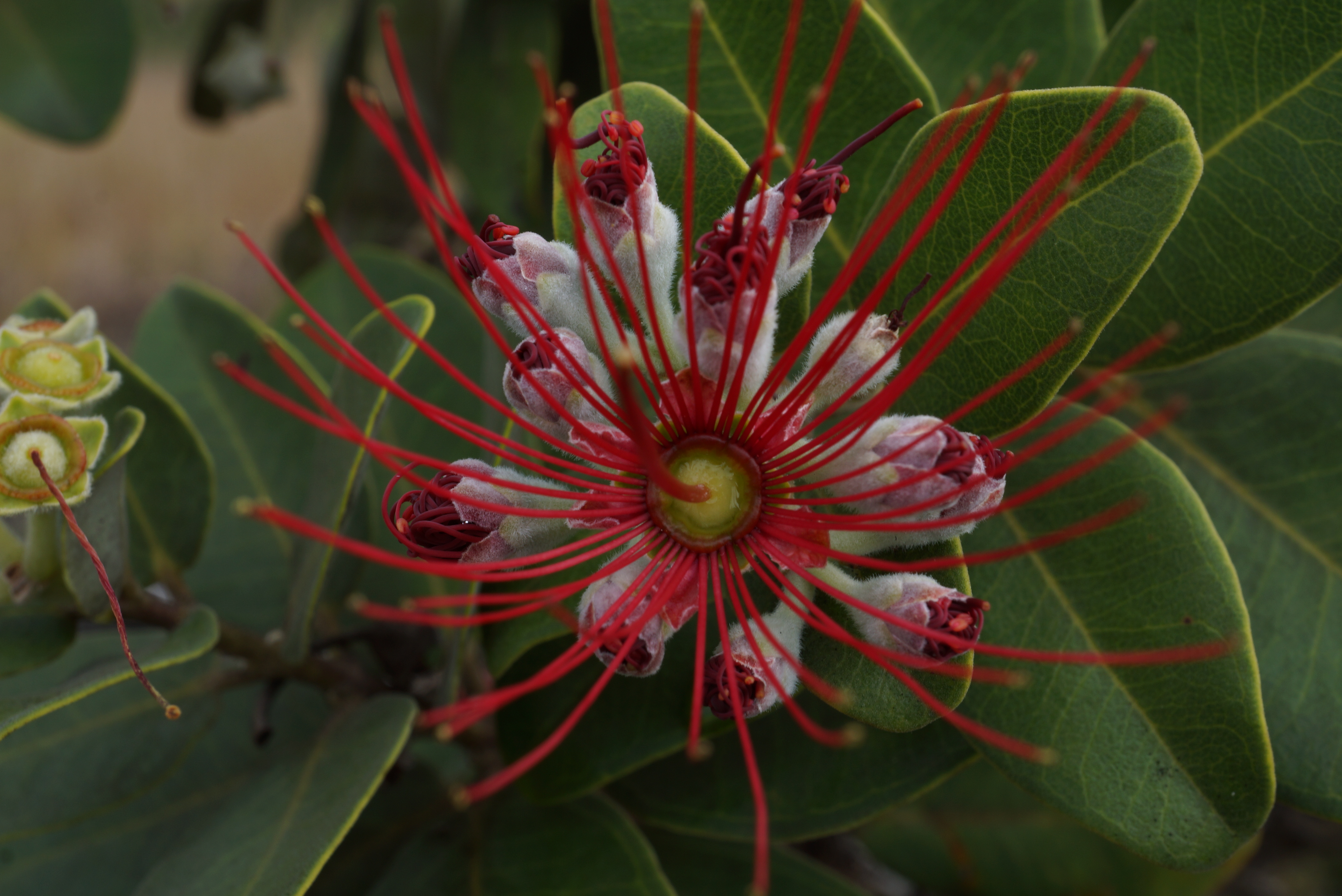
The first flower of an ohi’a inflorescence.
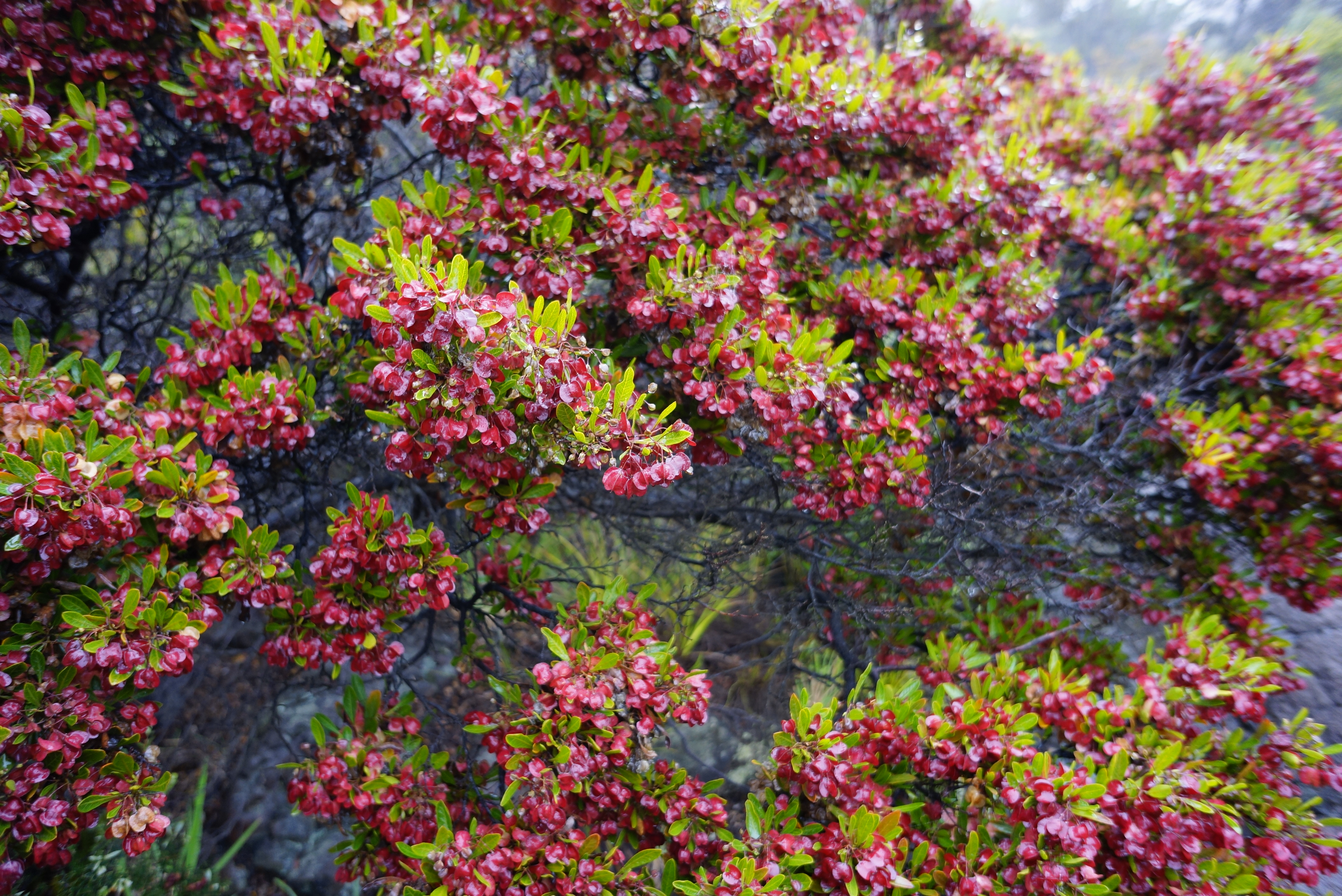
More dramatic than the flowers of the ohi’a is the fruits of Dodonea viscose, or a’ali’i. The color can range from burgundy red to pink, beautiful against the lava rock.
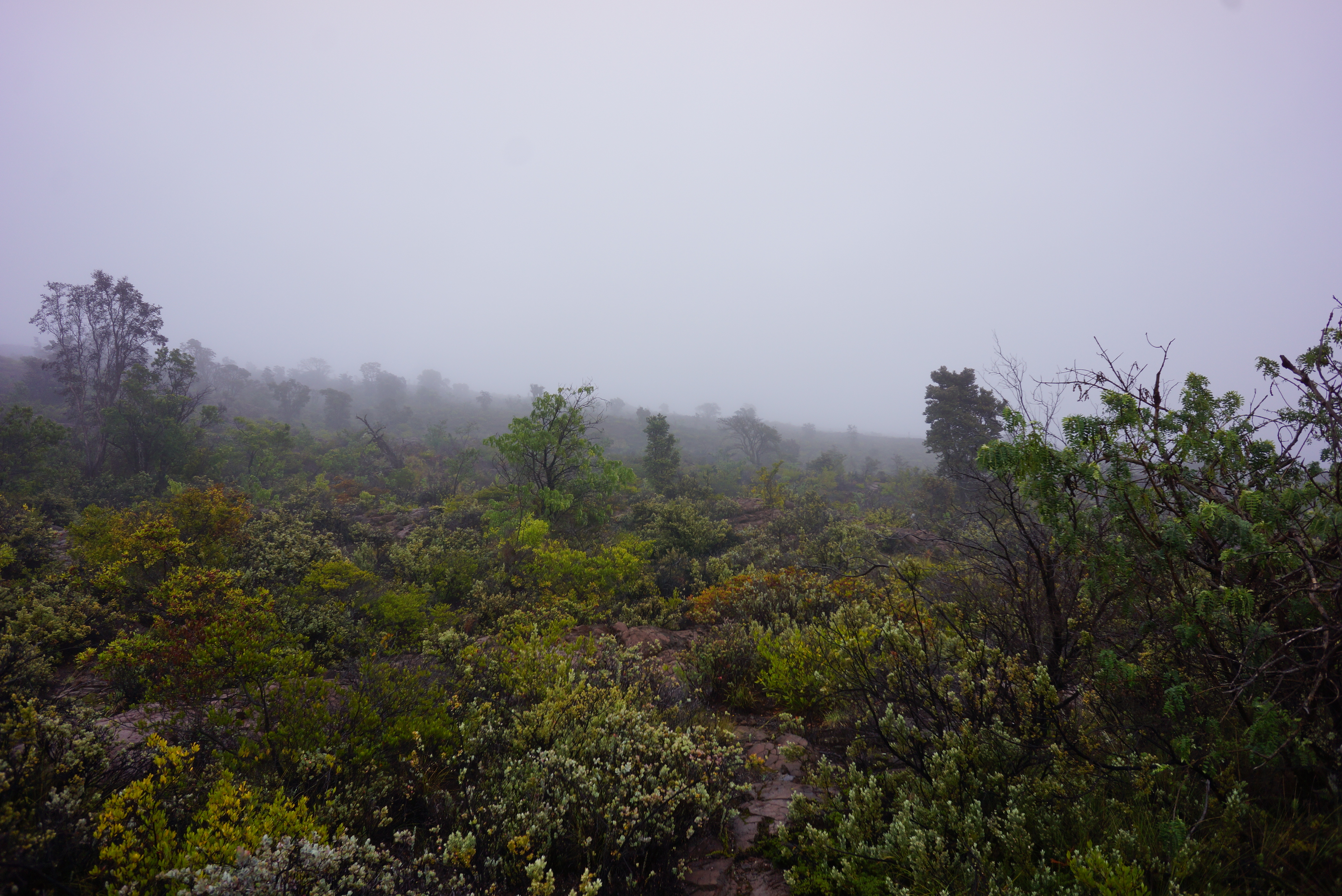
Though the trail promised dramatic views of Mauna Loa and Kiluaea Caldera, we were lost in a fog that kept our focus on all the small things growing around us. The landscape reminded me greatly of the macchia of the Mediterranean, though there was no rosemary here.
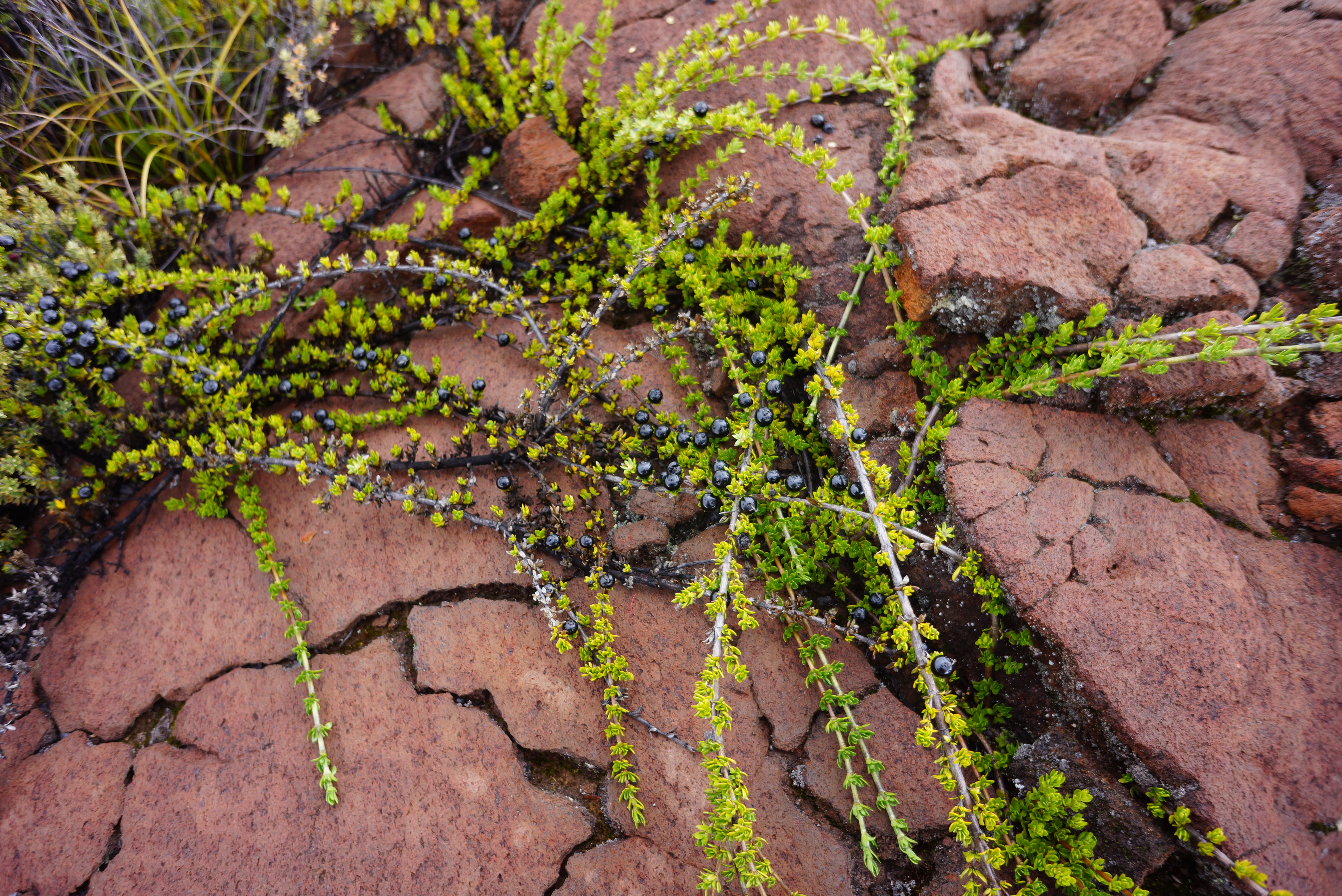
Except for the black berries this Coprosma ernodeoides, or ‘aiakanene, could be mistaken for a trailing rosemary. The endemic Hawaiian goose the nene eats them, thus the Hawaiian name. The day we saw the nenes my camera was not hand.
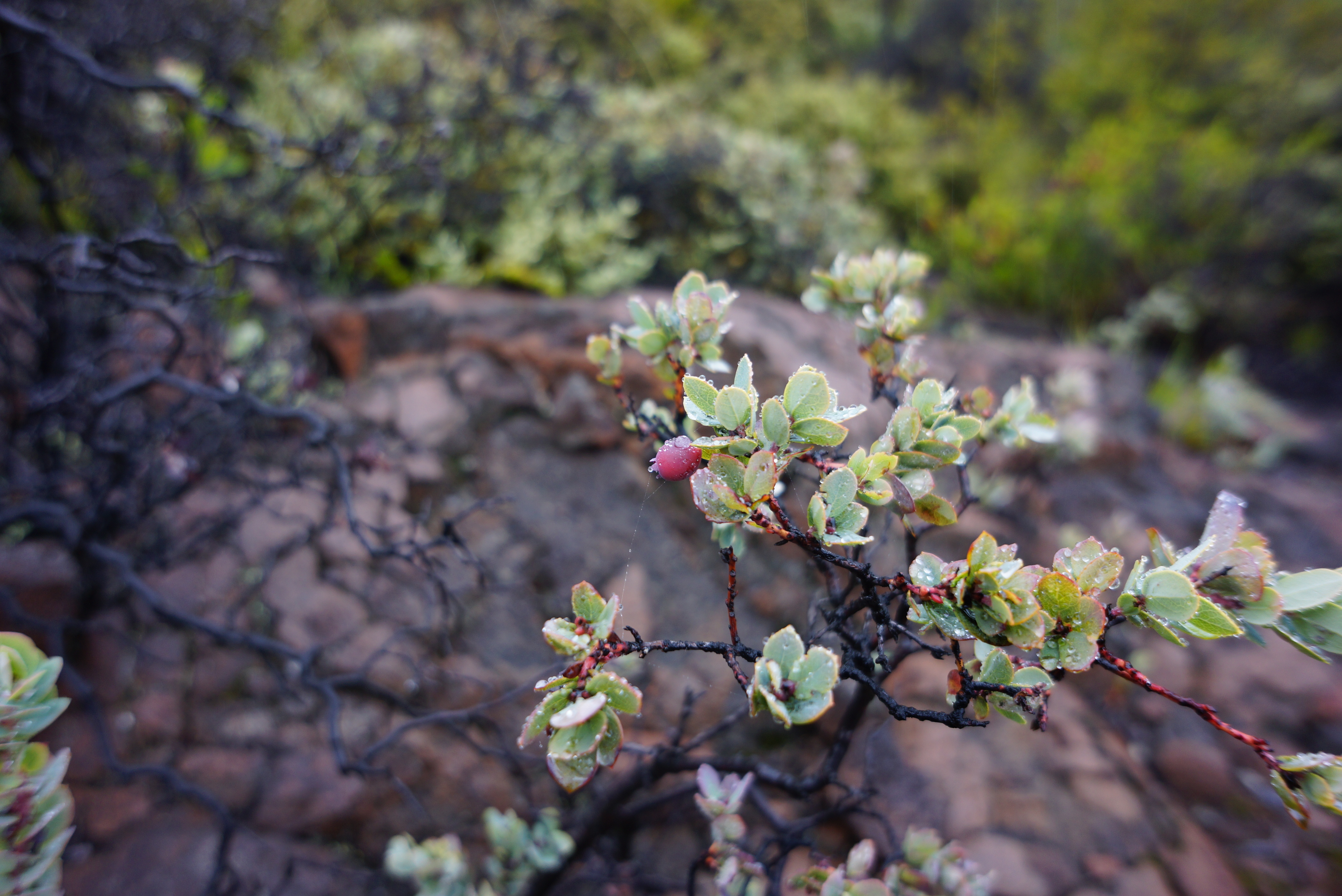
One of the Hawaiian blueberries, Vaccinium reticulatum, or ‘ohelu, also food for the nene.
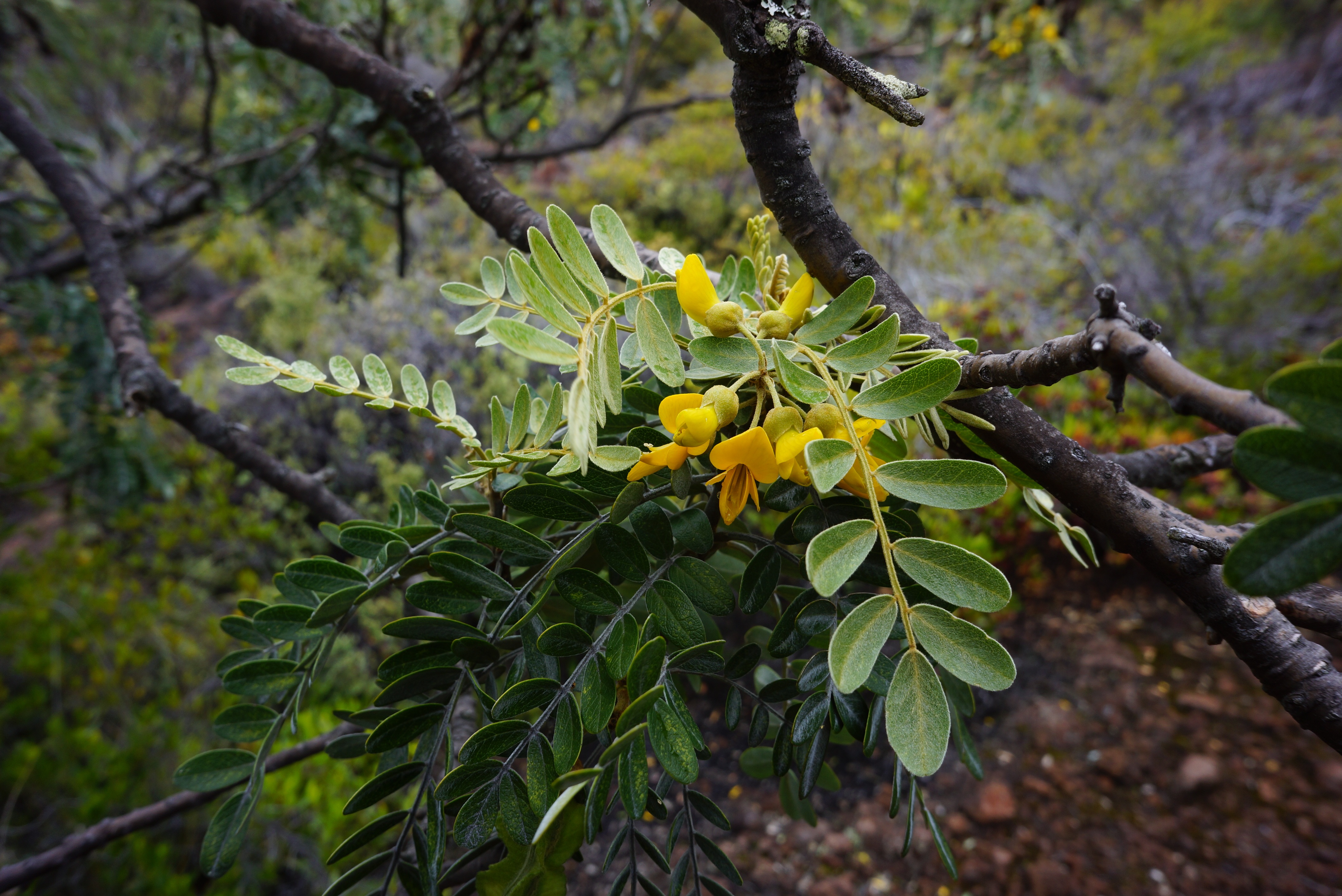
One of the more prevalent trees grows in these sub-alpine “forests” Sophora chrysophylla, or mamane; it is the second major legume of the islands after koa.
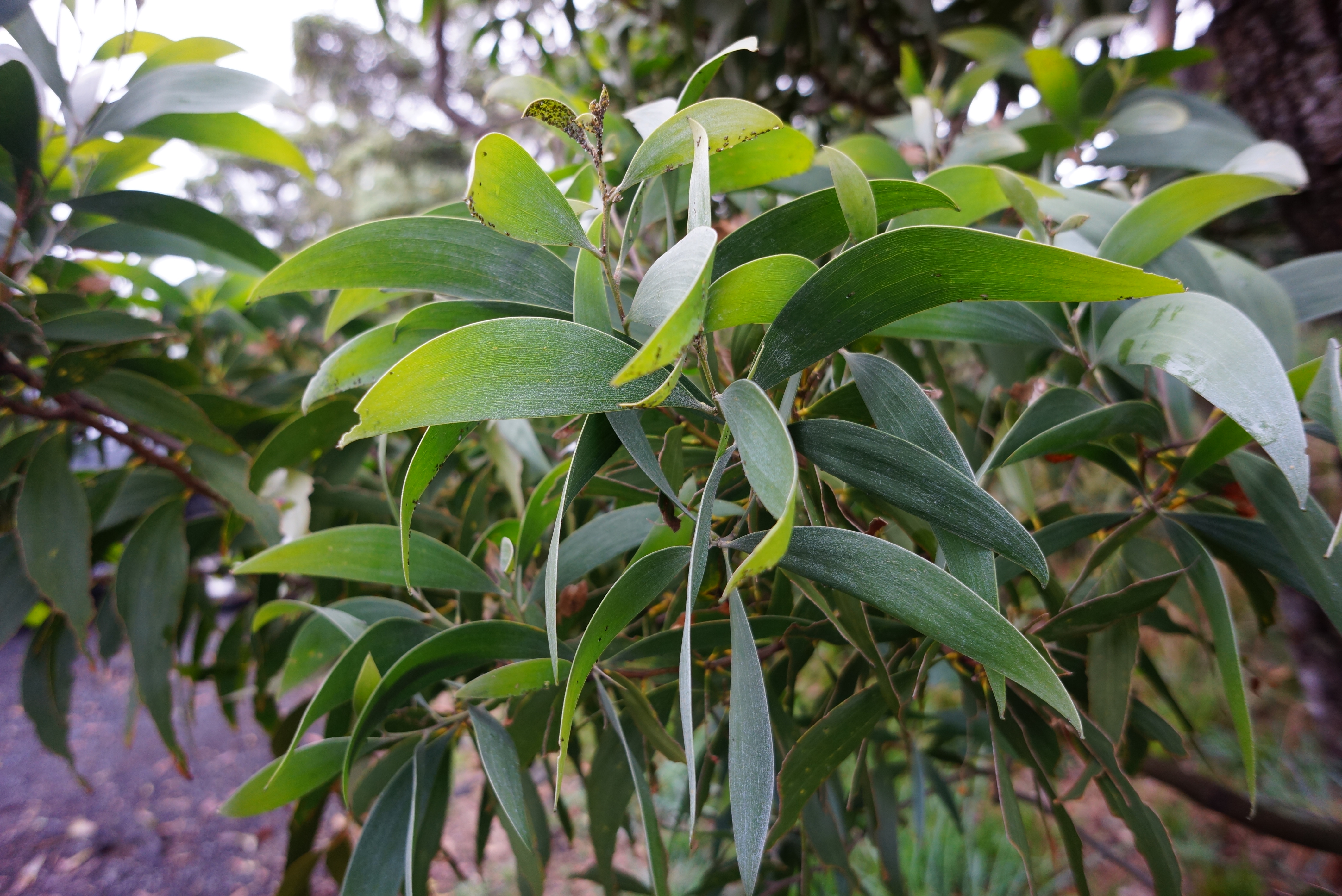
Acacia koa, or koa, forest dominate the mountain side on the road up to the Mauna Loa trailhead. These strange leaves of this eucalyptus relative are actually inflated leaf pedicles, the fine leave shed.
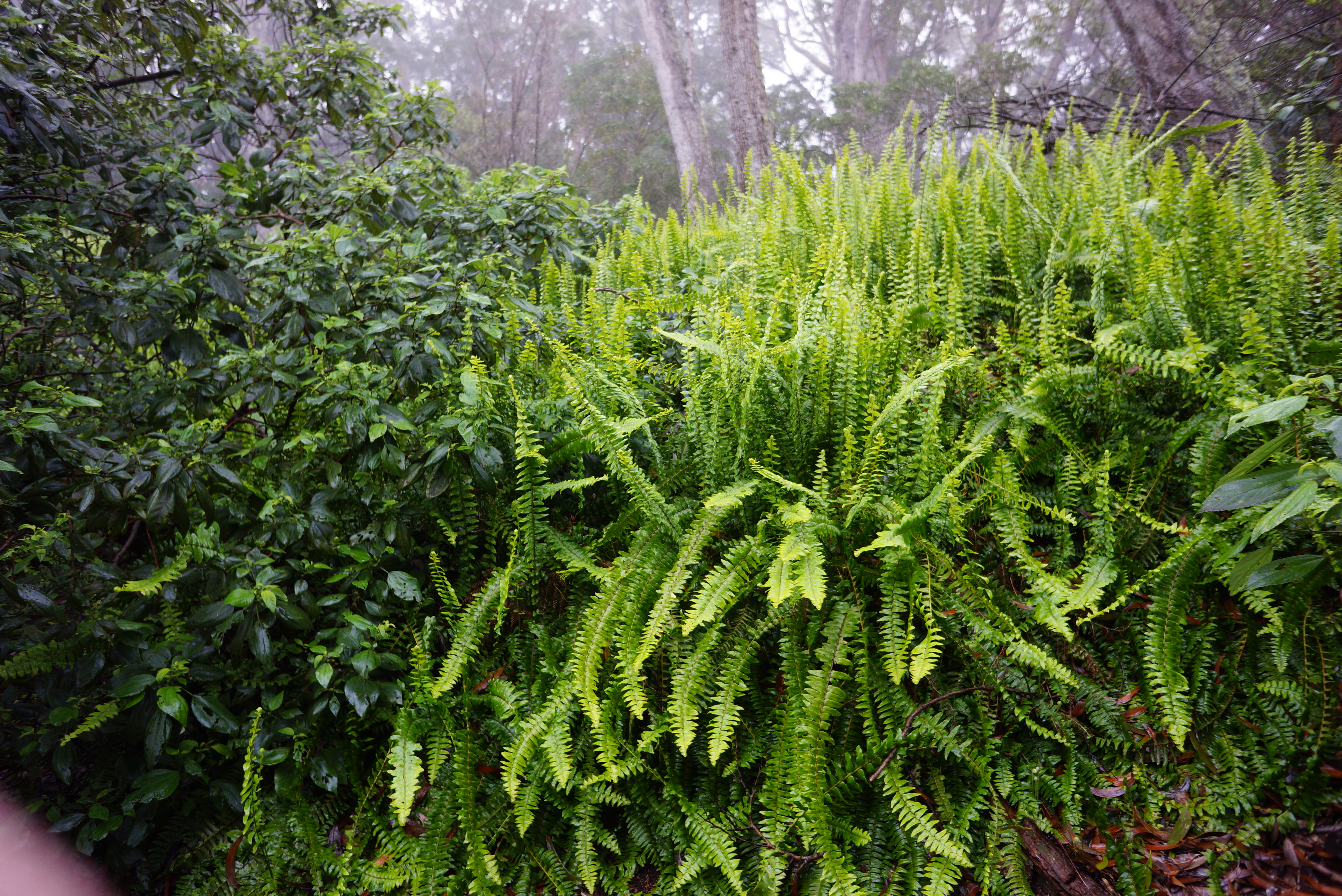
Nephrolepsis exaltata, kupukupu or sword fern, covers the ground in these rich moist woodlands. Much like our unrelated sword fen in the Pacific Northwest.
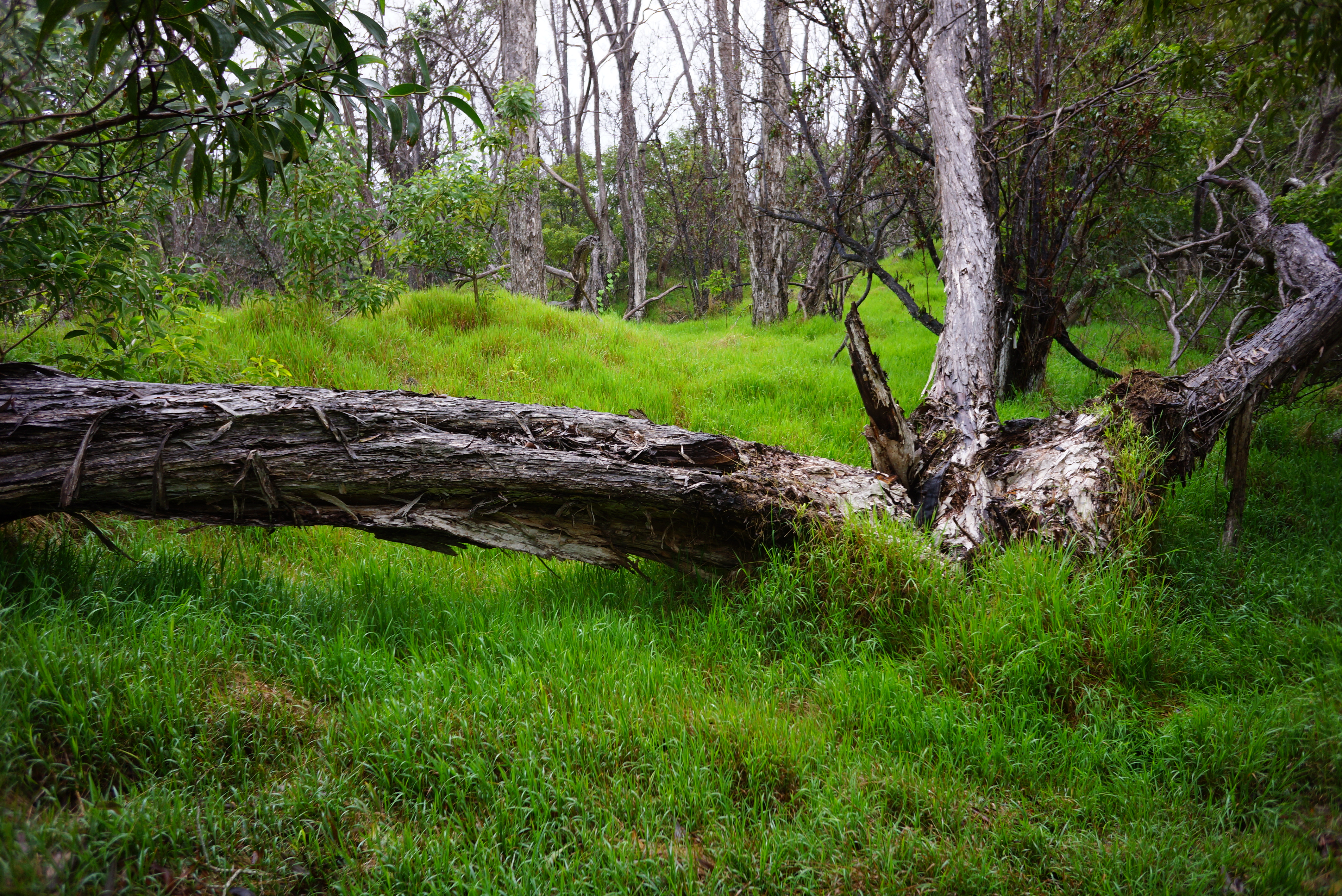
The koa forest was one of the rare places where we saw grass growing under trees. Squinting this picture could be the park down the road. Doesn’t look like Hawai’i at all.
Next post will be all those plants that remind us of paradise, orchids, palms, guavas and more. The trouble with paradise is it’s not native.
