Archives
- June 2018
- December 2017
- November 2017
- May 2017
- January 2017
- November 2016
- May 2016
- April 2016
- December 2015
- November 2015
- October 2015
- September 2015
- August 2015
- July 2015
- June 2015
- May 2015
- April 2015
- February 2015
- January 2015
- December 2014
- November 2014
- October 2014
- September 2014
- August 2014
- July 2014
- June 2014
- May 2014
- April 2014
- March 2014
- February 2014
- January 2014
- December 2013
- November 2013
- October 2013
- September 2013
- August 2013
- July 2013
- June 2013
- May 2013
- April 2013
- March 2013
- February 2013
- January 2013
- October 2012
- September 2012
- August 2012
- July 2012
- June 2012
- May 2012
- April 2012
- March 2012
- February 2012

April 2013
Apr
14
2013
 0
0
The tulip is the representative of the small world. The flower simple enough to be drawn by a child is probably the first flower a child ever draws—a stem like a stick, half an oval with a zig-zagging edge—voila le tulip! They can look like a Japanese big-headed anime character, almost comical as they supplicate to the ground after a rainstorm. Poor ol’ tulip-head fell down. It makes me want to laugh childishly.
It is this guilelessness that endears tulips to many. With their Crayola Crayon range of colors and their springtime pertinence, they have come to represent the innocence of spring. Not the virginal innocence of white roses, say, but the innocence of childish laughter.
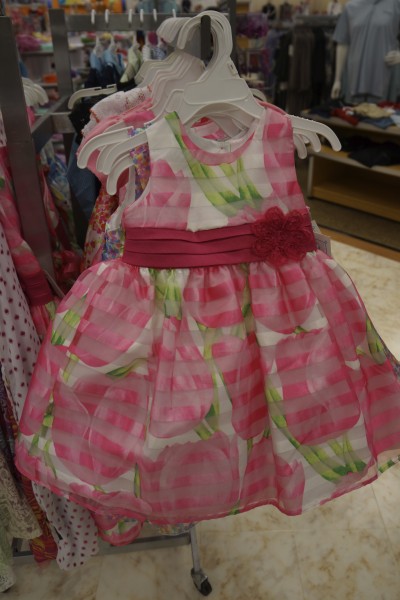
It is hard to image that at one time in Persia the gift of a red tulip from a man to a woman was a symbol of passionate sexual love. Now tulips, big happy colorful cheap bundles of tulips, had at every grocery store are so devoid of any meaning you could bring them to your officemate for her birthday. The love they represent is a friendly love, a childlike love, the happy love yearning to be shared.
By association this innocence has been twisted into a sense of purity, cleanliness. As a cut flower tulips are very “clean”, but they foist no fragrance to cover our awful bodily odors like lavender or jasmine. It is an implied sort of freshness that comes from the tulip, like a child is fresh.
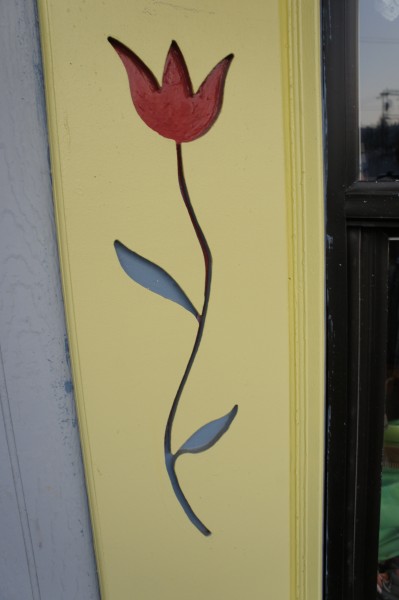
Unlike the long stem rose, tulips always feel like they came from the garden, not the florist. Tulips for all the efforts of breeders to make them elegant—and if you follow this string of tulipy posts I’m writing, you will see some elegant tulips—still have a hominess about them. Even the poorest gardens boast with the extravagance of a few tulips bulbs each spring. They are easily had and easily planted even the lamest of gardeners can succeed with tulips.
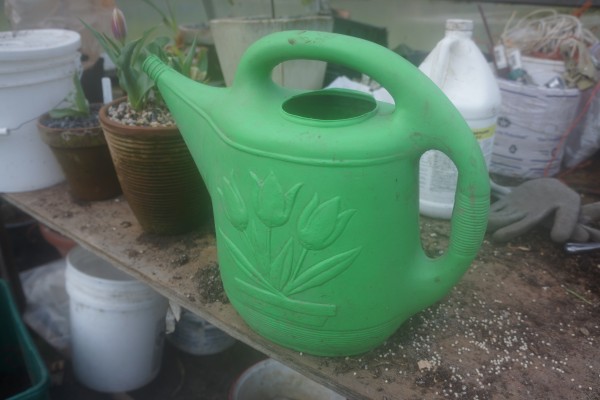
But they also add a note of gracefulness to homely things, lift them up from their hominess. Is this green watering can suddenly more elegant because it is emblazoned with tulips? Is it telling us that if we use this watering can you will be successful at raising flowers; well, at least tulips? Or is it simply decorative, no meaning implied? No meaning at all.
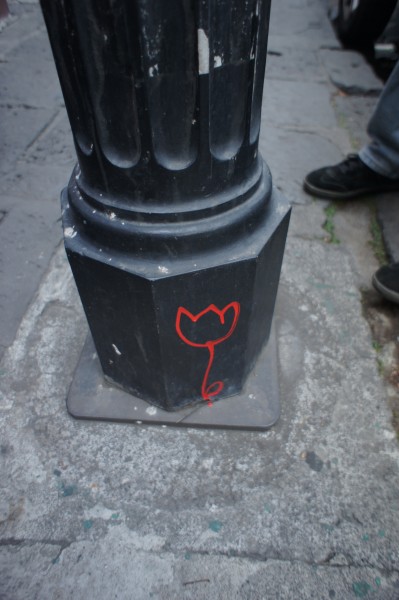
Like this tulip that broke from the pavement in Mexico City.
